




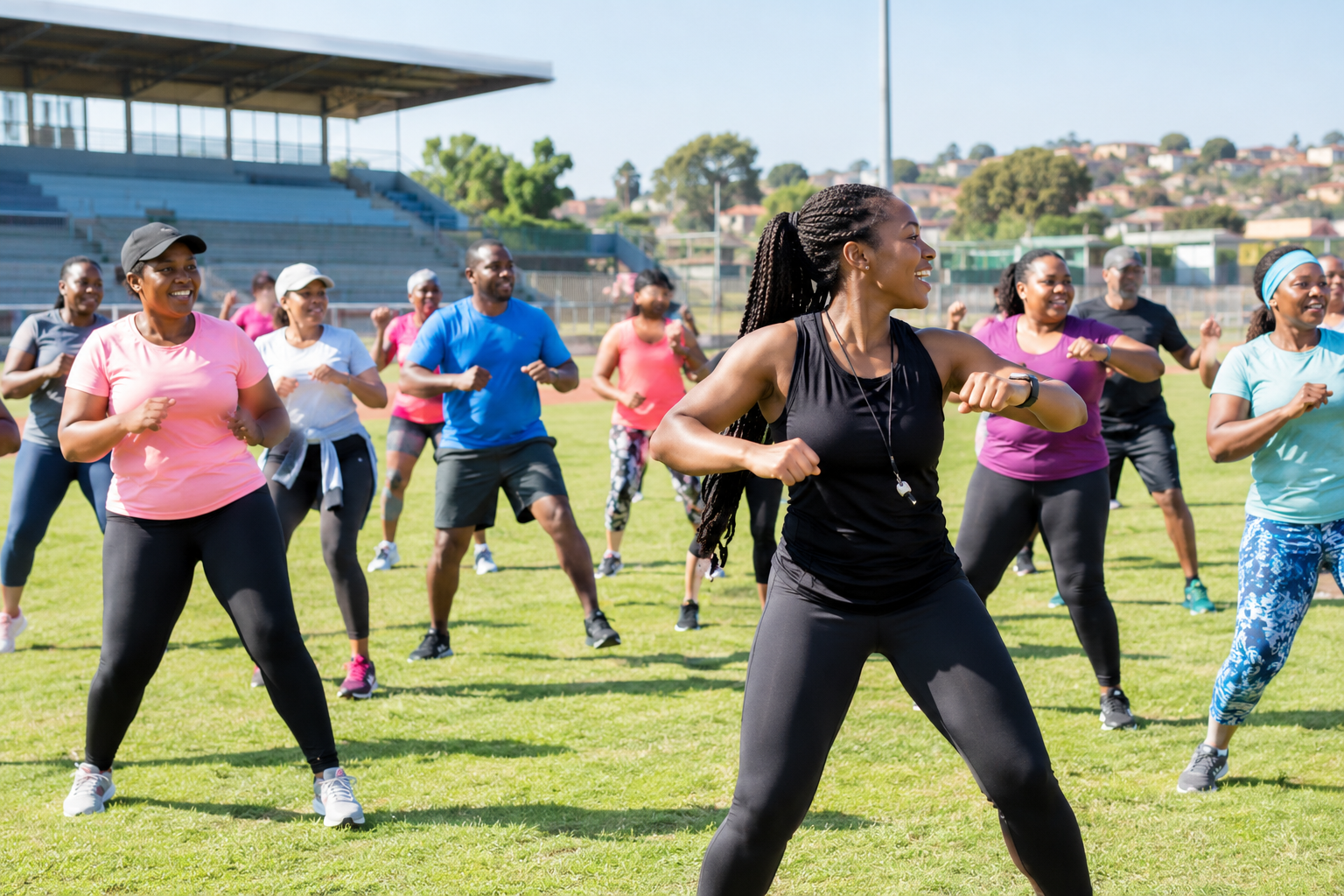
“Residents gathered at Rabie Ridge Stadium in Johannesburg on Saturday, 24 October 2026, for a community aerobics session designed to promote physical fitness, healthy living and social participation. The City of Johannesburg is encouraging accessible recreational activities that help people of different ages and fitness levels become more physically active without requiring expensive gym memberships or specialised equipment.”
Johannesburg Community Aerobics Initiative Promotes Accessible Fitness and Healthier Living
JOHANNESBURG, South Africa — 26 October 2026
Community aerobics puts fitness in the spotlight
Community-based physical activity is receiving renewed attention in Johannesburg following an aerobics session held at Rabie Ridge Stadium on Saturday, 24 October 2026. The event brought together residents of different ages and fitness levels for an energetic exercise programme aimed at promoting healthier lifestyles, improving physical wellbeing and encouraging community participation.
Reported by the City of Johannesburg on 26 October, the initiative forms part of municipal efforts to make sport and recreation more accessible to residents. With fitness instructor Samuel Fatule guiding participants through energetic movements, the gathering demonstrated how organised group exercise can provide an approachable introduction to regular physical activity.
Rather than requiring sophisticated gym equipment or expensive membership fees, the session relied on movement, music, instruction and collective participation. This approach is particularly relevant to people who want to improve their fitness but face financial, practical or social barriers to joining conventional fitness facilities.
The initiative also highlighted the value of creating welcoming environments where beginners can participate alongside people with greater exercise experience. According to the municipal report, participants enjoyed an opportunity to improve their wellbeing while connecting with fellow residents.
Making exercise accessible to more residents
Access remains an important consideration when encouraging healthier lifestyles. Gym memberships, specialised equipment, transport expenses and structured training programmes can make exercise difficult to maintain for some households. Community activities offer an alternative by bringing organised physical activity into neighbourhood spaces.
When suitable facilities are available, residents can participate in walking groups, aerobics classes, recreational sports and other activities without investing heavily in equipment. These options can help people establish a routine that fits their circumstances and physical abilities.
The Rabie Ridge event illustrates how municipal recreation programmes can contribute to this objective. By using a community stadium, organisers provided a shared environment where people could exercise together under the guidance of an instructor.
However, accessibility involves more than financial cost. Convenient scheduling, safe venues, inclusive instruction and consideration for people with disabilities can also influence participation. Residents may be more likely to attend when activities are welcoming, reasonably close to home and suitable for different levels of physical ability.
For Johannesburg, sustaining community programmes could help extend the benefits of organised recreation beyond individual events. Regular sessions, clear public communication and partnerships with local organisations may encourage residents to return and develop lasting exercise habits.
Why regular physical activity matters
Physical activity supports several aspects of health, including cardiovascular fitness, muscular strength, mobility and the ability to perform everyday tasks. Depending on the intensity and duration of an activity, exercise can also contribute to improved stamina, weight management and better sleep.
Aerobics combines rhythmic movement with sustained physical effort. Participants may perform steps, arm movements and coordinated routines that increase breathing and heart rate. The intensity can often be adjusted by changing the speed, range of movement or complexity of the exercises.
For people who have been inactive, beginning with manageable activity is generally more practical than attempting demanding workouts immediately. Short sessions can provide a starting point, with duration and intensity increasing gradually as fitness improves.
The World Health Organization recommends that adults aim for 150 to 300 minutes of moderate-intensity aerobic physical activity each week, or an equivalent amount of vigorous activity, alongside muscle-strengthening activities on at least two days. These recommendations are long-term targets, not requirements that beginners must achieve immediately.
Even modest increases in movement can be worthwhile for people who currently spend much of their day sitting. Walking more frequently, taking the stairs when appropriate, dancing at home or attending a community exercise class can all help reduce sedentary time.
Nevertheless, the benefits depend on individual circumstances, consistency and the suitability of the activity. People with significant health concerns or symptoms during exercise should seek appropriate professional advice before undertaking strenuous routines.
Group exercise can strengthen social connections
The Rabie Ridge gathering also highlights a benefit that can be overlooked in discussions about fitness: social connection. Exercising with other people creates opportunities for encouragement, conversation and shared achievement.
For some residents, exercising alone may feel intimidating or difficult to sustain. A group session can provide structure and a sense of belonging, while an instructor helps participants understand the movements and follow the routine.
The municipal report also included comments from resident Lerato Molungoa, who described feeling safer exercising with a group than running alone on the streets. Her experience points to an important issue in public recreation: people’s decisions about physical activity can be influenced by their perceptions of safety as well as by their motivation or physical condition.
This consideration is especially important when planning opportunities for women and other residents who may feel uncomfortable exercising alone in public spaces. Organised sessions can provide a more structured setting, although their effectiveness depends on appropriate supervision, venue management and local safety arrangements.
Group activities can also encourage intergenerational participation. When sessions accommodate different abilities and ages, family members and neighbours may find it easier to develop shared healthy routines.
However, participation should remain voluntary and inclusive. Beginners should not feel pressured to match the performance of experienced participants, and instructors should offer lower-impact alternatives where possible.
Community recreation and mental wellbeing
Physical activity is relevant to mental wellbeing as well as physical health. Regular movement can help some people manage stress, improve sleep and support their overall sense of wellbeing. Enjoyable activities can also provide a break from work pressures and everyday responsibilities.
Aerobics offers a combination of movement, music and social interaction that may make exercise more enjoyable for participants who find repetitive training difficult to maintain.
Still, exercise should not be presented as a replacement for professional mental healthcare. People experiencing persistent distress or mental health symptoms may benefit from appropriate clinical support alongside activities that suit their circumstances.
Community recreation programmes can contribute by creating welcoming opportunities for residents to spend time outdoors, interact with others and develop healthy routines. Their value may extend beyond the immediate exercise session when participation becomes a regular part of community life.
Building a sustainable fitness routine
The success of community fitness initiatives depends partly on whether residents can continue participating after an introductory event. One-off activities can generate enthusiasm, but consistent opportunities are more useful for establishing long-term habits.
Residents interested in improving their fitness can start by selecting an activity they enjoy and scheduling realistic periods for movement during the week. People who are new to exercise may begin with brief walks or gentle, low-impact routines before progressing to longer or more demanding sessions.
During aerobics, participants should use comfortable clothing and supportive footwear, remain hydrated and adapt movements to their abilities. Warming up before more demanding activity and cooling down afterwards can help make sessions more manageable.
It is also important to distinguish ordinary exertion from warning signs. Chest pain, faintness, unusual breathlessness or other severe or concerning symptoms warrant stopping exercise and obtaining appropriate medical assistance.
Progress should be measured through sustainable improvements rather than competition with others. Attending sessions consistently, walking more comfortably or finding everyday activities easier can all represent meaningful progress.
Local authorities can support these efforts by publicising available recreation programmes, providing accessible facilities and consulting residents about the activities they want. Partnerships with schools, community groups and qualified instructors may further broaden participation.
A wider public-health opportunity
The Johannesburg initiative sits within a broader conversation about preventive healthcare and the importance of making healthy behaviour practical. In the Western Cape, a separate programme called WOWRewards is testing whether food-voucher incentives can encourage preventive healthcare activities, including approved community exercise sessions and recognised parkrun events.
The Western Cape Department of Health and Wellness launched the pilot in Westridge, Mitchells Plain, on 10 October 2026. Eligible participants can earn up to R100 in monthly rewards for approved activities, with the programme intended to test whether incentives encourage healthier habits and more consistent preventive care.
The two initiatives are different: Johannesburg’s reported event focused on community aerobics, while WOWRewards combines incentives with several healthcare activities. Nevertheless, both illustrate approaches to making participation in healthier routines more achievable.
Evidence from such programmes will be important when assessing their longer-term value. Relevant measures could include repeat attendance, participant feedback, sustained physical activity and whether programmes reach residents who face the greatest barriers to participation.
The available reports do not establish that either initiative has already produced measurable improvements in population health. Their longer-term impact will depend on implementation, sustained participation and careful evaluation.
Looking ahead
The Rabie Ridge aerobics session provides a practical example of how community recreation can encourage physical activity while bringing residents together. Its central message is straightforward: fitness does not always require costly equipment, specialised facilities or highly demanding training.
For residents, the next step is to find suitable opportunities for regular movement and build gradually towards achievable goals. For municipal authorities, the challenge is to maintain accessible programmes, communicate opportunities clearly and ensure that activities remain inclusive and safe.
As Johannesburg continues promoting healthier lifestyles, community-based exercise may offer a useful way to connect public recreation with everyday wellbeing. Sustained investment, resident participation and reliable evaluation will help determine how effectively these opportunities translate into lasting benefits.



