




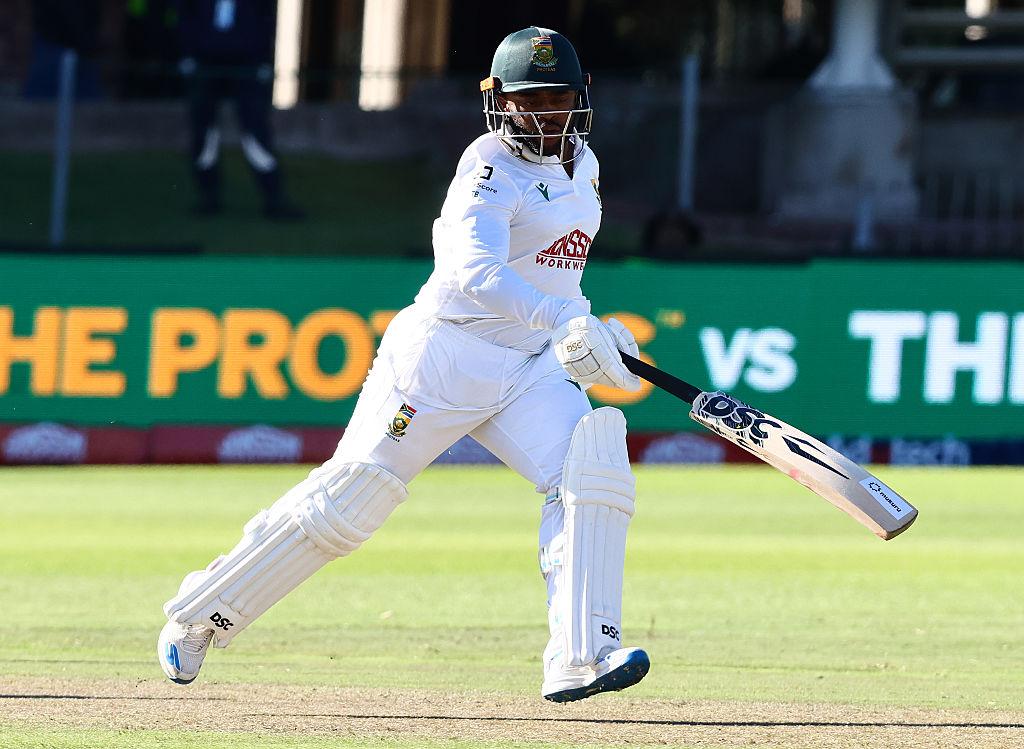
“South African captain Temba Bavuma produced a career-best 179 runs to rescue the Proteas from a precarious position and guide them to 425 for nine declared against Australia in the second Test at St George’s Park in Gqeberha. Supported by important lower-order contributions from Marco Jansen and Simon Harmer, South Africa finished the third day in a commanding position, with Australia struggling at three runs for one wicket when play ended.”
Temba Bavuma’s Record-Breaking 179 Revives South Africa Against Australia in Gqeberha
Introduction: A remarkable turnaround for the Proteas
South African cricket received a significant boost on Tuesday, 20 October 2026, when captain Temba Bavuma delivered a magnificent innings of 179 runs against Australia in the second Test at St George’s Park in Gqeberha. His performance transformed a difficult match situation into an opportunity for South Africa to fight back in the three-match Test series, demonstrating the value of patience, discipline and leadership under pressure.
The Proteas had entered the third day facing a substantial challenge. After losing early wickets in difficult conditions during the opening two days, South Africa resumed their first innings at 97 for five. Australia’s fast bowlers had established control, leaving the home side vulnerable to a disappointing total. However, Bavuma remained composed and gradually shifted the balance through an innings that combined defensive discipline with carefully timed attacking strokes.
By the end of the day, South Africa had declared at 425 for nine, establishing a substantial first-innings lead. Australia then lost Nic Maddinson for a duck to returning fast bowler Kagiso Rabada and finished at three for one. Although rain had already reduced the available playing time, South Africa had dramatically improved their prospects of levelling the series.
Bavuma demonstrates exceptional resilience
Bavuma’s innings was the defining feature of the day’s cricket. The 36-year-old captain scored 179 from 334 deliveries, striking 18 fours and one six. It surpassed his previous Test best of 172 against the West Indies in 2023 and represented his fifth century in Test cricket.
His contribution was particularly important because of the circumstances surrounding his arrival at the crease. South Africa had lost two early wickets on the opening day, and Bavuma was required to confront an Australian attack capable of exploiting the movement available to fast bowlers. Persistent rain and overcast conditions complicated batting during the first two days, making every scoring opportunity valuable.
Rather than attempting to force the pace, Bavuma concentrated on protecting his wicket. He left deliveries outside off stump, defended balls directed towards his stumps and waited for opportunities to score. His approach prevented Australia from completing the collapse that appeared possible when the Proteas lost their fifth wicket.
The captain’s progress also illustrated how a Test innings can develop over time. His early runs came through patience and careful shot selection. Once the weather improved and the pitch offered more assistance to batters, he expanded his range of strokes, finding boundaries through the off side and playing confidently against deliveries that could be attacked.
His century arrived after 223 deliveries. However, reaching three figures did not end his responsibility. With South Africa still needing runs to establish a competitive total, Bavuma continued batting and helped the lower order build partnerships that eventually carried the team beyond 400.
According to the International Cricket Council’s match report, the innings became a career-best achievement and placed South Africa in a commanding position after they had been reduced to 97 for five. The performance also reinforced Bavuma’s importance to the team as a leader capable of responding to difficult circumstances.
Marco Jansen provides crucial support
Marco Jansen played a decisive role in South Africa’s recovery. The tall left-handed all-rounder scored 85 runs from 100 deliveries, adding aggression to Bavuma’s measured approach.
Their seventh-wicket partnership produced 132 runs and changed the character of the innings. Australia had been concentrating on removing the remaining recognised batters, but Jansen’s arrival created a new challenge. He was willing to attack loose deliveries, while Bavuma continued to manage risk and protect his wicket.
The partnership required both players to understand their different roles. Jansen’s attacking intent forced Australia to adjust field placements and reconsider bowling lengths. Bavuma, meanwhile, ensured that an aggressive passage of play did not become an uncontrolled exchange of wickets.
Their stand was particularly significant because it came after South Africa had lost much of their top order. Lower-order partnerships can be difficult to construct against experienced fast bowlers, especially when the fielding team believes that the innings is approaching its conclusion.
Jansen eventually fell to Scott Boland, who completed an impressive five-wicket haul. Nevertheless, the damage had already been done. The partnership had lifted South Africa beyond the immediate danger zone and created a foundation for another important stand.
Jansen’s innings demonstrated why all-rounders remain valuable in Test cricket. Their contribution extends beyond bowling, particularly when a team needs runs from positions where conventional batting specialists are no longer available.
Simon Harmer and the record partnership
Simon Harmer continued South Africa’s recovery after Jansen’s dismissal. The experienced spinner scored a career-best 82 runs, forming an 183-run eighth-wicket partnership with Bavuma.
The stand established a South African record for the eighth wicket against the backdrop of an innings that had threatened to collapse. It also represented the largest of the two major partnerships that rescued the Proteas.
Harmer’s contribution was important because Australia needed to dismiss him quickly to expose the remaining tail. Instead, he showed patience, selected his attacking opportunities and forced the Australian bowlers to continue working long after they might have expected the innings to finish.
The partnership also placed a considerable physical demand on Australia’s attack. Fast bowlers had already spent extensive periods on the field, and the improving batting conditions made it increasingly difficult to generate breakthroughs.
Harmer eventually fell to Marnus Labuschagne, while Bavuma was dismissed by Mitchell Starc for 179. With South Africa approaching a substantial total, the team declared at 425 for nine.
The contributions from Bavuma, Jansen and Harmer demonstrated that Test matches are frequently decided by partnerships rather than isolated individual achievements. Bavuma supplied the stability, Jansen changed the momentum and Harmer helped turn a recovery into a commanding first-innings total.
Australia’s bowlers lose control
Australia’s bowling performance presented a contrast between the opening stages and the third day. Scott Boland had been particularly effective, finishing with five wickets for 81 runs. Mitchell Starc also claimed three wickets for 89 runs, continuing to challenge the South African batters with pace and movement.
However, Australia’s attack struggled to maintain the same level of control as the innings progressed. The improved weather created more favourable batting conditions, while the South African lower order made the visitors work for every breakthrough.
Captain Pat Cummins went wicketless during his lengthy spell, an unusual outcome for a bowler accustomed to influencing important Test matches. Josh Hazlewood’s availability had also been affected by illness earlier in the contest, limiting Australia’s options during a critical period.
These circumstances did not erase the quality of Australia’s early bowling. Instead, they demonstrated how quickly the direction of a Test can change when a team fails to finish off its opponents after establishing an advantage.
The absence of a specialist frontline spinner, Nathan Lyon, also became relevant as the innings extended. Australia had fewer conventional options for controlling the scoring against batters who were increasingly comfortable on the surface.
Nevertheless, the visitors remained capable of fighting back. A first-innings collapse by South Africa had initially appeared likely, and Australia’s bowlers had done much of the hard work needed to create that opportunity. Their challenge was to recover their discipline and find a way to take wickets more consistently.
Kagiso Rabada makes an immediate impact
South Africa’s improved position received another boost when Kagiso Rabada returned to Test cricket. The fast bowler had missed the first Test and had been sidelined by injury, making his availability an important development for the hosts.
Rabada made an immediate impression by dismissing Nic Maddinson in his first over. Maddinson edged a delivery to the slip cordon, giving South Africa the breakthrough they needed before the close of play.
Australia ended the day at three for one, still trailing South Africa by 422 runs. Travis Head and nightwatchman Boland remained at the crease when bad light brought the day’s play to an end.
Rabada’s wicket mattered for more than the number on the scoreboard. It offered South Africa an opportunity to attack Australia’s batting order while the visiting team was under pressure to recover from a substantial deficit.
The Proteas will need their fast bowlers to combine accuracy with sustained intensity if they are to convert their advantage into victory. Rabada’s return strengthens their options, but the remaining batters in Australia’s lineup possess the ability to resist pressure and build partnerships.
The declaration and the race against time
South Africa’s declaration at 425 for nine was a major tactical decision. By ending their innings, the hosts gave themselves an opportunity to dismiss Australia and potentially establish the conditions required for a series-levelling victory.
However, the match had already suffered considerable interruptions because of rain during the first two days. That lost time made the declaration particularly important, since South Africa needed enough overs to bowl Australia out and, if necessary, complete another innings.
The timing of the declaration also prompted debate. Some observers argued that South Africa could have declared earlier to give Rabada and the other fast bowlers more time to attack before the close. Others could point to the importance of securing a large total and ensuring that the lower order had taken Australia out of contention for an easy first-innings lead.
Bavuma’s approach reflected the competing priorities of Test captaincy. A declaration must balance scoreboard security, the state of the pitch, the remaining time and the strengths of the bowling attack.
With Australia at three for one, South Africa had created an excellent opportunity. However, the final outcome remained uncertain. A substantial first-innings lead does not automatically produce victory, particularly when weather has reduced the available playing time.
What the performance means for the series
The second Test carries considerable importance following Australia’s victory in the opening match in Durban. South Africa needed a strong response to prevent the visitors from strengthening their position in the three-match series.
Bavuma’s innings has provided that response, at least in terms of the match situation. His performance has demonstrated that the Proteas can recover from difficult positions against a high-quality opposition and that their lower order can contribute meaningfully when the top order fails.
For the captain personally, the innings represents an important achievement. A career-best Test score against Australia, made under pressure and supported by record partnerships, strengthens his record as a batter and leader.
It also offers a reminder that a player’s value cannot be measured solely through short periods of poor form. Test cricket requires sustained concentration, technical adjustments and the ability to respond to changing conditions. Bavuma displayed those qualities throughout an innings that lasted more than nine hours.
For Australia, the match is a test of resilience. The visitors must respond to South Africa’s recovery without allowing frustration to affect their bowling or batting. Their attack has already demonstrated its ability to take wickets, but the remaining challenge is to build sustained pressure after a difficult day.
The result will also shape preparations for the third Test in Cape Town, scheduled to begin on 27 October. A South African victory in Gqeberha would level the series and create a decisive final match. An Australian recovery, meanwhile, could preserve their advantage.
Conclusion: A defining day for South African cricket
Temba Bavuma’s 179 will be remembered as a major innings in South Africa’s attempt to recover against Australia. It combined technical discipline, mental strength and effective leadership at a moment when the home side faced the possibility of another damaging defeat.
The contributions of Marco Jansen and Simon Harmer ensured that Bavuma’s effort translated into a substantial total rather than remaining an individual achievement. Their partnerships carried South Africa to 425 for nine declared, while Rabada’s immediate breakthrough left Australia under pressure at three for one.
The Proteas had not yet secured victory at the end of the third day, and the lost playing time meant that the contest remained dependent on what happened next. Nevertheless, South Africa had transformed the match and given themselves a realistic opportunity to level the series.
The next day’s play would test the visitors’ batting depth and the hosts’ ability to sustain pressure. For South African supporters, however, Bavuma’s innings had already delivered an important message: determination, partnership-building and composure can change the direction of a match, even when the situation appears unfavourable.



