




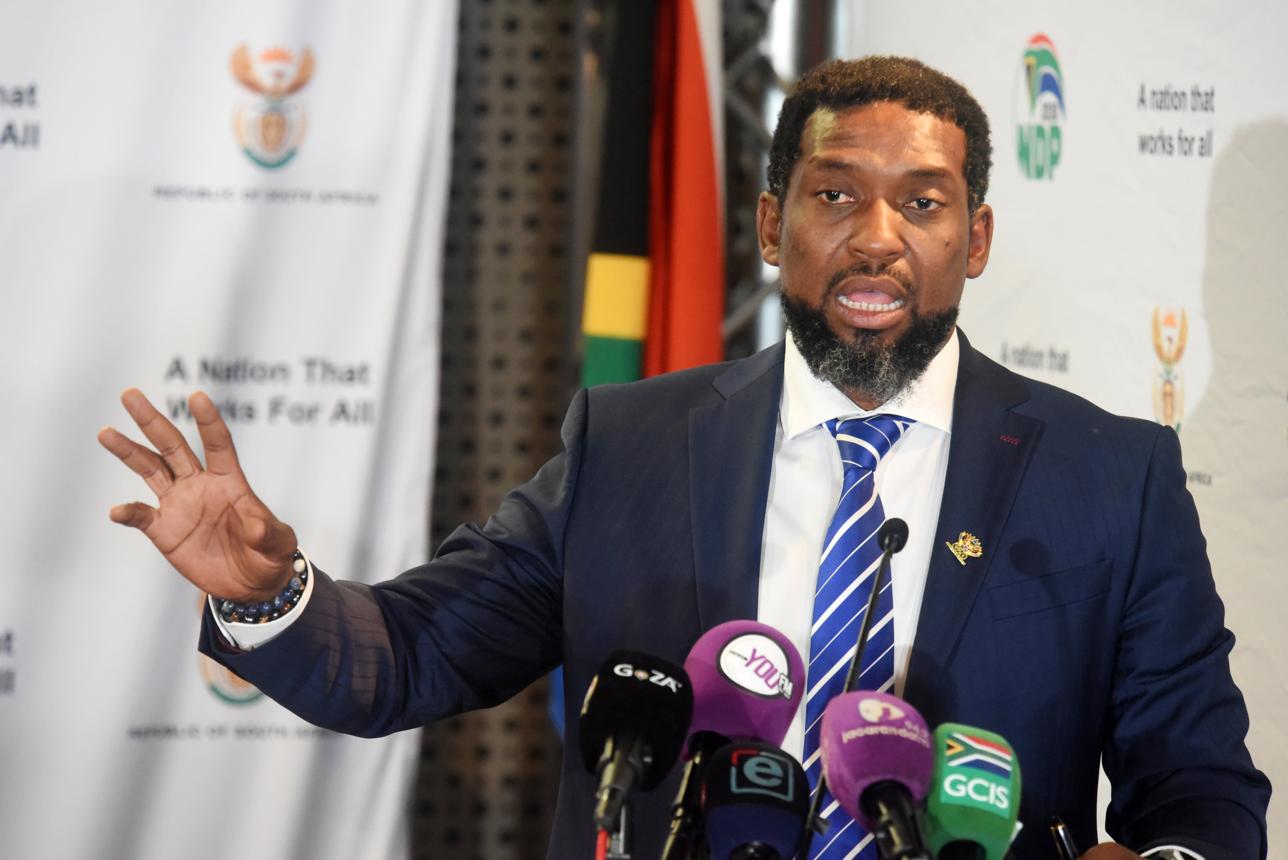
“South Africa’s Higher Education and Training Minister, Buti Manamela, has urged universities to rethink teaching and assessment as artificial intelligence transforms research, learning and the workplace. He also called for stronger domestic AI research, African-language technologies, trustworthy data and collaboration to prevent South Africa from becoming permanently dependent on systems developed elsewhere.”
South Africa Urged to Transform University Education as Artificial Intelligence Reshapes Learning
Universities face a new artificial intelligence challenge
South Africa’s higher education sector is facing growing pressure to adapt to artificial intelligence (AI), as government calls for universities to reconsider how they teach students, assess academic performance and prepare graduates for employment. Higher Education and Training Minister Buti Manamela has warned that institutions must respond to technological change by strengthening critical thinking, research capability and the country’s ability to develop its own AI technologies.
In a report published on 14 October by the South African Government News Agency, Manamela outlined the opportunities and risks associated with generative AI during a national webinar titled The Intellectual Directions of Higher Education in South Africa. The event was convened by Nelson Mandela University, the University of the Free State, Rosebank International and Higher Education Media Services.
The minister’s message was clear: universities cannot respond to AI simply by attempting to detect whether students have used it to complete assignments. Instead, they must reconsider what meaningful learning looks like when machines can produce essays, summaries and other written material within seconds.
Rethinking teaching and assessment
Generative AI tools can produce convincing answers, organise information and assist with academic writing. Although these capabilities may improve productivity, they also create challenges for educators attempting to determine whether students genuinely understand the material they submit.
Manamela argued that universities should place greater emphasis on students’ ability to formulate meaningful questions, evaluate evidence, exercise ethical judgement, collaborate with others and apply knowledge to unfamiliar problems.
This approach could encourage institutions to move beyond assessments that reward the reproduction of information. Oral examinations, supervised practical exercises, research presentations and project-based assignments are among the methods universities could consider when developing assessment systems that measure understanding.
However, these approaches would require careful planning. Large classes, limited teaching resources and unequal access to technology could make implementation difficult for some institutions. Universities would therefore need to balance academic standards with realistic staffing, infrastructure and funding arrangements.
The objective is not necessarily to prohibit AI use. Instead, students should learn when the technology is useful, when it is unreliable and why human judgement remains essential.
AI offers opportunities for research and teaching
Despite the risks, AI could provide important benefits for South African universities.
Researchers may use AI-assisted tools to organise large datasets, identify patterns, explore research questions and accelerate certain stages of analysis. Educators could use the technology to develop teaching materials, provide additional explanations and support students who need help understanding difficult concepts.
Translation tools could also help make academic resources accessible to students who speak different languages. Administrative applications might reduce repetitive work, allowing staff to spend more time supporting students and conducting research.
Nevertheless, these benefits depend on how systems are selected and implemented. AI-generated information can contain fabricated facts, misleading references and biased conclusions. Consequently, universities must ensure that students and academics verify important claims against reliable sources rather than treating fluent computer-generated answers as authoritative.
Academic integrity policies will also need to explain acceptable AI use, disclosure requirements and responsibility for submitted work. Institutions should distinguish between using AI as a learning aid and submitting unverified machine-generated material as independent research.
Building South Africa’s own AI capabilities
One of the most significant aspects of Manamela’s address was his call for South Africa to develop its own artificial intelligence capabilities instead of relying indefinitely on technologies created elsewhere.
AI development requires more than access to applications. It depends on research infrastructure, computing resources, high-quality datasets, specialist skills and sustained cooperation between universities, government and industry.
Without these foundations, South African institutions could become consumers of imported technologies while having limited influence over how those systems are designed, trained and governed.
Domestic research could help address problems specific to South Africa and the wider African continent. These include improving public services, strengthening agricultural productivity, supporting healthcare delivery and developing tools that work effectively across local languages.
Such ambitions require investment. Universities need researchers, computing facilities, reliable digital infrastructure and opportunities to test innovations in real-world settings. Partnerships with businesses and public institutions could help turn academic research into useful products and services.
Open research resources and responsible data-sharing arrangements could also broaden participation, provided that privacy, security, intellectual property and ethical obligations are respected.
African languages must be represented
Language is another important consideration in South Africa’s AI future.
Many widely available AI systems perform differently across languages, particularly when training data is limited. If local languages receive insufficient representation, communities could face barriers when attempting to use AI-powered educational resources, public services and digital tools.
Manamela emphasised the importance of African-language technologies, multilingual teaching resources and scholarly vocabularies. Developing these resources could improve access to knowledge while supporting the production of research that reflects South Africa’s diverse communities.
The challenge extends beyond translating English content. Effective language technologies must account for meaning, cultural context, regional usage and specialised terminology.
Universities could contribute by supporting linguistic research, creating responsibly governed datasets and collaborating with language specialists, teachers and technology developers.
These efforts could also help ensure that African knowledge contributes to the development of future AI systems instead of being treated merely as material to be interpreted through externally developed technologies.
Addressing bias, misinformation and dependence
AI systems reflect characteristics of their training data, design choices and operating environments. As a result, they can reproduce existing inequalities or generate misleading information.
In higher education, these risks could affect research quality, student evaluation and the credibility of academic publications. AI-generated references that do not exist, for example, can undermine scholarly work if researchers fail to verify their sources.
Institutions should therefore establish practical governance frameworks covering privacy, transparency, data protection, human oversight and accountability.
Students should be taught to examine the origin of information, compare claims with independent evidence and recognise the limitations of automated systems. Academics also need opportunities to develop their own AI literacy.
Dependence on proprietary systems presents another concern. If universities rely heavily on external platforms, their access to essential tools may be influenced by subscription costs, licensing conditions, changing product features and the decisions of private technology providers.
A balanced approach could combine carefully selected commercial services with open resources, local research and partnerships that strengthen domestic expertise.
Funding and access remain central
AI transformation cannot be separated from the financial pressures facing South African universities.
Manamela highlighted the relationship between student funding, institutional sustainability and access to higher education. He argued that supporting students is insufficient if universities lack the resources required to maintain laboratories, libraries, research programmes and effective teaching environments.
Introducing AI responsibly may require additional spending on connectivity, staff training, cybersecurity, computing resources and technical support. Institutions with stronger financial positions may be better placed to make these investments, potentially widening existing differences between universities.
Government and institutional leaders will therefore need to consider how technological improvements can benefit students across the system, including those from disadvantaged backgrounds.
Students should not be expected to purchase expensive tools or devices simply to meet new academic requirements. Clear institutional policies and accessible learning resources will be important to prevent AI adoption from creating additional barriers.
Connecting universities with communities and employers
The minister also called for stronger partnerships between universities, technical and vocational education and training colleges, community colleges, employers, labour organisations and civil society.
These partnerships could help align education with changing workplace requirements. As AI becomes more common in professional environments, graduates will need technical competence alongside communication, problem-solving, ethical reasoning and adaptability.
Employers could help identify emerging skills needs, while universities provide foundational education and opportunities for research. Technical colleges could contribute practical training, and community organisations could help identify local problems that deserve attention.
Potential applications include agricultural information services, water management, public health research and improved municipal administration. Such projects would require evidence-based design and appropriate safeguards, but they could demonstrate how university research contributes to everyday development challenges.
Lifelong learning will also become increasingly important. Workers may need opportunities to update their skills as digital tools and job responsibilities change.
The road ahead for South African higher education
Manamela’s address places artificial intelligence within a broader debate about the purpose of universities, access to knowledge and South Africa’s technological independence.
The central challenge is to ensure that AI strengthens rather than weakens education. Institutions must help students use the technology productively while preserving the ability to think independently, evaluate evidence and take responsibility for their conclusions.
Achieving this will require practical assessment reforms, investment in research infrastructure, stronger local-language resources and collaboration across the education and technology sectors.
It will also require universities to make deliberate choices about which AI systems they adopt, how student information is protected and how academic standards are maintained.
The developments outlined by the minister do not, by themselves, establish a national implementation timetable or demonstrate that all universities have adopted new AI policies. Progress will depend on subsequent decisions, available funding and the capacity of individual institutions.
Nevertheless, the direction of the debate is significant. South Africa’s universities are being challenged not merely to accommodate artificial intelligence, but to help determine how it is developed, evaluated and used.
If that ambition is supported by sustained investment and inclusive planning, AI could become a valuable tool for research, teaching and national development. If institutions fail to address unequal access, unreliable information and technological dependence, the same transformation could reinforce existing weaknesses.
The task ahead is therefore both educational and strategic: prepare graduates for an AI-enabled economy while building the knowledge, skills and infrastructure needed for South Africa to shape its own technological future.



