




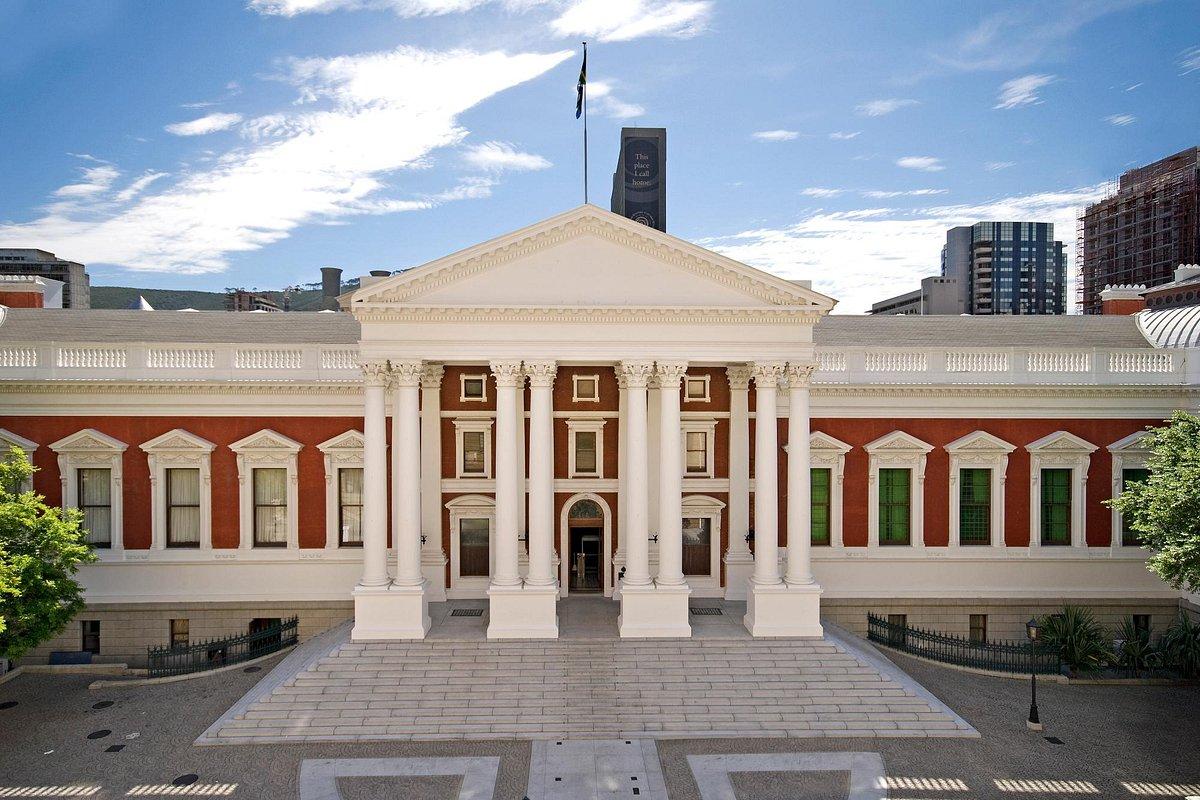
“South Africa’s Standing Committee on Finance is scheduled to hear responses from National Treasury and SARS concerning public submissions on three proposed tax-law measures, including amendments to taxation legislation, tax administration rules and revenue laws. The proceedings provide an opportunity for professional bodies, businesses and other stakeholders to raise concerns about the proposed changes before Parliament continues its legislative scrutiny.”
South Africa’s proposed tax legislation faces parliamentary scrutiny as Treasury and SARS prepare responses
Parliamentary scrutiny places tax legislation in focus
South Africa’s legislative agenda is placing taxation and revenue administration under renewed parliamentary scrutiny as the Standing Committee on Finance engages with National Treasury and the South African Revenue Service (SARS) on proposed amendments to tax legislation. The committee’s scheduled proceedings on Wednesday, 14 October 2026, concern submissions received on three draft legislative measures that could influence the administration of taxation and the operation of the country’s revenue framework.
According to Parliament’s announcement published on 13 October, the committee is expected to hear responses from the two institutions on the draft Taxation Laws Amendment Bill, the Tax Administration Laws Amendment Bill, and the Rates and Monetary Amounts and Amendment of Revenue Laws Bill. Stakeholders who participated in earlier public hearings are also being given an opportunity to comment.
The development matters because tax legislation affects government revenue, business compliance, public finances and the relationship between the state and taxpayers. Parliamentary consideration provides a formal setting in which the government’s proposals can be examined, technical concerns can be raised and lawmakers can assess whether amendments are sufficiently clear, workable and consistent with broader public interests.
However, the committee meeting should not be confused with the final enactment of legislation. The measures remain draft bills subject to the relevant legislative processes. The available announcement does not confirm that the committee has adopted the bills, that Parliament has passed them or that any new provisions have come into force.
Three proposed bills form the centre of the proceedings
The first measure, the Taxation Laws Amendment Bill, concerns proposed changes to taxation legislation. Such amendments can address how particular tax provisions operate, clarify existing rules or adjust the treatment of specified transactions and circumstances. Their practical effects depend on the actual clauses in the draft legislation.
For businesses and individuals, the details matter more than the bill’s title. Changes to definitions, thresholds, deductions, exemptions or other tax provisions can affect financial planning and reporting obligations. Nevertheless, the parliamentary notice does not specify the individual amendments under consideration, so it would be premature to attribute a particular tax increase, relief measure or new obligation to this bill without examining its text.
The second measure, the Tax Administration Laws Amendment Bill, focuses on legislation governing the administration of taxation. Tax administration is important because the effectiveness of a tax system depends not only on the taxes Parliament authorises but also on how consistently and transparently those taxes are assessed, collected and enforced.
Administrative rules influence the relationship between SARS and taxpayers. They can affect filing procedures, information requirements, dispute processes, enforcement mechanisms and the handling of taxpayer obligations, depending on the provisions proposed. Clear rules can improve compliance and reduce uncertainty, while poorly designed procedures can create unnecessary costs and disputes.
The third measure, the Rates and Monetary Amounts and Amendment of Revenue Laws Bill, is also included in the committee’s scheduled review. Its full implications must be assessed against the actual provisions and supporting explanatory documents. The title alone does not establish which rates or monetary amounts would change or how those changes would affect specific households and businesses.
Together, the three bills illustrate why parliamentary scrutiny of revenue legislation requires careful consideration of both technical drafting and economic consequences.
National Treasury and SARS must address stakeholder concerns
The scheduled engagement brings the government’s fiscal authorities into direct discussion with stakeholders who submitted comments during public hearings on 30 September 2026. Parliament identifies participants including the South African Institute of Taxation, the South African Institute of Chartered Accountants, PKF, the Alternative Information Development Centre, Vaping Saved My Life, British American Tobacco South Africa, the South African Liquor Brand Association, Wine SA, South African Breweries and an individual participant, Keitumetse Sesana.
These participants represent a range of professional, commercial and public-interest perspectives. Their involvement highlights the fact that tax policy can affect industries and communities differently, even when the underlying legislation forms part of a single national revenue framework.
Professional tax and accounting organisations can contribute technical assessments of whether proposed rules are clear, administratively feasible and consistent with established accounting and compliance practices. Businesses may examine how changes could affect operating costs, reporting responsibilities, investment decisions and the predictability of their tax obligations.
Public-interest organisations can raise broader questions about fairness, distributional consequences and the effects of fiscal policy on vulnerable communities. Industry representatives, meanwhile, may focus on the implications of particular provisions for their sectors.
These perspectives do not necessarily agree. That is precisely why public participation and committee deliberations are important. They allow competing arguments to be recorded and considered through an institutional process rather than leaving policy questions solely to executive departments.
The parliamentary notice confirms that Treasury and SARS are scheduled to respond to submissions. It does not, however, disclose the substance of every submission or establish that the institutions have accepted any particular recommendation.
Why the legislative process matters to taxpayers
Tax legislation has implications beyond government departments and parliamentary committees. Households, employers, small businesses, professional firms and large corporations all depend on rules that are understandable and sufficiently predictable to support responsible financial decisions.
For individual taxpayers, changes to applicable tax provisions may affect take-home income, savings decisions or the reporting of taxable transactions. The actual effect will depend on the specific measures eventually adopted, their commencement dates and the circumstances of each taxpayer.
For small businesses, the clarity of administrative requirements can be especially important. Businesses with limited accounting resources may face additional costs when compliance procedures change or when guidance is unclear. Conversely, well-designed amendments may simplify procedures, resolve ambiguities or improve consistency.
Larger companies and professional advisers also need time to interpret new obligations, update systems and communicate changes to clients or employees. Consequently, implementation arrangements and explanatory guidance can be as important as the substantive provisions themselves.
These considerations demonstrate why legislation should be assessed through more than its stated policy objectives. Lawmakers must also consider implementation costs, the availability of guidance, the capacity of public institutions and the possibility of unintended consequences.
Nevertheless, it would be inaccurate to conclude that the current bills necessarily increase taxes or impose additional burdens on all taxpayers. That assessment requires a clause-by-clause examination of the proposed amendments and the supporting policy explanations.
Public participation strengthens accountability
The committee’s engagement with stakeholders forms part of the broader principle that legislation should be subjected to public scrutiny before final decisions are made. In a constitutional democracy, Parliament has responsibilities that extend beyond considering government proposals and voting on bills. Its committees also provide opportunities for evidence, questioning and oversight.
Public hearings allow affected parties to identify potential problems that policymakers may not have fully anticipated. Written submissions can explain technical difficulties, while oral engagement gives committees an opportunity to seek clarification and compare different positions.
This process can improve the quality of legislation when concerns are evaluated carefully and the resulting decisions are explained transparently. It can also strengthen public confidence by demonstrating that policymaking involves more than consultation after important decisions have already been made.
However, participation alone does not guarantee that every concern will be resolved. Committees must weigh competing interests, assess evidence and consider the government’s fiscal responsibilities. Some recommendations may be accepted, others amended, and others rejected.
The central question is whether the final legislative outcome is legally sound, administratively workable and consistent with the public interest.
For the tax bills under consideration, the next important information will be the content of the committee’s discussions, any recommendations emerging from them and the subsequent parliamentary timetable.
Revenue policy and the wider economic environment
Tax legislation is closely connected to the government’s ability to finance public services and manage the national budget. Revenue collected through the tax system supports public expenditure, including infrastructure, education, healthcare, social programmes and the administration of government.
At the same time, tax policy influences economic incentives. Businesses consider tax obligations when deciding whether to expand, hire workers, invest in equipment or enter new markets. Individuals may also adjust their spending and savings in response to changes in their financial circumstances.
Effective tax legislation therefore requires a balance between reliable public revenue and a regulatory environment that supports economic activity. Governments must consider revenue needs alongside fairness, administrative efficiency, compliance costs and the long-term sustainability of public finances.
The proposed amendments should be evaluated in that context, but without assuming that the bills will produce particular economic outcomes before their provisions and final status are established.
The quality of implementation will also matter. Even a technically sound law can create uncertainty if taxpayers receive inconsistent explanations or if administrative systems are not ready when the provisions commence. Clear communication from Treasury and SARS can help reduce misunderstandings and support voluntary compliance.
What happens after the committee meeting?
The scheduled engagement is one stage in a wider legislative process. The committee can examine the government’s responses and stakeholder comments, identify areas requiring further clarification and proceed according to the applicable parliamentary rules.
Depending on the issues raised and the status of each bill, further deliberations or amendments may be required before the relevant legislative stages are completed. The exact sequence and timing must be verified against Parliament’s official records rather than assumed from the announcement alone.
Members of the public and affected organisations can follow the progress of the bills through Parliament’s legislation pages, committee notices and published proceedings. These records are important for distinguishing proposals from approved laws and for confirming when any eventual provisions become legally effective.
Businesses should avoid making significant compliance changes based solely on a news headline. Instead, they should review the relevant bill texts, monitor official guidance and obtain appropriate professional advice where the proposed provisions could affect their obligations.
Similarly, commentators should distinguish between stakeholder proposals, government responses, committee recommendations and final legislation. Each represents a different stage of the decision-making process.
Conclusion: scrutiny, transparency and implementation will determine the outcome
South Africa’s finance committee proceedings on 14 October place proposed tax-law amendments at the centre of an important legislative review. The participation of National Treasury, SARS and stakeholders from professional, commercial and public-interest organisations creates an opportunity to examine the proposed measures from multiple perspectives.
The significance of the engagement lies not simply in the number of bills being considered but in the questions surrounding clarity, fairness, administrative feasibility and the effective management of public revenue.
For taxpayers and businesses, the immediate priority is to understand what the draft measures actually propose and to distinguish potential future changes from existing legal obligations. For Parliament, the responsibility is to examine the evidence, scrutinise the government’s responses and ensure that legislative decisions follow the required processes.
The final impact will depend on the wording of any amendments, the decisions taken through Parliament and the arrangements made for implementation. Until those developments are confirmed in official records, the meeting should be treated as a significant stage of scrutiny rather than proof that new tax rules have already been enacted.
Reporting note: The article above is an original analysis of the confirmed parliamentary announcement, not a claim that the meeting’s outcomes have already been reported. The source material available for this report does not establish the final decisions reached on 14 October 2026.



