




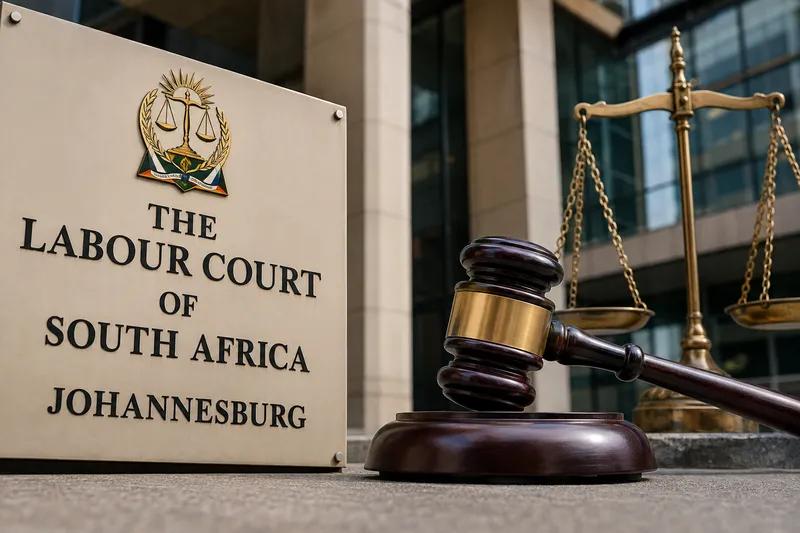
“South Africa’s Labour Court has criticised a CCMA arbitration ruling involving six former South African Post Office employees after the commissioner relied on a purported Constitutional Court judgment that could not be found and whose citation actually referred to an unrelated immigration case. Acting Judge Sean Snyman ruled that the arbitration should be halted, highlighting the serious consequences of relying on unverified AI-generated legal research in decisions affecting workers, employers and the administration of justice.”
South African Labour Court warns against AI-generated legal errors after fake judgment undermines Post Office dispute
Introduction: Artificial intelligence faces a critical test in South Africa’s legal system
Artificial intelligence is increasingly being used to research information, summarise documents and assist professionals with complex decisions. However, a recent Labour Court judgment in South Africa has demonstrated why the technology must be used cautiously when legal rights and institutional responsibilities are at stake.
The case involves the Commission for Conciliation, Mediation and Arbitration (CCMA), the state-owned South African Post Office (SAPO), and six former employees who challenged their dismissals. The court found that a CCMA ruling relied on a purported Constitutional Court judgment that could not be verified. Acting Labour Court Judge Sean Snyman raised serious concerns about the commissioner’s apparent reliance on artificial intelligence to substantiate the decision.
The matter has attracted attention because it illustrates a central limitation of generative AI: a system can produce legal-sounding explanations and apparently precise references without those references corresponding to real judgments.
The controversy is therefore not simply about whether a chatbot made a mistake. It concerns the responsibility of public officials to verify evidence, apply the law correctly and protect the integrity of decisions that affect people’s livelihoods.
The dispute involving six former Post Office employees
The dispute began after six SAPO employees were dismissed on 2 December 2025 over alleged misconduct. They subsequently pursued an unfair dismissal claim through the CCMA, seeking remedies that included reinstatement and back pay.
The CCMA is an independent statutory institution established to help resolve employment disputes. Its processes are intended to provide workers and employers with a relatively accessible alternative to lengthy and expensive court proceedings.
In this case, however, SAPO’s business-rescue status created a significant legal obstacle.
The Post Office entered business rescue in July 2023 as it sought to address its financial difficulties. Business rescue is a legal process designed to give a financially distressed company an opportunity to restructure its affairs and potentially return to commercial viability.
South African company law places restrictions on legal proceedings against a company undergoing business rescue. As explained in the court reporting, proceedings generally require the consent of the business-rescue practitioners or leave from the relevant court, subject to the applicable legal provisions.
This restriction became central to the dispute because the employees’ unfair dismissal claim was being advanced while SAPO remained in business rescue.
The commissioner, Menzi Fakude, ruled in August 2026 that the dispute could proceed to arbitration. The ruling relied on legal reasoning intended to support the proposition that business rescue did not prevent employees from accessing statutory labour-dispute mechanisms.
SAPO’s business-rescue practitioners challenged that approach, arguing that the ruling relied on a judgment that did not exist.
The fictitious judgment at the centre of the controversy
The most serious issue emerged from a legal authority cited in the commissioner’s decision.
The ruling referred to a purported Constitutional Court judgment identified as South African Post Office SOC Ltd (In Business Rescue) and Others v Communication Workers Union and Others [2023] ZACC 40.
The citation was used to support the argument that business rescue did not suspend labour legislation or deprive employees of access to dispute-resolution procedures.
However, SAPO’s legal representatives disputed the existence of the cited judgment. When Acting Judge Snyman independently investigated the reference, he was unable to locate the case either.
The citation number, 2023 ZACC 40, actually belongs to a Constitutional Court judgment in Rayment and Others v Minister of Home Affairs and Others, a case concerning immigration matters rather than the legal position of employees pursuing claims against a business-rescue company.
That distinction is important. A genuine judgment can be cited incorrectly, but a fabricated case presents a more fundamental problem: the supposed authority cannot be examined to determine what the court actually decided.
The Labour Court judge said the circumstances suggested that the commissioner might have relied on AI to find support for his reasoning. This was an inference from the apparent error, not proof establishing exactly which tool was used or how the false citation was generated.
The distinction matters for accurate reporting. The court’s central concern was the use of unverifiable legal authority and the failure to check it, regardless of the precise origin of the error.
What AI hallucinations mean in legal research
Generative AI systems produce responses by identifying and generating patterns in language and other learned information. They can be useful for explaining unfamiliar concepts, outlining arguments and suggesting research directions.
Nevertheless, they do not necessarily verify every statement against an authoritative legal database before presenting an answer.
An AI hallucination occurs when a system generates information that is false, unsupported or misleading while presenting it in a convincing manner. In legal research, this may take the form of an invented case name, an incorrect citation, a fabricated quotation or a genuine judgment described as establishing a principle it never addressed.
These mistakes can be difficult to identify because legal writing often follows a predictable structure. A fabricated citation may contain a plausible case title, a court abbreviation, a year and a reference number. A reader unfamiliar with the relevant database may assume that the reference is genuine.
The risk increases when users ask AI systems to produce legal arguments supporting a predetermined conclusion. A system may return a coherent explanation without providing a dependable basis for the claim.
This is why generated legal research must be treated as a starting point for verification rather than as an authoritative source.
In the SAPO dispute, the alleged use of an AI tool became especially consequential because the citation was used to support an official arbitration ruling. The problem therefore extended beyond an inaccurate sentence: it raised questions about the reasoning underlying an institutional decision.
Judge Snyman’s criticism and the decision to halt arbitration
In his judgment, handed down on 23 October 2026, Acting Judge Snyman strongly criticised the failure to verify the purported legal authority.
He described the circumstances as an untenable state of affairs and a serious failure to discharge the duties expected of an arbitrator with the necessary diligence and responsibility. His criticism focused on the fact that the cited authority could not be found and that its identifying reference belonged to an unrelated case.
The court also considered the wider concern that AI-generated material can enter legal proceedings without adequate scrutiny.
The immediate consequence was a halt to the planned arbitration. The court interdicted and restrained the CCMA and Commissioner Fakude from proceeding with the arbitration scheduled for 15 October 2026 while the relevant legal challenge continued.
This intervention did not determine every underlying issue in the employees’ unfair dismissal dispute. Rather, it addressed the immediate problem arising from the challenged ruling and the legal restrictions associated with SAPO’s business-rescue process.
The distinction is essential: stopping the arbitration at this stage does not mean that the six employees’ allegations of unfair dismissal have been finally resolved on their merits. Nor does the judgment, by itself, establish that AI was definitively used to produce the false authority.
The case instead demonstrates how a serious verification failure can interrupt a legal process and create additional work for the parties and the court.
Why the ruling matters beyond the Post Office
The case has implications for South African courts, employment tribunals, public institutions, law firms and businesses adopting AI-powered tools.
First, it reinforces the importance of independent professional judgment. Legal decision-makers must assess the relevant law and evidence rather than accept a generated explanation simply because it appears authoritative.
Second, it highlights the potential costs of unreliable AI-assisted work. When a decision is challenged because its legal foundations cannot be verified, the parties may face delays, additional legal expenses and uncertainty about the next steps. Employees seeking remedies can be particularly affected when a dispute takes longer to resolve.
Third, the case raises questions about institutional governance. Organisations that introduce AI into professional workflows need clear policies identifying which tasks may be assisted by AI, which decisions require human approval and how the accuracy of generated information must be established.
These concerns are not unique to South Africa. Courts internationally have encountered cases in which lawyers or other decision-makers submitted invented legal authorities generated by AI systems. The common lesson is that using advanced technology does not remove existing professional obligations.
A growing challenge for legal professionals
South African courts have already expressed concern about unverified AI-generated material in legal proceedings. In another Labour Court matter involving disciplinary proceedings at Matjhabeng Local Municipality, a judge raised concerns about potentially hallucinated legal authorities and the failure to confirm their accuracy. That matter illustrates that the risks extend beyond one institution or dispute.
For legal professionals, the appropriate response is not necessarily to prohibit every use of AI. Instead, it is to distinguish between tasks where AI can improve efficiency and tasks where accuracy must be independently established.
AI can help organise a lengthy record, summarise documents, identify issues for further investigation or suggest search terms. However, any legal citation it supplies should be checked against an authoritative database, such as the Southern African Legal Information Institute (SAFLII), and the original judgment should be read to confirm that it supports the proposition being advanced.
A reliable verification process should include checking the case name, citation, court, date and relevant paragraphs. Legal professionals should also confirm that a decision has not been overturned or distinguished by a later judgment.
The same principle applies when AI is used to draft submissions, memoranda, contracts or internal advice. A human reviewer must remain responsible for the accuracy and appropriateness of the final work.
Implications for responsible AI adoption in South Africa
South Africa is exploring how artificial intelligence can support economic growth, public services and innovation. Yet effective adoption requires more than access to sophisticated software.
The country’s broader AI policy debate has already highlighted the importance of oversight and accountability. Earlier in 2026, the government withdrew a draft national AI policy after concerns emerged about apparently fabricated references. That episode was separate from the SAPO case, but both illustrate the risks of allowing unverified generated information to enter formal decision-making.
For public institutions, responsible AI governance should include staff training, approved research procedures, clear accountability for decisions and safeguards for sensitive information.
Institutions should also avoid assuming that an AI tool is reliable simply because it is widely used or commercially sophisticated. Reliability depends on the task, the quality of the available information, the method of verification and the consequences of an error.
The stakes are especially high in legal settings, where decisions can affect employment, financial security, reputation and access to justice.
What the case means for businesses and ordinary South Africans
The lesson is relevant outside the courtroom. Businesses increasingly use AI to prepare reports, assess applications, answer customer questions and support compliance work.
If an organisation relies on an incorrect AI-generated legal interpretation, it may make decisions that expose it to disputes or regulatory problems. Employers should therefore ensure that AI-assisted employment decisions and legal advice receive appropriate human review.
Individuals should exercise similar caution when using chatbots to understand contracts, labour rights or court procedures. AI-generated explanations can help users formulate questions and identify issues, but they should not replace authoritative legal sources or advice from a qualified professional where the circumstances require it.
For journalists and researchers, the case provides another reminder to check original documents rather than repeat claims from generated summaries. A plausible reference is not evidence that a judgment exists.
Conclusion: Human accountability remains essential
The Labour Court’s intervention in the dispute involving the South African Post Office and six former employees is a significant warning about the risks of unverified artificial intelligence in legal decision-making.
The central issue is not whether AI can be useful. It is whether professionals can demonstrate that the information informing their decisions is genuine, relevant and legally sound.
The court’s criticism underscores that the responsibility for an official ruling cannot simply be transferred to a software tool. Even when AI assists with research, the decision-maker remains responsible for verifying the authorities and applying the law.
The immediate arbitration halt also illustrates the practical consequences of failing to conduct those checks: proceedings can be delayed, resources can be wasted and confidence in institutional processes can be damaged.
As AI becomes more common in South African workplaces and public services, organisations will need to combine technological innovation with rigorous quality controls. That means verifying sources, training staff, documenting decisions and ensuring that people remain accountable for consequential outcomes.
Ultimately, the case offers a straightforward principle for the country’s expanding AI ecosystem: artificial intelligence may assist professional judgment, but it cannot replace the duty to verify facts, follow the law and take responsibility for decisions.



