




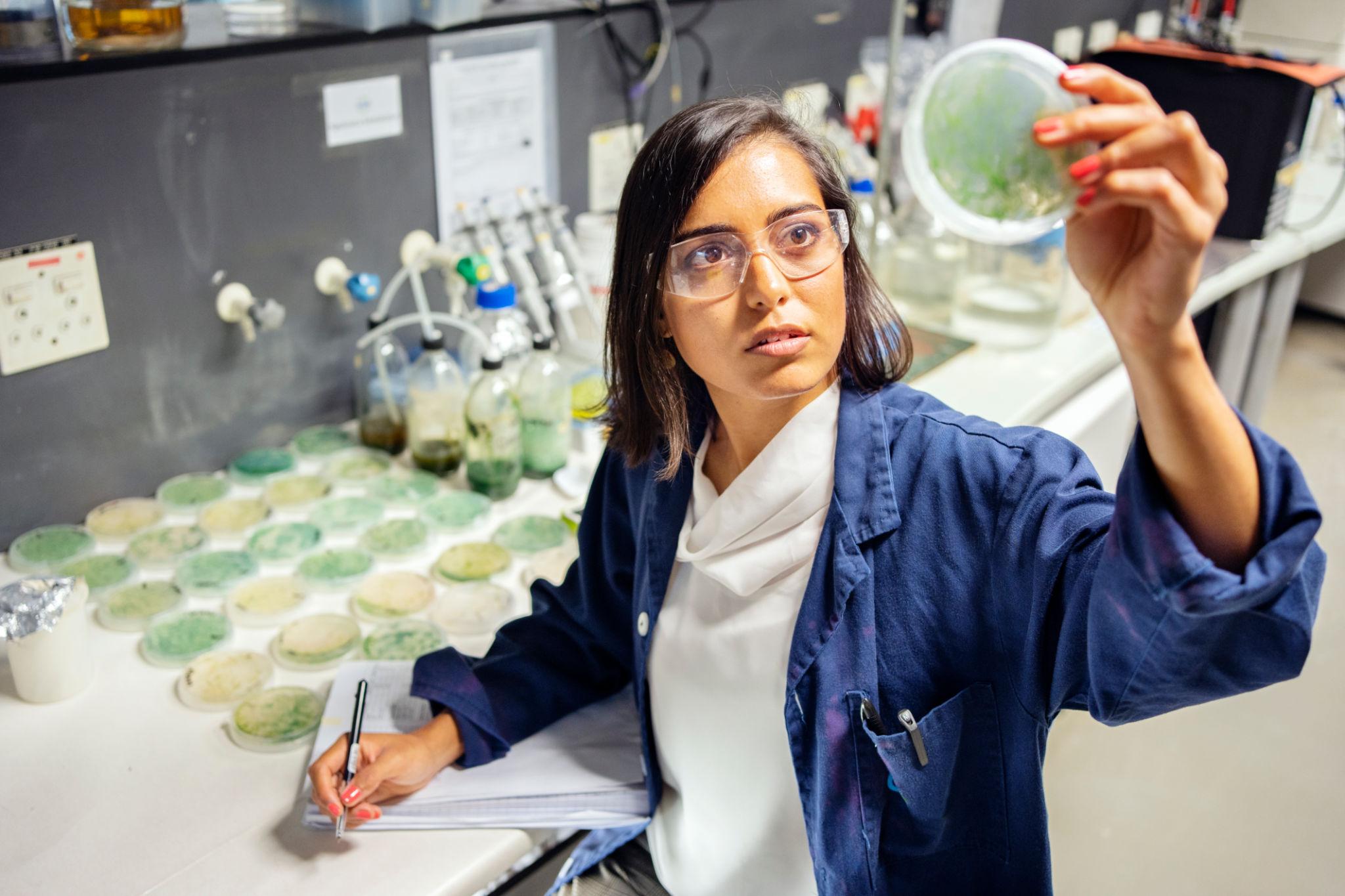
“South African biotechnology startups and university-linked research facilities are working to reduce Africa’s dependence on imported vaccines and biopharmaceuticals by developing local capabilities in precision fermentation, recombinant proteins, enzyme technology and pharmaceutical manufacturing. The progress of companies such as Immobazyme, supported by biotechnology incubators and growing investor interest, highlights the potential for South Africa to expand its pharmaceutical industry, although funding, manufacturing infrastructure, regulatory capacity and commercialisation remain significant challenges.”
South Africa’s Biotechnology Sector Seeks to Reduce Africa’s Dependence on Imported Medicines
South Africa is emerging as an important centre for biotechnology innovation as researchers, entrepreneurs and university-linked incubators work to strengthen Africa’s ability to develop and manufacture essential biological medicines. The effort addresses a persistent challenge facing the continent: substantial reliance on international suppliers for vaccines, biopharmaceuticals and specialised medical products.
A report published by GEN on 26 October 2026 highlights the work of South African biotechnology startup Immobazyme and the role of research commercialisation initiatives in turning scientific discoveries into marketable products. Although the development was not published on 28 October, it is among the most relevant recent biotechnology stories identified for South Africa.
Africa’s reliance on imported biopharmaceuticals
Biotechnology uses living organisms, cells and biological processes to develop products for healthcare, agriculture, food production and industry. In medicine, it enables the development of vaccines, therapeutic proteins, antibodies, enzymes and other products that may be difficult or impossible to manufacture using conventional chemical processes alone.
For African countries, expanding this capability has implications beyond scientific achievement. Local production could help strengthen medicine availability, improve supply-chain resilience, create specialised jobs and support the development of industries that retain more economic value within the continent.
The GEN report cites estimates that Africa imports approximately 99% of its routine vaccines and between 70% and 90% of its biopharmaceuticals. Such dependence exposes countries to international manufacturing constraints, transport disruptions, changing prices and competition for limited supplies during public-health emergencies.
The COVID-19 pandemic demonstrated the consequences of relying heavily on external suppliers. Countries with limited domestic manufacturing capacity faced difficulties securing vaccines and other essential medical products when international demand increased rapidly.
Developing local manufacturing capability could help address this vulnerability. However, producing biotechnology-based medicines requires more than laboratory discoveries. Manufacturers need specialised equipment, validated production processes, skilled employees, reliable financing, quality-control systems and regulatory approval.
Consequently, South Africa’s biotechnology development is increasingly focused on bridging the gap between research and commercial manufacturing.
Immobazyme advances biotechnology manufacturing
One company featured in the recent coverage is Immobazyme, a South African biotechnology business specialising in advanced biomanufacturing and precision fermentation.
The company is developing capabilities intended to produce valuable biological materials, including recombinant proteins, enzymes and growth factors. These products have potential applications across pharmaceutical development, healthcare, research, food production and other industries.
Precision fermentation uses selected microorganisms or other biological production systems to manufacture particular substances under controlled conditions. Depending on the process, scientists can optimise production conditions to obtain a desired molecule more efficiently and consistently.
Recombinant protein production similarly uses biological systems to manufacture proteins based on genetic instructions introduced or selected for that purpose. Such technologies underpin the production of many modern medicines and research materials.
For South African innovators, developing these capabilities locally could reduce dependence on imported ingredients and create opportunities to supply customers elsewhere in Africa.
The company’s longer-term ambition, as described in the GEN report, includes developing the capacity to manufacture biosimilars in a facility operating under Good Manufacturing Practice requirements. Biosimilars are biological medicines demonstrated to be highly similar to an already approved reference biological medicine, with no clinically meaningful differences in safety, purity and potency.
Such ambitions are significant because biological medicines are technically demanding to produce. Their manufacturing processes must be carefully controlled, and changes to production conditions can affect product characteristics. Facilities must therefore establish rigorous quality systems before their products can be supplied for clinical or commercial use.
The path from a promising biological process to a commercially viable medicine is consequently lengthy and capital-intensive.
Financing remains a major challenge
Biotechnology businesses often face different financial conditions from companies operating in sectors where products can be developed and sold relatively quickly.
A startup developing a digital service, for example, may expand its customer base without building a specialised physical production facility. A biotechnology company may need expensive laboratory equipment, sterile manufacturing environments, analytical instruments and additional production capacity as its technology advances.
The GEN report describes Immobazyme’s recent venture financing of $1.45 million, bringing its reported total funding to $2.9 million. The investment represents an example of capital flowing into South African biotechnology despite the sector’s substantial infrastructure and development requirements.
Funding is important at several stages. Early investment supports research and development, while later financing may be needed to validate production processes, establish manufacturing facilities, conduct required studies and prepare for regulatory review.
Investors must also account for uncertainty. A promising laboratory result does not guarantee that a product can be manufactured economically at scale or that it will obtain regulatory approval.
For these reasons, biotechnology investment often requires patient capital and a willingness to support technical development over several years.
South Africa’s ability to attract investors who understand these challenges will influence whether emerging companies can progress from experimental research to sustainable manufacturing businesses.
University incubators help commercialise scientific discoveries
Another important aspect of the biotechnology story is the role of university-linked commercialisation programmes.
South African universities produce scientific research across medicine, molecular biology, chemistry, genetics and related disciplines. However, discoveries do not automatically become products that can be manufactured, distributed and sold.
Researchers may lack access to commercial manufacturing facilities, experienced business advisers or investors familiar with biotechnology. Intellectual property protection and regulatory planning can also complicate the transition from academic research to commercial development.
Stellenbosch University’s LaunchLab CERIBIO biotechnology incubator seeks to address some of these barriers by providing dedicated laboratory space and support for emerging biotechnology businesses.
According to GEN, the facility helps researchers assess the commercial potential of inventions, protect intellectual property and determine whether a discovery should be licensed to an existing business or developed through a startup.
This approach can make a difference because scientific novelty alone does not establish commercial viability. A product must solve a meaningful problem, have a plausible route to market and be capable of development within the relevant technical and regulatory constraints.
Intellectual property management is also important. Where appropriate, researchers and universities need to assess patent protection before publicly disclosing inventions that could otherwise lose commercial protection.
Successful incubators can connect scientists with entrepreneurs, investors, industry partners and experienced advisers. These relationships help founders address practical questions about manufacturing, market demand, financing and the skills needed to build a business.
In the longer term, this ecosystem could enable more South African discoveries to become locally developed products rather than remaining primarily in academic publications.
Regulatory systems must keep pace with biotechnology
Biotechnology manufacturing also depends on effective regulation.
Biological medicines can be complex, and their quality, safety and effectiveness must be established through appropriate evidence. Manufacturers need systems that ensure products remain consistent across production batches and meet the required standards.
Regulators must assess these products while adapting to scientific developments in areas such as mRNA technology, biosimilars and advanced biological manufacturing.
The GEN report identifies regulatory modernisation as an issue facing the development of African biopharmaceutical manufacturing.
Updating regulatory frameworks does not mean weakening safety requirements. Instead, regulators need suitable scientific expertise, clear guidance and efficient processes that support innovation while protecting patients.
Regional cooperation could also help African countries strengthen technical expertise and coordinate approaches to evaluating medical products. Greater alignment may reduce unnecessary duplication while maintaining each jurisdiction’s responsibilities for public health.
South Africa already has a pharmaceutical regulatory system, but emerging biotechnology products can require specialised assessment and manufacturing expertise. Continued investment in regulators, laboratories and quality systems will therefore remain essential.
Ultimately, local production will only improve healthcare if medicines are appropriately evaluated, reliably manufactured and made available to patients who need them.
Beyond medicines: wider industrial applications
Biotechnology also offers opportunities outside pharmaceutical manufacturing.
The GEN report highlights Immobazyme’s enzyme-related technology, including its PepTrap approach, which is designed to immobilise and stabilise enzymes so they can be reused more cost-effectively.
Enzymes are biological catalysts that help chemical reactions occur. They are used in numerous applications, including food processing, industrial manufacturing and biotechnology research.
Making enzymes more stable and reusable could help reduce operating costs in certain processes. However, the commercial benefit depends on the specific application, production conditions, enzyme performance and cost of implementing the technology.
Other potential areas for biotechnology businesses include agricultural innovation, food ingredients, cosmetics and nutraceuticals. These markets may offer opportunities to commercialise certain products before a company undertakes the more demanding development pathway required for pharmaceutical medicines.
Different products nevertheless face different regulatory obligations. A biotechnology ingredient intended for industrial use cannot automatically be treated as equivalent to a biological medicine intended for human consumption or injection.
A diversified approach could help companies build technical experience, develop customers and establish revenue streams while continuing to pursue more complex products.
Economic opportunities and regional health security
South Africa’s biotechnology ambitions have implications for employment and industrial development.
Expanding the sector could create opportunities for scientists, laboratory technicians, engineers, quality-assurance specialists, regulatory professionals and manufacturing workers. It could also support suppliers of laboratory equipment, specialist services, logistics and industrial infrastructure.
The benefits would extend beyond individual companies if locally developed technologies were incorporated into broader African supply chains.
For example, a successful manufacturer could supply biological ingredients to regional pharmaceutical producers, while universities could train researchers and partner with businesses to develop new products.
Yet these outcomes depend on sustained investment and effective collaboration. Startups need access to infrastructure, while manufacturers need reliable demand and commercially competitive production costs. Public institutions can help by supporting research, workforce development and appropriate procurement policies.
The opportunity is not limited to replacing imports. South African companies could also develop specialised technologies and products for international markets, particularly where they offer competitive pricing, strong technical performance or solutions suited to regional needs.
Nevertheless, achieving this potential will require businesses to demonstrate that their products meet recognised standards and can compete with established international manufacturers.
The road ahead for South African biotechnology
South Africa’s emerging biotechnology ecosystem illustrates both the promise and the difficulty of building advanced manufacturing industries.
Companies such as Immobazyme demonstrate how local entrepreneurs are attempting to turn scientific expertise into technologies with commercial applications. University-linked incubators provide a route for research discoveries to become startups, while investment can help companies develop the infrastructure required to expand production.
However, significant obstacles remain. Biotechnology businesses need sustained financing, specialised facilities, experienced employees, clear regulatory pathways and reliable routes to market. Establishing these conditions will take time and coordinated action from government, universities, investors and private industry.
The development of domestic biopharmaceutical manufacturing should also be measured against tangible outcomes: products that meet quality standards, production processes that operate reliably, businesses that can sustain their activities and medicines that become accessible to patients.
For Africa, greater local production could improve resilience when international supply chains are disrupted. For South Africa, it could create a stronger connection between scientific research, industrial growth and public-health priorities.
The central message is that biotechnology independence will depend not only on scientific breakthroughs, but also on the ability to finance, regulate, manufacture and distribute products at scale. The recent progress reported in South Africa provides an encouraging example of that effort, although the ultimate impact will depend on how successfully these capabilities develop in the years ahead.



