




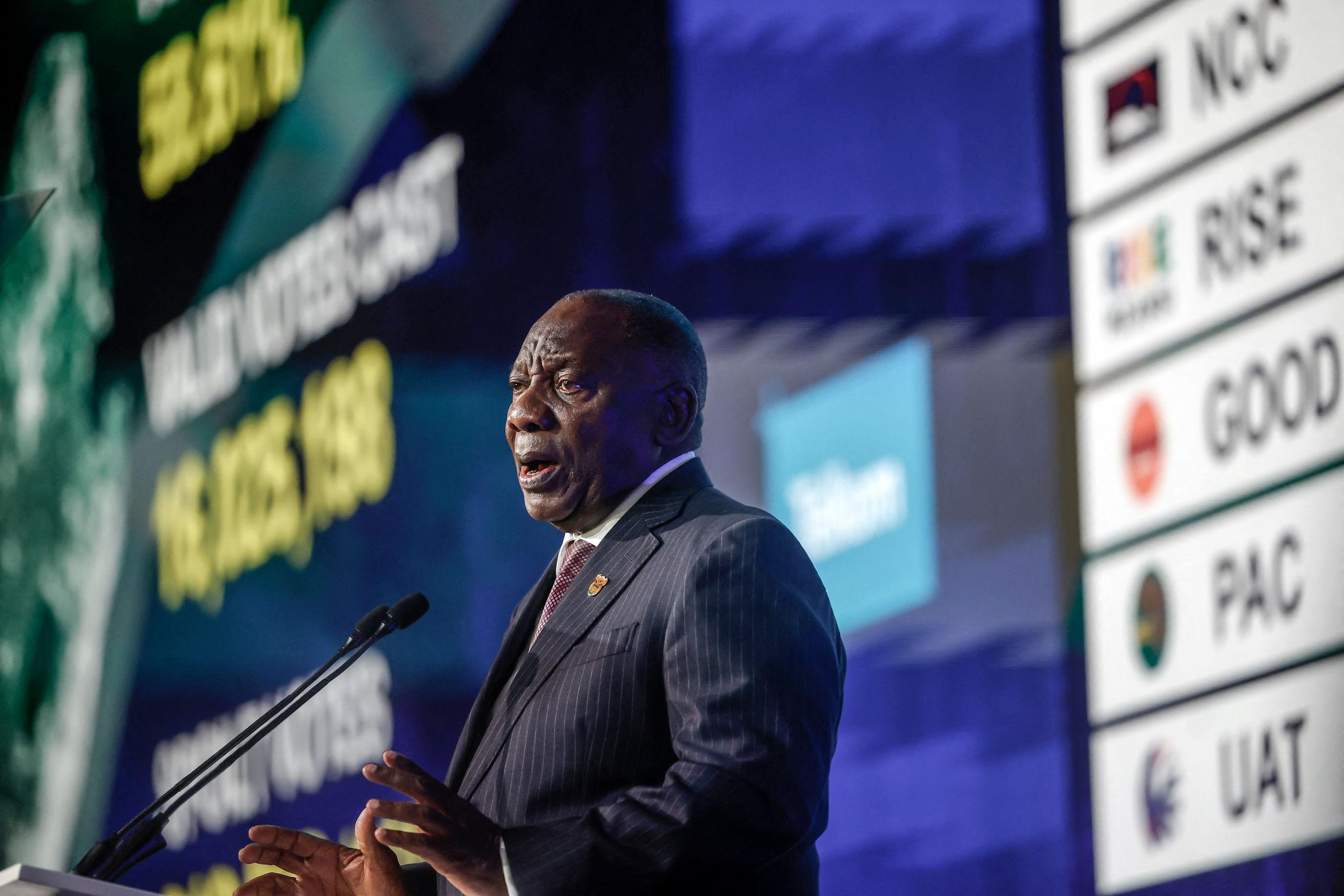
“South Africa’s African National Congress is confronting an unprecedented political setback following the November 4, 2026, municipal elections, in which its national vote share fell to approximately 30.76%, intensifying pressure on the party to rebuild public confidence and address longstanding municipal governance failures. The election results have triggered complex coalition negotiations across major cities, while the ANC leadership maintains that President Cyril Ramaphosa is not under pressure to resign despite the party’s declining electoral support.”
South Africa’s ANC Faces Historic Electoral Setback as Coalition Politics Reshape Municipal Government
South Africa’s political landscape is undergoing a significant transformation following the November 4, 2026, Local Government Elections, which delivered a historic setback to the African National Congress (ANC) and strengthened the country’s emerging multiparty political environment. The results have intensified discussions about political accountability, municipal governance, coalition stability and the future direction of South Africa’s democratic institutions.
The ANC, which governed South Africa nationally for three decades following the end of apartheid in 1994, secured approximately 30.76% of the national municipal vote, marking a substantial decline from its 45.59% performance in the 2021 local elections. The Democratic Alliance (DA) followed with approximately 24.64%, while former president Jacob Zuma’s uMkhonto weSizwe Party (MK Party) emerged as another significant political force, securing approximately 9.77%.
The outcome represents another major electoral warning for the ANC, which lost its parliamentary majority in the 2024 national elections and subsequently entered a Government of National Unity arrangement.
Electoral Results Signal Changing Political Loyalties
The 2026 municipal elections demonstrate that South African voters are increasingly willing to reconsider longstanding political loyalties.
For decades, the ANC benefited from its historical association with the liberation struggle and the establishment of democratic government. However, declining confidence in municipal administration, persistent unemployment, infrastructure deterioration and corruption allegations have increasingly challenged that political advantage.
The latest electoral results reinforce the growing importance of political performance, particularly in communities where residents expect reliable water supplies, electricity, sanitation, functioning roads and accountable local leadership.
According to reporting published following the election, the ANC’s approximately 30.76% national vote represents a significant decline compared with previous municipal contests. Meanwhile, opposition parties have gained opportunities to expand their influence across metropolitan and smaller municipal councils.
The outcome also demonstrates that South Africa’s electorate remains politically diverse, with numerous smaller parties and independent candidates competing for representation.
The Electoral Commission of South Africa reported that approximately 29.2 million voters were registered for the elections, with national turnout reaching approximately 52%, compared with 45.9% in 2021.
The increased participation provides an important indication that municipal elections continue to attract significant public attention despite dissatisfaction with political institutions.
Municipal Service Delivery Emerges as a Central Electoral Issue
One of the most important explanations for the ANC’s declining electoral support is the persistent dissatisfaction surrounding municipal service delivery.
Water shortages, electricity interruptions, deteriorating infrastructure, inadequate sanitation and poorly maintained roads have become major political concerns across South Africa’s metropolitan areas.
Johannesburg, Tshwane and eThekwini have experienced substantial infrastructure and municipal management challenges, placing pressure on local authorities to improve service provision.
Reuters reporting before the elections highlighted water infrastructure failures, unemployment, crime and housing affordability as among the principal concerns influencing voter decisions.
Johannesburg has faced particularly difficult water infrastructure conditions, with substantial water losses associated with ageing pipes, leaks and maintenance challenges.
In eThekwini, infrastructure deterioration and water losses have also placed pressure on municipal service delivery.
These challenges have contributed to growing dissatisfaction among residents who increasingly expect elected representatives to demonstrate practical improvements rather than rely exclusively on political promises.
Consequently, the 2026 elections have strengthened the relationship between municipal performance and electoral accountability.
Political parties that demonstrate credible plans for infrastructure rehabilitation, financial management and improved public services may benefit from changing voter expectations.
Johannesburg Becomes a Major Coalition Battleground
Johannesburg has emerged as one of the most important political battlegrounds following the election.
The Democratic Alliance recorded approximately 35% of the vote in the metropolitan municipality, while the ANC secured approximately 20%. ActionSA also performed strongly, placing third with approximately 16%.
However, the fragmented electoral outcome means that no single party secured sufficient support to govern Johannesburg independently.
Coalition negotiations will therefore determine the political composition of the municipal administration and the direction of local governance.
The DA has an opportunity to strengthen its influence, but securing a stable governing arrangement requires cooperation with other parties.
ActionSA leader Herman Mashaba has indicated that his party would not support a DA administration led by Helen Zille, complicating potential coalition arrangements.
The situation illustrates the increasingly complicated nature of coalition politics in South Africa.
Municipal coalition governments must negotiate agreements covering leadership positions, policy priorities, budget allocations and administrative responsibilities.
Their success will depend on whether political parties can establish sufficiently stable partnerships to maintain functioning municipal administrations.
ANC Leadership Rejects Resignation Pressure
The electoral setback has also intensified speculation about the ANC’s national leadership.
President Cyril Ramaphosa remains a central figure in discussions about the party’s response to declining electoral support.
However, the ANC spokesperson stated on November 12 that Ramaphosa was not under pressure to resign, rejecting reports suggesting that the president had considered stepping down as party leader.
The statement came as the party prepared to deliberate on its response to the municipal election results and its approach to coalition negotiations.
ANC leadership figures have acknowledged the seriousness of the electoral outcome.
Secretary-General Fikile Mbalula described the results as catastrophic for the party, while emphasizing the need for internal reflection and organisational renewal.
investing.com
The party’s challenge is therefore not limited to negotiating municipal coalitions.
It must also address declining public confidence, improve organisational discipline and demonstrate that it can respond effectively to citizens’ concerns.
Opposition Parties Gain Greater Political Influence
The election has strengthened the position of several opposition parties, including the DA, MK Party, ActionSA and the Inkatha Freedom Party.
The DA’s performance reinforces its position as one of South Africa’s principal opposition political organisations.
The MK Party’s approximately 9.77% national municipal vote is particularly significant because the party contested its first local government elections after emerging as a major political force during the 2024 national elections.
ActionSA also recorded considerable electoral growth, strengthening its potential influence in municipal coalition negotiations.
Meanwhile, smaller parties secured representation in councils across the country, reflecting the increasingly fragmented nature of South Africa’s political system.
The development presents both opportunities and challenges.
Multiparty representation can strengthen accountability by ensuring that municipal administrations face greater scrutiny.
However, fragmented councils can also complicate decision-making, particularly when coalition agreements become unstable or political disagreements prevent the adoption of budgets and development programmes.
Coalition Governance Becomes the Immediate Priority
Following the declaration of municipal election results, political parties have entered a period of negotiations to establish governing arrangements in municipalities where no party secured an outright majority.
Reuters reported that parties would have approximately 14 days to negotiate before municipal councils are constituted.
These negotiations are expected to shape municipal leadership and administrative priorities across several major urban centres.
Coalition agreements will be particularly important in municipalities where political fragmentation creates uncertainty about governance.
The immediate priorities include establishing council leadership, agreeing on municipal budgets, identifying shared policy objectives and ensuring that administrative decisions can proceed without persistent political disputes.
South Africa’s experience with municipal coalitions has demonstrated that political partnerships can provide alternatives to single-party dominance.
However, coalition instability has also contributed to leadership changes and uncertainty in some municipalities.
The success of the 2026 coalition negotiations will therefore depend on whether parties prioritise governance objectives over short-term political advantages.
Electoral Commission Reports Higher Voter Participation
The Electoral Commission of South Africa has reported that the 2026 municipal elections achieved higher voter participation than the previous local government elections.
National turnout reached approximately 52%, representing an increase of 6.1 percentage points compared with 2021. Approximately 14.9 million citizens participated in the elections.
The commission also reported that hundreds of political parties and independent candidates contested municipal council positions.
The elections involved more than 10,500 council seats, reflecting the extensive scale of local government representation across South Africa.
Despite isolated disruptions, the Electoral Commission declared the elections free and fair.
The South African Human Rights Commission also welcomed the largely peaceful electoral process and acknowledged the contribution of citizens who exercised their constitutional voting rights.
The higher turnout represents an important development for democratic participation.
It suggests that despite political dissatisfaction, citizens continue to recognise elections as an important mechanism for influencing public administration and political leadership.
Economic Consequences of Municipal Political Change
The electoral results also carry important implications for South Africa’s economic environment.
Municipal governments influence investment conditions through infrastructure provision, electricity distribution, water management, transport systems and business regulation.
Unreliable municipal services can increase operating costs for businesses, discourage investment and reduce economic opportunities.
Consequently, coalition negotiations will be closely watched by businesses and investors seeking predictable municipal administration.
Johannesburg, Tshwane and eThekwini remain particularly important economic centres.
Improving infrastructure management, strengthening municipal finances and reducing administrative inefficiencies could support economic recovery and employment creation.
Political parties that successfully establish stable municipal administrations may therefore gain advantages beyond electoral popularity.
They could demonstrate that coalition governance is capable of producing measurable improvements in public services and economic performance.
Democratic Accountability and the Future of South African Politics
The 2026 Local Government Elections demonstrate that South Africa’s political system is becoming increasingly competitive.
The ANC’s declining support, the growing influence of opposition parties and the expansion of coalition governance represent significant developments in the country’s democratic evolution.
The results also reinforce the principle that electoral mandates remain conditional on public confidence and political performance.
Although historical political achievements continue to influence voter perceptions, contemporary concerns about employment, infrastructure, corruption and municipal accountability increasingly shape electoral decisions.
South Africa’s political parties must therefore adapt to a more competitive environment in which voters expect practical results.
For the ANC, rebuilding confidence will require more than internal political discussions.
It will require visible improvements in governance, stronger accountability mechanisms and credible responses to longstanding public concerns.
For opposition parties, the election provides opportunities to demonstrate whether alternative political leadership can deliver more effective municipal administration.
Coalition governments will consequently become an increasingly important test of South Africa’s democratic institutions.
Conclusion: South Africa Enters a New Era of Municipal Coalition Politics
South Africa’s November 2026 municipal elections have delivered a powerful message about changing political expectations.
The ANC’s electoral decline represents a major challenge for the governing party, while opposition parties have gained opportunities to influence municipal administration and policy.
The emergence of coalition negotiations across important municipalities highlights the growing complexity of South African politics.
President Cyril Ramaphosa’s leadership remains a subject of political debate, although the ANC has rejected claims that he faces immediate pressure to resign.
The central challenge confronting political parties is now whether they can translate electoral mandates into improved public services, stronger economic opportunities and more accountable governance.
Ultimately, the success of South Africa’s evolving democratic system will depend not only on the ability of parties to win elections but also on their capacity to deliver meaningful improvements in citizens’ lives.
The 2026 elections have established a new political reality: South African voters are increasingly prepared to demand accountability, reconsider established political loyalties and support alternative governing arrangements.
The coalition negotiations now underway will determine whether that political transformation produces greater stability, stronger municipal administration and renewed public confidence in democratic institutions.



