




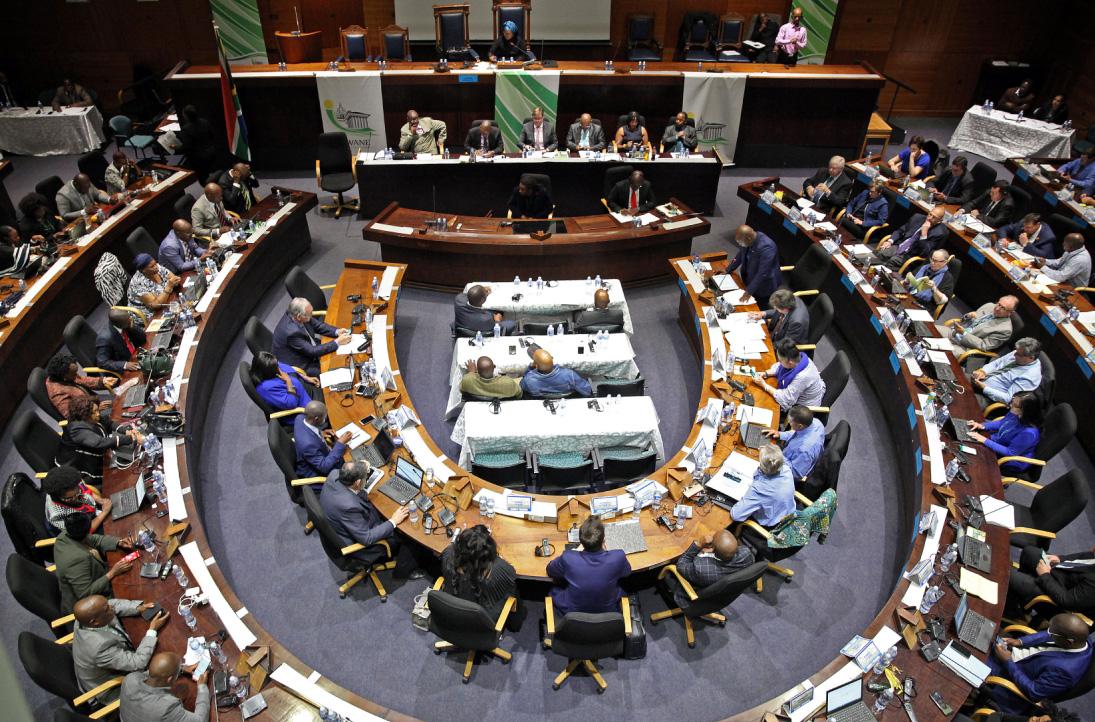
“South Africa’s parliamentary Cooperative Governance and Traditional Affairs Committee has welcomed new guidelines designed to strengthen political stability, accountability and administrative continuity in municipalities following the 2026 local government elections. With approximately 138 hung councils requiring coalition or cooperative governing arrangements, the guidelines encourage written agreements, transparent decision-making and a clear separation between political leadership and municipal administration to protect service delivery.”
South Africa’s New Coalition Guidelines Seek to Strengthen Municipal Governance and Protect Service Delivery
South Africa has taken an important step towards strengthening municipal governance following the 2026 local government elections, with new coalition guidelines intended to promote political stability, accountability and uninterrupted public service delivery. The guidelines have received a positive response from Parliament’s Portfolio Committee on Cooperative Governance and Traditional Affairs (COGTA), as political parties begin negotiations to establish governing arrangements in municipalities where no party secured an outright majority.
The development comes at a critical moment for local government, with approximately 138 hung councils, representing about 65% of councils, requiring coalition governments, minority administrations or other cooperative political arrangements. The scale of these negotiations places renewed attention on the country’s ability to establish functional municipal leadership while maintaining effective administrative operations.
Coalition negotiations emerge as a major governance priority
The 2026 local government election results have created a complex political environment in numerous municipalities. Rather than allowing a single party to govern independently, the electoral outcomes require parties to negotiate agreements that can establish governing majorities or facilitate cooperative council arrangements.
These negotiations are particularly important because municipalities are responsible for essential services, including water provision, sanitation, electricity distribution, waste management, municipal infrastructure and local economic development.
The Department of Cooperative Governance and Traditional Affairs has published the Guidelines for Stable Coalitions in Local Government to provide practical assistance during this transition.
According to Parliament’s statement on 13 November, the guidelines are intended to help municipalities establish functioning councils and ensure that political transitions do not interrupt service delivery.
The Portfolio Committee chairperson, Dr Zweli Mkhize, welcomed the publication, highlighting the importance of transparent agreements, accountability and cooperation between political parties.
The guidelines are designed to provide political parties with a common reference point during negotiations, helping them manage disagreements and establish governing arrangements capable of functioning throughout the municipal term.
Written coalition agreements take centre stage
One of the central recommendations contained in the guidelines is the importance of written coalition agreements.
Political parties are encouraged to document their shared policy priorities, decision-making procedures, responsibilities and mechanisms for resolving disputes.
Written agreements can provide greater certainty about how coalition partners intend to govern together. They can also reduce misunderstandings, establish expectations and create a framework for managing political disagreements without destabilising municipal institutions.
The guidelines include a template that parties can use as a foundation for their negotiations.
However, the effectiveness of these agreements will depend on the willingness of coalition partners to honour their commitments and prioritise municipal responsibilities over narrow political interests.
Transparent negotiations are equally important. Residents should be able to understand the policy commitments and governing arrangements that influence the administration of their municipalities.
Parliament has stressed that transparency is essential for accountability, particularly when political parties negotiate positions of authority and establish governing partnerships.
Separating politics from municipal administration
Another significant feature of the guidelines is the emphasis on separating political leadership from administrative responsibilities.
Coalition agreements should establish a clear distinction between the political functions of councillors and the professional responsibilities of municipal officials.
The guidelines specifically indicate that political parties should leave appointments, procurement decisions and the awarding of tenders to municipal administrations.
This principle is particularly important because procurement and appointments can create opportunities for political interference, conflicts of interest and misuse of public resources.
Municipal administrations must operate according to lawful procedures, professional standards and applicable financial management legislation.
The distinction between political and administrative responsibilities is intended to protect institutional integrity while ensuring that public resources are directed towards community needs.
According to Parliament, municipal resources must serve communities, and administrative decisions must remain subject to lawful procedures.
Effective implementation will require coalition partners to respect municipal administrative independence while maintaining legitimate oversight over policy implementation and public expenditure.
Political instability and service delivery concerns
South Africa’s experience with unstable municipal coalitions has demonstrated the potential consequences of prolonged political disagreements.
Frequent changes in mayors, speakers and other political leadership positions can disrupt council operations and delay important decisions.
Where coalition partners repeatedly withdraw support from governing arrangements, municipalities may struggle to maintain consistent leadership and administrative direction.
Such instability can affect the approval of budgets, implementation of infrastructure projects, oversight of municipal finances and delivery of essential services.
The new guidelines seek to reduce these risks by encouraging political parties to establish predictable governing arrangements and effective mechanisms for managing disagreements.
The objective is not simply to create political agreements but to ensure that municipalities remain functional institutions capable of meeting their constitutional responsibilities.
Residents depend on municipalities for services that directly affect their daily lives. Consequently, political negotiations must not become a reason for prolonged administrative disruption.
Government support during the transition
Cooperative Governance and Traditional Affairs Minister Velenkosini Hlabisa has also emphasised the need for proactive support to municipalities during coalition negotiations.
During a special Minister and Members of Executive Councils meeting on 10 November, government representatives considered the coalition guidelines and the challenges associated with establishing municipal councils following the elections.
The meeting brought together national and provincial cooperative governance leadership, representatives of traditional leadership structures and local government stakeholders, including the South African Local Government Association and the Municipal Demarcation Board.
The minister stressed the importance of supporting municipalities facing coalition negotiations, particularly where political disagreements could delay council formation.
Provincial governments are expected to play an important role in supporting municipalities, providing guidance and helping maintain administrative continuity throughout the transition.
The guidelines also emphasise the importance of cooperation between political parties, municipalities and provincial authorities.
This coordinated approach is intended to ensure that municipal institutions remain operational while new political leadership structures are established.
Council constitution deadlines and legal requirements
The establishment of municipal councils following the elections remains subject to constitutional and legislative requirements.
According to the government briefing reported by SAnews, the Electoral Commission of South Africa was expected to publish the official election results in the Government Gazette during the week.
The publication triggers the statutory period within which metropolitan and local municipal councils must be constituted.
The timelines outlined by government indicate that this process runs from 12 November to 26 November 2026.
District municipal councils will subsequently be constituted once their respective local municipal councils have been established.
The sequence is important because district councils cannot be established before the constitution of the relevant local councils.
Political parties and municipal authorities are therefore expected to complete the process within the prescribed legal timeframes.
The minister warned that delays could undermine municipal governance and service delivery, urging parties to use the guidelines constructively and comply with applicable legislative requirements.
The Municipal Coalitions Bill remains important
Although the guidelines provide an immediate framework for political negotiations, the broader legislative process remains significant.
The Local Government: Municipal Structures Amendment Bill of 2026, commonly referred to as the Municipal Coalitions Bill, is still undergoing parliamentary processes.
The guidelines therefore serve as an interim practical resource while Parliament considers the legislative framework intended to address coalition arrangements more comprehensively.
The distinction between guidelines and legislation is important. The publication of guidance does not eliminate the need for political parties and municipalities to comply with existing statutory requirements.
The eventual legislative framework could help strengthen the rules governing coalition formation, political accountability and the management of municipal councils.
Parliament’s consideration of the bill will consequently remain an important governance development as South Africa seeks to improve the functioning of coalition municipalities.
Accountability and public confidence
The coalition guidelines also raise broader questions about accountability in democratic governance.
Political parties are elected to represent communities, and their governing arrangements should reflect the interests of residents rather than solely the ambitions of political leaders.
Coalition agreements that clearly identify policy priorities, decision-making responsibilities and dispute-resolution procedures can help voters understand how their representatives intend to govern.
Moreover, transparent arrangements may strengthen public confidence by making political commitments easier to scrutinise.
Accountability must extend beyond the signing of coalition agreements. Councillors should remain responsible for their decisions, while municipal administrations must ensure that public resources are managed properly.
Residents, civil society organisations and oversight institutions also have an important role in monitoring municipal performance and identifying governance concerns.
The effectiveness of the new guidelines will therefore depend on both political cooperation and sustained public oversight.
Implications for municipalities and communities
The immediate challenge facing South Africa is to translate coalition agreements into functioning municipal governments.
Municipalities need stable leadership capable of approving budgets, maintaining infrastructure, supporting local economic development and overseeing administrative performance.
The new guidelines could help reduce uncertainty during coalition negotiations by providing parties with a practical framework for cooperation.
However, their success will ultimately be measured by municipal performance rather than political announcements.
Communities will expect improvements in basic services, responsible financial management and greater responsiveness from elected representatives.
Where coalition governments operate effectively, they may provide opportunities for broader political cooperation and more inclusive decision-making.
Conversely, continued political instability could undermine municipal institutions and weaken public confidence in democratic governance.
Conclusion
South Africa’s new coalition governance guidelines represent an important intervention in the country’s evolving local government landscape following the 2026 elections.
With approximately 138 hung councils requiring cooperative governing arrangements, the emphasis on written agreements, transparency, administrative independence and dispute resolution addresses several challenges associated with coalition politics.
The guidelines provide political parties with practical assistance during negotiations while reinforcing the principle that municipal institutions must continue functioning regardless of political transitions.
The forthcoming Municipal Coalitions Bill remains an important part of the broader governance reform process.
Ultimately, the success of these measures will depend on whether political parties demonstrate the maturity, integrity and commitment necessary to establish stable municipal administrations.
For communities across South Africa, the central expectation remains clear: political cooperation must translate into accountable leadership, effective municipal management and reliable public service delivery.



