




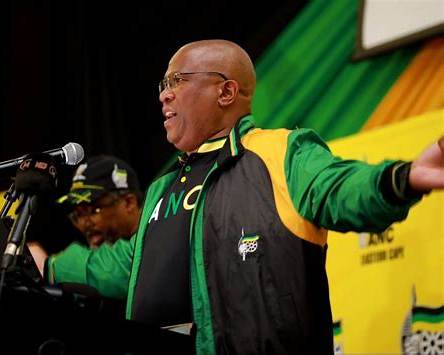
“ANC Eastern Cape chairperson Oscar Mabuyane has opened the door to cooperation between the ANC and South African Communist Party (SACP) after the 4 November 2026 local government elections, despite the historic alliance partners contesting the election separately. Mabuyane says political cooperation should be based on programmes for rebuilding municipalities, improving service delivery, fighting corruption and creating jobs rather than simply dividing positions such as mayor, speaker or committee chairperson.”
ANC-SACP Cooperation Emerges as Key Political Question Ahead of November Elections
South Africa’s political landscape has entered a significant new phase ahead of the 4 November 2026 local government elections, with the long-standing relationship between the African National Congress (ANC) and South African Communist Party (SACP) facing its most important electoral test in decades. In a development that could have consequences well beyond the municipal elections, ANC Eastern Cape chairperson and Premier Oscar Mabuyane has suggested that the two organisations should remain open to cooperation after voting, even though the SACP will contest the elections independently.
Mabuyane made the remarks while delivering the ANC’s message of support at the SACP’s Red October launch in the Eastern Cape. His comments are significant because the ANC and SACP have historically operated as close political allies within the Tripartite Alliance, alongside the Congress of South African Trade Unions (Cosatu). The decision by the SACP to contest the 2026 local elections independently has therefore created a new political reality for both organisations.
Mabuyane argued that the political differences between the parties should not automatically develop into permanent hostility. Although the ANC and SACP will compete for votes in communities across South Africa, he said both organisations should remember their shared history and the political challenges they will continue to face after election day.
The proposal comes at a particularly sensitive moment for the ANC. Mabuyane acknowledged that the governing party is entering the local government elections in a vulnerable position, with declining public confidence, organisational difficulties, factionalism and municipal governance problems affecting its political standing. The ANC has traditionally been the dominant force in South African politics, but the 2026 local elections are taking place in a much more competitive environment involving established opposition parties and a growing number of smaller political organisations.
The ANC’s electoral difficulties have become particularly visible at local-government level. Recent election developments have shown that the party is facing legal, organisational and political challenges in several areas. In the Eastern Cape, for example, the ANC is dealing with disputes surrounding candidate lists while campaigning to regain or strengthen control in municipalities where coalition politics has become increasingly important. SABC News reported that the ANC remains confident of its prospects in the province despite legal challenges involving the registration of candidates.
Against this backdrop, the possibility of post-election cooperation with the SACP could become politically important. Mabuyane said any cooperation should not simply be about negotiating political positions. Instead, he argued that parties should first establish whether they share a practical programme for governing municipalities.
That distinction is important because South Africa’s local governments face persistent challenges involving service delivery, infrastructure, unemployment, municipal finances and institutional capacity. Water shortages, electricity problems, deteriorating roads, weak administration and allegations of corruption have all contributed to public dissatisfaction with municipal governments.
Mabuyane therefore suggested that any future cooperation should focus on what political organisations intend to do with state power. Questions surrounding who becomes mayor, speaker or chief whip, he argued, should not become the central purpose of political alliances.
His position reflects a wider challenge facing South African political parties as coalition governments become increasingly common. The 2026 local elections are expected to produce highly competitive contests in several municipalities, making cooperation between parties potentially necessary in councils where no single organisation secures a majority.
The ANC has already experienced coalition politics in a number of municipalities, including major metropolitan areas. The party has therefore had to adjust to an environment in which electoral dominance can no longer automatically translate into uncontested control of local government.
The SACP’s independent electoral strategy adds another layer to this changing political environment. For decades, SACP members have participated in government through the ANC, and many individuals have maintained relationships with both organisations. The decision to contest elections separately creates the possibility that some municipalities could see the ANC and SACP competing directly for voters who have historically belonged to the same political tradition.
Mabuyane has urged the ANC not to treat SACP members holding public office as enemies simply because the Communist Party has decided to contest elections independently. He argued that public representatives should instead be judged according to competence, integrity, performance and commitment to transformation.
This position could become increasingly important as the election campaign intensifies. If ANC and SACP supporters attack one another too aggressively during the campaign, rebuilding cooperation after the election could become more difficult. Mabuyane has therefore called for political discipline and restraint.
The issue is not simply about electoral tactics. It also concerns the future of the historic Tripartite Alliance. Mabuyane raised the possibility that the post-election political environment could force the ANC and its alliance partners to reconsider the structure and purpose of their relationship.
The Tripartite Alliance was built around a shared struggle against apartheid and a common political vision. However, South Africa’s political and economic environment has changed dramatically since the democratic transition. The ANC no longer holds the same level of electoral dominance it once enjoyed, while the SACP has increasingly sought to establish an independent electoral identity.
The 2026 elections could therefore become an important turning point.
Mabuyane has warned that the fragmentation of progressive political forces could have consequences at a time when conservative and other competing political forces are reorganising. At the same time, the SACP has emphasised the importance of fighting corruption, strengthening public accountability and ensuring that councillors serve communities rather than using political office as a pathway to personal advancement.
SACP secretary-general Solly Mapaila used the Red October launch to warn against corruption in local government. He argued that municipal representatives should remain accountable to the communities they serve and said public resources must be protected from tender corruption and other forms of abuse.
These comments highlight an important area where the ANC and SACP could potentially cooperate: improving local government performance. Both parties will have to respond to voters who are increasingly focused on practical issues such as water, electricity, roads, housing, employment and municipal accountability.
However, cooperation will not necessarily be straightforward. The parties will first have to contest the election against each other in some areas. They will need to persuade voters that their respective political programmes deserve support. Campaign rhetoric could create tensions that remain after election day.
The political arithmetic of the November election will ultimately determine whether cooperation becomes necessary. If municipalities produce councils without clear majorities, parties may face pressure to form coalitions or other governing arrangements. In such circumstances, the ANC and SACP could find themselves having to decide whether their historic political relationship still provides a basis for practical cooperation.
Mabuyane’s comments suggest that the ANC is already thinking about that possibility.
The broader significance of the development lies in what it says about South Africa’s changing party system. The country is moving from an era dominated by one overwhelmingly powerful political organisation towards a more fragmented system in which alliances, coalitions and negotiated governing arrangements are becoming increasingly important.
The 4 November election will therefore not only determine which parties control individual municipalities. It could also influence the future relationship between organisations that have shaped South African politics for generations.
For the ANC, the immediate challenge is to rebuild public trust and demonstrate that it can provide effective local government. For the SACP, the challenge is to establish an independent electoral presence while maintaining its historic political identity. For both organisations, the challenge will be determining whether competition can coexist with cooperation.
Mabuyane’s message is that it can.
His argument is essentially that the election should not erase decades of shared political history. The ANC and SACP may enter polling day under different banners, but they will emerge into the same South Africa facing many of the same problems.
Ultimately, the success or failure of any post-election cooperation will depend less on historical loyalty and more on whether the parties can agree on practical programmes. Voters are likely to judge municipalities according to whether their lives improve, rather than according to the historical relationships between political organisations.
That makes service delivery, employment, clean governance and functioning municipalities central to the future of any ANC-SACP arrangement.
The November elections could therefore mark more than another contest for municipal power. They may represent the beginning of a new chapter in the relationship between the ANC and SACP — one in which political competition and cooperation exist side by side.
For the first time, the two organisations are preparing to ask voters directly for separate mandates at local-government level. What happens afterwards could determine whether their historic alliance is weakened, restructured or renewed.
With South Africa’s political system becoming increasingly competitive, the answer may ultimately depend on whether these former allies can transform their shared history into a practical programme for governing the country’s municipalities.
The election will decide who wins votes. The period after the election may determine who can work together to govern.



