




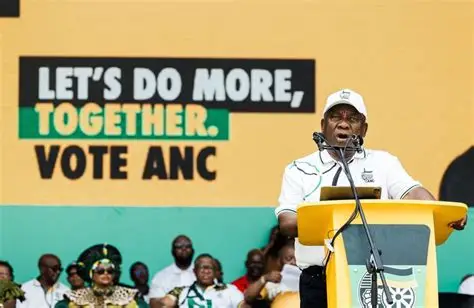
“The ANC enters the November 2026 local government elections under unprecedented pressure, grappling with internal disputes, declining voter trust, and administrative challenges with the Electoral Commission. Analysts argue that the party’s failure to balance liberal democratic ideals with African cultural politics has opened space for rivals like the IFP and MK Party to gain traction.”
The African National Congress (ANC), South Africa’s ruling party since the dawn of democracy in 1994, is facing one of its most turbulent moments ahead of the November 4, 2026 local government elections. Once a political juggernaut commanding overwhelming majorities, the ANC now finds itself battling internal divisions, declining voter confidence, and fierce competition from emerging parties. The stakes are high: the outcome of these elections will determine not only control of municipalities but also the trajectory of South Africa’s political landscape.
Historical Decline
The ANC’s downward trajectory has been evident for years. In the 2021 municipal elections, the party slipped below 50% for the first time since 1994. The decline accelerated in the 2024 general election, where the ANC secured just 40.18% of the national vote. This erosion of support reflects growing disillusionment among South Africans who feel the party has failed to deliver on its promises of economic transformation, service delivery, and inclusive governance.
Philosophical Rift
Political analyst Professor Musa Xulu argues that the ANC’s decline stems partly from its embrace of liberal democratic constitutionalism at the expense of African cultural politics. While liberal democracy promised equality and rights, many South Africans feel it has not translated into tangible improvements in their daily lives. Instead, voters are increasingly drawn to parties that emphasize traditional values and cultural identity, such as the Inkatha Freedom Party (IFP). Former ANC president Jacob Zuma’s uMkhonto weSizwe (MK) Party has also capitalized on this sentiment, presenting itself as a defender of African traditions against what it portrays as Western-imposed liberalism.
Candidate Selection Disputes
Compounding these ideological tensions are operational challenges. The ANC’s attempt to democratize candidate selection by involving local communities has backfired. According to Professor Ntsikelelo Breakfast, councillors selected through community participation often feel independent from the ANC, weakening party discipline. This hybrid system has created confusion, resentment, and disputes within branches, undermining the party’s ability to present a united front.
Administrative Failures
The ANC is also locked in a dispute with the Electoral Commission of South Africa (IEC). The party claims that a system glitch prevented it from submitting some candidates on time, while the IEC insists the ANC simply failed to meet deadlines. This controversy has further damaged the ANC’s credibility, raising questions about its organizational competence. For a party already struggling to maintain voter trust, such administrative blunders could prove costly.
Rising Competition
Meanwhile, opposition parties are seizing the opportunity. The IFP has gained momentum by appealing to voters disillusioned with liberal democracy, while the MK Party has positioned itself as a populist alternative. In major metros like Johannesburg, Tshwane, and eThekwini, competition is fierce, with dozens of parties contesting proportional representation lists. The ANC’s once-unquestioned dominance is now under serious threat.
Voter Sentiment
South Africans are increasingly skeptical of the ANC’s ability to deliver. Service delivery failures, corruption scandals, and factional infighting have eroded trust. Many voters are turning to smaller parties that promise accountability and community-focused governance. The November elections will serve as a litmus test for whether the ANC can stem its decline or whether South Africa is entering a new era of coalition politics.
Conclusion
As the ANC prepares for the November 2026 local government elections, it faces a perfect storm of ideological rifts, operational failures, and declining voter confidence. The party’s ability to adapt and reform will determine whether it remains a central force in South African politics or cedes ground to rivals. For voters, the elections represent not just a choice of councillors but a referendum on the ANC’s future.



