




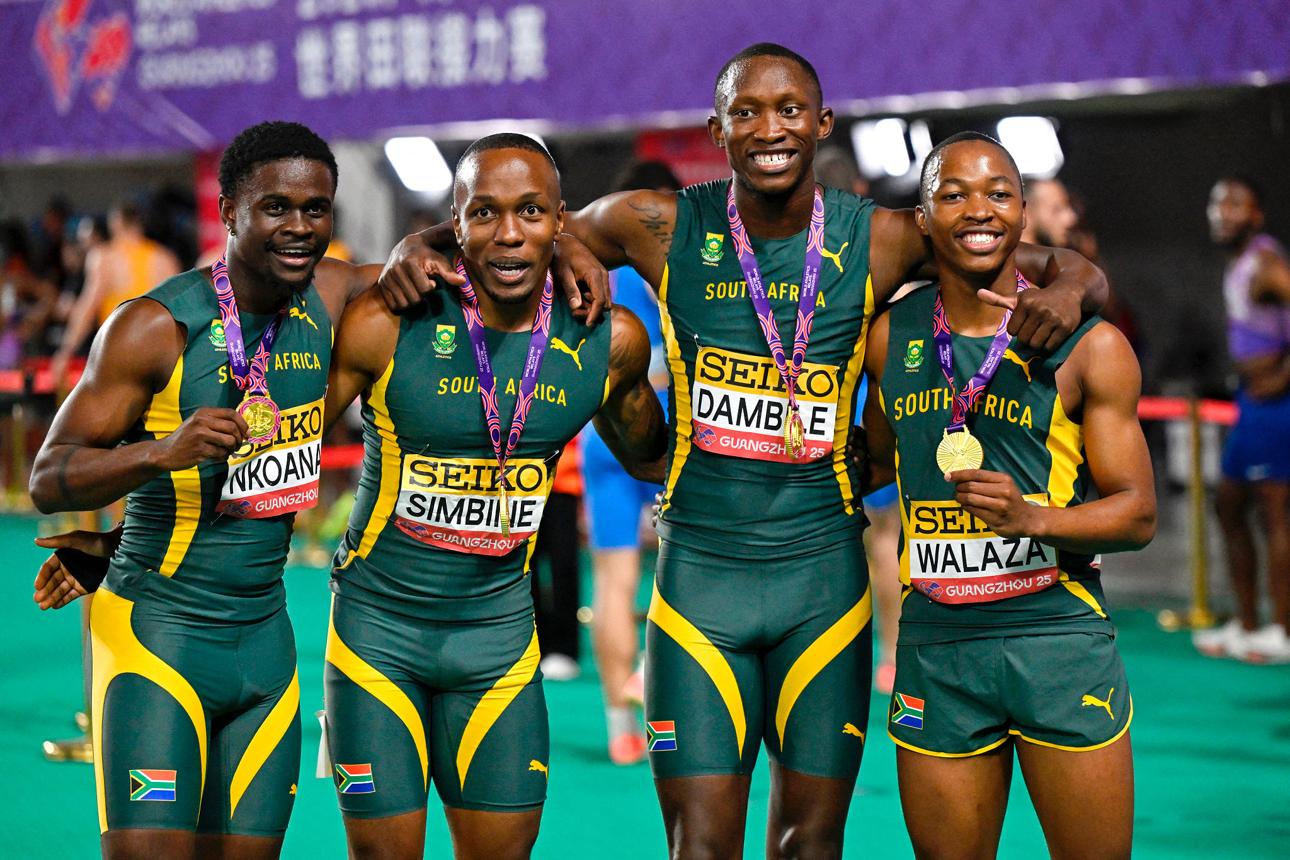
“Athletics South Africa (ASA) is undergoing a major governance overhaul after World Athletics demanded the removal of suspended president James Moloi, constitutional reforms and fresh elections within six months, warning that non-compliance could lead to provisional suspension. Jean Verster has been appointed acting president while the federation prepares a reform roadmap, leaving South African athletes facing uncertainty over the organisation’s international standing and future competitions.”
Athletics South Africa’s Governance Crisis Threatens International Future of Athletes as World Athletics Demands Sweeping Reforms
South African athletics is facing one of its most significant administrative challenges in recent years, with the national governing body, Athletics South Africa (ASA), under international pressure to implement comprehensive governance reforms. The crisis has placed the federation’s leadership, constitution and institutional credibility under scrutiny, while raising concerns about the possible consequences for athletes representing the country internationally.
The developments have emerged following investigations into financial misconduct involving suspended ASA president James Moloi and broader concerns about the federation’s governance structures. World Athletics, the international governing body responsible for track and field, has issued a six-month reform mandate that could ultimately result in provisional suspension if the federation fails to meet its obligations.
The situation has become particularly significant because South Africa remains one of Africa’s leading athletics nations, producing internationally competitive sprinters, relay teams and distance runners.
Jean Verster appointed acting president
In its latest leadership development, Athletics South Africa appointed Jean Verster as acting president, replacing John Mathane, who had been serving in the position following Moloi’s suspension.
The appointment was announced on November 2, 2026, after an ASA board meeting held on October 30. Verster, who previously served as the federation’s track and field chairperson, accepted the responsibility of providing interim leadership while the organisation works towards implementing the required reforms.
According to ASA, Verster’s appointment will remain in place until the federation’s council meeting scheduled for November 28. At that meeting, council members are expected to consider the interim leadership arrangement and determine the next steps in the organisation’s restructuring process.
The appointment followed a directive from Zakhele Dlamini, president of the Southern African Confederation of Athletics and vice-president of the Confederation of African Athletics, who has been involved in overseeing the reform process.
The decision represents an important administrative development, although it does not resolve the underlying institutional challenges facing the federation.
World Athletics demands comprehensive constitutional reforms
The international athletics governing body has identified several structural weaknesses within ASA that require urgent attention.
A fact-finding mission conducted in South Africa in September 2026 examined the federation’s governance and functioning. The resulting report identified divisions within the executive board, difficulties in collective decision-making, uncertainty regarding the authority of elected officials and conflicts of interest arising from overlapping national and provincial responsibilities.
World Athletics subsequently communicated its concerns to ASA in a letter dated October 15.
The international organisation instructed the federation to enforce the findings of its independent disciplinary panel concerning Moloi and undertake comprehensive constitutional reforms.
According to reporting by TimesLIVE, the six-month deadline requires ASA to reform its constitution and hold elections. Failure to satisfy the requirements could lead to provisional suspension, subject to applicable constitutional procedures.
World Athletics has emphasised that the problems identified are not simply disagreements between individual administrators. Instead, they reflect structural weaknesses that could prevent the federation from fulfilling its responsibilities effectively.
The reform process is therefore expected to address the distribution of authority, voting arrangements, financial oversight and accountability mechanisms.
James Moloi’s disciplinary findings intensify the crisis
The controversy surrounding former ASA president James Moloi has been central to the federation’s difficulties.
An independent disciplinary panel chaired by retired judge Basheer Waglay found Moloi guilty of two charges relating to the misuse of ASA funds. The panel concluded that his removal as president and executive board member was the appropriate sanction.
The findings followed investigations into the use of an ASA corporate credit card.
A forensic review by Forvis Mazars examined transactions made between May 2023 and April 2024. Reports indicated that the card had been used hundreds of times during the period, with more than R300,000 identified as unauthorised or personal expenditure.
The disciplinary findings prompted renewed calls for accountability within the federation.
World Athletics subsequently instructed ASA to implement the disciplinary panel’s decision without delay.
The controversy has become a wider governance issue because the international governing body believes the federation’s administrative shortcomings require institutional reform rather than merely the replacement of one individual.
ASA’s leadership transition is consequently being accompanied by demands for stronger financial controls, transparent decision-making and independent oversight.
November strategic planning meeting expected to shape reform roadmap
Athletics South Africa has announced another important step towards addressing the governance crisis.
The federation’s board resolved to convene a strategic planning meeting from November 13 to November 15, 2026.
The meeting is expected to focus on developing an organisational roadmap that aligns ASA’s governance and operational structures with the requirements communicated by World Athletics and the Confederation of African Athletics.
Zakhele Dlamini is expected to assist with the process.
The proposed roadmap will subsequently be presented to ASA’s council for consideration and formal adoption before being submitted to the relevant international and continental governing bodies.
The November 28 council meeting is therefore expected to become a significant moment in determining the federation’s immediate administrative future.
The council remains the federation’s supreme decision-making body, making its decisions central to the implementation of the constitutional reforms.
The process will also need to establish how future elections are conducted and how leadership responsibilities are distributed across the organisation.
Athletes remain at the centre of the uncertainty
Although the controversy concerns federation administration, the potential consequences extend directly to athletes, coaches and other participants in South African athletics.
South Africa has established itself as a competitive force in international track and field, particularly in sprinting and relay competitions.
Athletes such as Akani Simbine, Gift Leotlela, Zakithi Nene and Lythe Pillay have contributed to the country’s growing international profile.
The men’s relay teams have also produced outstanding performances at major competitions, including world championship and World Athletics Relay events.
However, international participation depends on the national federation maintaining its membership and meeting its obligations to World Athletics.
A provisional suspension could therefore create significant uncertainty for athletes seeking to compete under the South African flag.
The consequences could extend beyond elite competitors to developing athletes, national teams, coaches and domestic programmes connected to international competition.
This is why the reform process has become particularly important for the country’s sporting community.
The challenge facing ASA is to resolve its administrative difficulties without disrupting athlete development or undermining the competitive achievements of South African athletics.
South Africa’s athletics reputation faces a governance test
South Africa’s athletics achievements have historically provided the country with international recognition.
The national relay teams have demonstrated the ability to compete against leading athletics nations, while individual athletes continue to participate in major global competitions.
The federation’s current difficulties therefore represent more than an internal administrative dispute.
They raise questions about the relationship between sporting performance and institutional accountability.
A successful reform process could strengthen the organisation’s credibility, improve financial management and establish clearer responsibilities for elected officials.
However, failure to implement meaningful changes could deepen uncertainty and expose South African athletes to consequences beyond their control.
The international governing body’s intervention demonstrates the importance increasingly attached to transparent and accountable administration within national sporting organisations.
For ASA, the task is to demonstrate that reforms can be implemented effectively and that the interests of athletes remain central to its operations.
What happens next?
The next important developments are expected during November.
The strategic planning meeting from November 13 to November 15 will provide an opportunity to develop the proposed organisational roadmap.
The council meeting on November 28 will then consider the interim leadership arrangement and the federation’s direction.
These meetings will be closely watched because the international reform deadline remains in place.
ASA will need to demonstrate that constitutional amendments, leadership changes and governance improvements are progressing in accordance with World Athletics’ expectations.
The process will also require cooperation among administrators, provincial structures and other stakeholders involved in South African athletics.
Conclusion
Athletics South Africa is entering a decisive period in its institutional history.
The appointment of Jean Verster as acting president marks an important step towards stabilising leadership, while the proposed strategic planning meeting and council proceedings provide opportunities to establish a clearer reform pathway.
Nevertheless, the federation’s challenges remain substantial.
World Athletics has made it clear that constitutional reform, accountability and effective governance are essential requirements for maintaining international membership.
For South African athletes, the outcome is particularly important because their international opportunities depend partly on the stability and compliance of their national federation.
The coming weeks will therefore be critical in determining whether Athletics South Africa can successfully address its governance crisis, rebuild institutional confidence and protect the country’s position within international athletics.
The ultimate measure of success will not simply be administrative change. It will be whether the federation establishes a sustainable system that supports athletes, protects sporting opportunities and allows South Africa’s athletics talent to continue competing on the world stage.



