




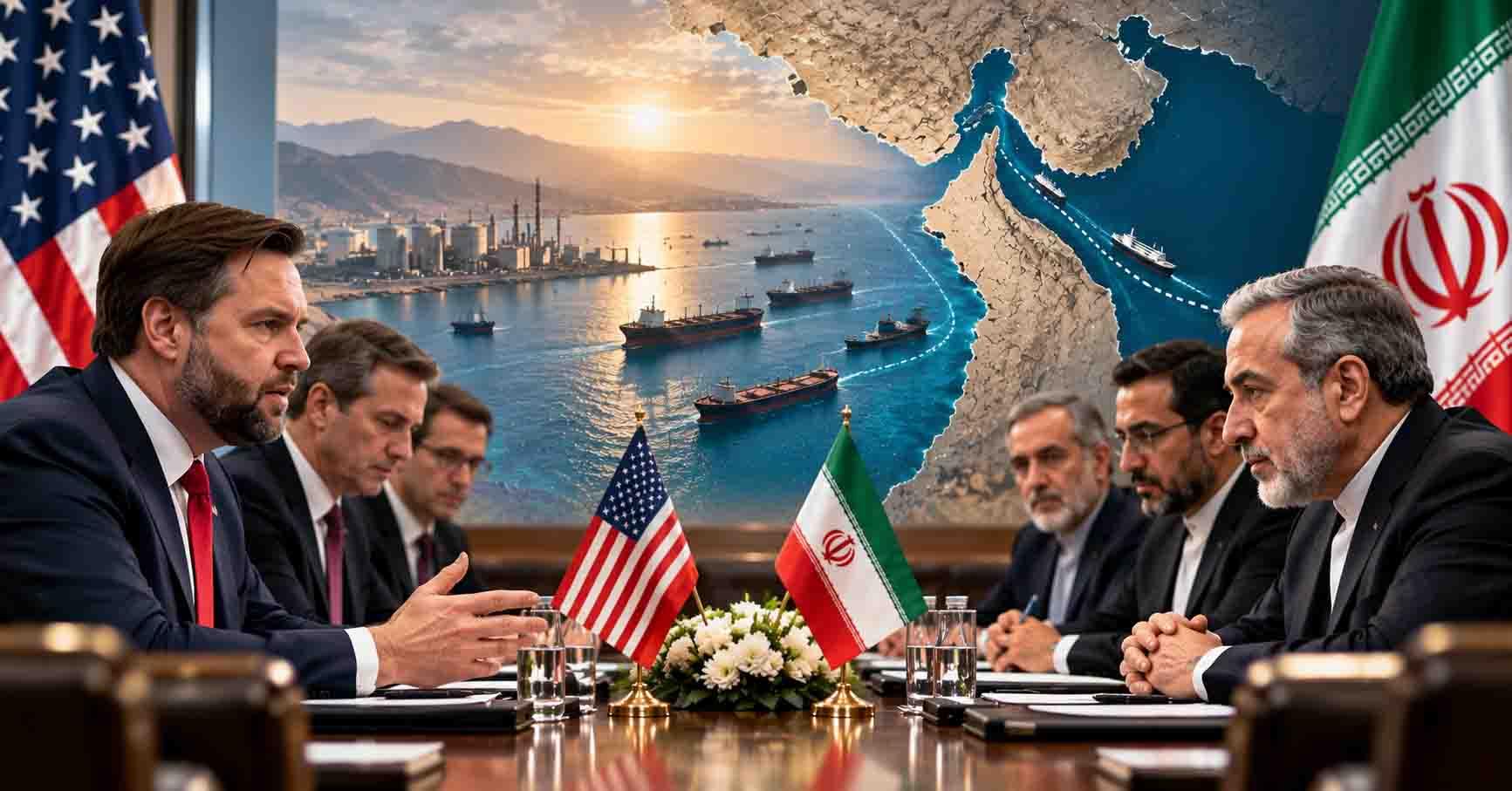
“A political setback for US President Donald Trump following the American midterm elections has intensified pressure on Washington to reconsider its approach to Iran, although the administration retains the authority to escalate military operations. The article examines the fragile diplomatic negotiations, growing security cooperation among Gulf countries, and the potential consequences of renewed conflict for international trade, maritime transport and regional stability.”
Iran tensions, US political pressure and the growing international security crisis
A political turning point in Washington
The possibility of renewed military confrontation between the United States and Iran is emerging as a significant international relations concern following the American midterm elections. The political outcome has created new pressure on President Donald Trump, whose administration faces increasing scrutiny over its foreign policy decisions and the economic consequences of the conflict.
According to Zeenat Adam’s analysis published by Mail & Guardian on 8 November, the Democrats’ victory and their control of both chambers of Congress have strengthened political opposition to the administration’s approach to Iran. The result could influence future decisions regarding military expenditure, diplomatic negotiations and the continuation of American involvement in the conflict.
However, the electoral outcome does not immediately remove presidential authority over foreign policy and military operations. The new Congress will only assume office in January, leaving a period during which the administration retains considerable freedom to make decisions regarding Iran.
Consequently, the international community faces an uncertain diplomatic environment. Washington could use the political pressure to pursue negotiations and reduce tensions, or it could attempt to demonstrate continued military strength before congressional opposition becomes more influential.
The distinction is particularly important because international conflicts frequently become entangled with domestic political considerations. Leaders may seek diplomatic solutions when confronted with economic pressure, electoral setbacks or public dissatisfaction. Alternatively, political challenges can encourage more aggressive foreign policy decisions intended to reinforce perceptions of national strength.
Diplomatic negotiations remain fragile
Despite the possibility of renewed hostilities, diplomatic engagement between Washington and Tehran has continued.
The Mail & Guardian analysis identifies Qatar as an important intermediary in efforts to restore negotiations. Qatar’s diplomatic position reflects its geographical proximity to Iran, its relationships with regional governments and its interest in preventing a conflict that could threaten Gulf stability.
Negotiations are complicated by substantial differences between American and Iranian demands.
Washington wants assurances that Iran will not rebuild its nuclear programme, while Tehran has demanded the removal of American restrictions, sanctions relief, the release of frozen financial assets and arrangements concerning the Strait of Hormuz.
These competing priorities demonstrate the difficulties involved in negotiating a comprehensive settlement.
Neither side appears willing to make substantial concessions without guarantees that the other party will fulfil its commitments. This creates a sequencing problem in which both governments demand progress from their counterpart before implementing significant changes.
The failure of previous diplomatic arrangements has further complicated the situation.
According to Adam’s analysis, an earlier agreement involving Pakistan and Qatar, intended to reopen the Strait of Hormuz and facilitate nuclear negotiations, collapsed after renewed attacks. The experience has contributed to distrust and increased the difficulty of establishing a durable framework for peace.
Diplomatic mediation therefore remains important, but its effectiveness depends on whether the parties can agree on credible guarantees, implementation mechanisms and a practical timetable.
Gulf countries confront growing security risks
The possibility of renewed conflict has encouraged Gulf governments to strengthen their security preparations.
Qatar continues to support diplomatic mediation while expanding its defensive capabilities. Its leadership has emphasised that negotiations must operate alongside preparedness for potential military threats.
The country is reportedly pursuing international partnerships involving missile defence, counter-drone technology and cybersecurity. Such developments illustrate a broader regional trend in which governments increasingly combine diplomacy with military preparedness.
Saudi Arabia, Pakistan and Türkiye have also strengthened security cooperation.
The Mail & Guardian article highlights the Makkah Joint Defence Agreement, signed in August, which provides a framework for collective defence, intelligence sharing and closer military cooperation.
The agreement has gained significance amid concerns about missile and drone attacks affecting regional infrastructure.
However, the emerging security arrangements should not automatically be interpreted as a unified military campaign against Iran. Regional governments have different strategic priorities, economic interests and diplomatic relationships.
Saudi Arabia, for example, has an interest in reducing direct confrontation with Tehran while maintaining sufficient defensive capacity to protect its territory and infrastructure.
This combination of diplomacy and security cooperation demonstrates the complexity of contemporary Middle Eastern international relations.
Maritime security and the Strait of Hormuz
One of the most important international consequences of renewed conflict would be the disruption of maritime transport.
The Strait of Hormuz is a strategic waterway connecting the Persian Gulf with international shipping routes. Its importance extends beyond the countries immediately surrounding it because it carries energy supplies and commercial traffic serving global markets.
A prolonged confrontation involving Iran and the United States could threaten shipping operations, increase insurance costs and disrupt energy exports.
Such consequences would affect countries far beyond the Middle East.
Energy-importing economies could face higher costs, while shipping companies might be forced to reconsider routes, schedules and insurance arrangements.
The crisis also highlights the importance of the Bab el-Mandeb Strait and the Red Sea.
These waterways connect important commercial routes between Europe, Asia and Africa. Instability affecting both the Strait of Hormuz and Red Sea shipping could create overlapping disruptions to international supply chains.
According to the Mail & Guardian analysis, reduced shipping activity through the Red Sea has already contributed to substantial economic pressure on countries dependent on maritime commerce.
Egypt, in particular, faces financial consequences when shipping disruptions reduce traffic through the Suez Canal.
The wider lesson is that maritime security is inseparable from international economic stability.
Infrastructure vulnerabilities extend beyond shipping
The potential consequences of conflict are not limited to oil supplies, ports and commercial vessels.
Modern international commerce also depends on undersea telecommunications infrastructure.
Fibre-optic cables connecting Europe, Asia, Africa and the Middle East carry enormous volumes of international data. These networks support banking, digital payments, communications, logistics and government services.
Damage to undersea cables could therefore produce consequences extending well beyond internet connectivity.
Financial institutions may experience communication disruptions, companies could encounter difficulties coordinating operations, and governments might face challenges maintaining essential digital services.
The article identifies previous cable damage in the Red Sea as an example of how maritime insecurity can affect telecommunications infrastructure.
This vulnerability creates additional responsibilities for governments and international organisations.
Protecting critical infrastructure increasingly requires cooperation involving maritime authorities, telecommunications operators, cybersecurity agencies and international partners.
The development also illustrates the changing character of international security. Traditional military threats remain important, but digital infrastructure and economic networks have become increasingly exposed to geopolitical conflict.
Implications for Africa and South Africa
Although the immediate confrontation concerns the United States, Iran and the Gulf region, its consequences are relevant to African countries.
South Africa maintains diplomatic and economic relationships with countries across the Middle East and has an interest in international stability, multilateral diplomacy and peaceful dispute resolution.
The country also depends on international trade and energy markets. Disruptions affecting maritime routes or global petroleum prices could influence transport costs, production expenses and inflation.
Higher shipping costs can affect imports and exports, particularly when companies face longer routes or increased insurance premiums.
South African businesses operating within international supply chains could experience additional uncertainty if commercial shipping becomes more expensive or less predictable.
Furthermore, the crisis has implications for South Africa’s broader foreign policy positioning.
Pretoria has historically emphasised diplomatic engagement, international law and multilateral cooperation in addressing international conflicts. A renewed confrontation involving major powers would place additional pressure on international institutions seeking to prevent escalation.
South Africa’s diplomatic approach would therefore need to balance national economic interests, relationships with international partners and its commitments to peaceful conflict resolution.
The importance of international law and multilateral diplomacy
The possibility of renewed military operations raises broader questions about international law and the responsibilities of governments involved in armed conflict.
The United Nations Charter establishes important principles concerning the use of force and the peaceful settlement of international disputes.
Diplomatic negotiations, mediation and confidence-building measures remain central mechanisms for preventing conflict escalation.
International institutions can provide platforms for communication, facilitate negotiations and support arrangements intended to reduce military tensions.
However, the effectiveness of these institutions depends partly on cooperation among major powers.
When governments prioritise unilateral military action over diplomatic engagement, international organisations may struggle to influence the outcome.
The Iran crisis therefore illustrates the continuing tension between national security strategies and collective approaches to international peace.
It also demonstrates why diplomatic channels must remain available even when governments disagree fundamentally over security priorities.
Economic consequences could become global
The economic implications of renewed conflict would potentially extend across multiple sectors.
Energy markets are particularly sensitive to uncertainty surrounding major producing regions and shipping routes.
Higher oil prices could increase transport and manufacturing costs, while disruptions to international logistics could affect the availability and affordability of goods.
Countries with limited fiscal resources may face additional pressure when energy prices increase.
For African economies, these developments could complicate efforts to manage inflation, support economic growth and maintain public spending.
The effects would not necessarily be uniform.
Energy-producing countries could benefit from higher export prices, while import-dependent economies could experience increased costs.
Nevertheless, widespread disruption to maritime commerce would generally increase uncertainty for international businesses and governments.
The crisis reinforces the importance of economic diversification, resilient supply chains and strategic planning.
Prospects for a diplomatic settlement
The immediate challenge remains whether Washington and Tehran can return to negotiations before renewed military action produces another escalation.
Qatar’s mediation, regional diplomatic engagement and security cooperation among Gulf governments demonstrate that several countries recognise the importance of preventing a prolonged conflict.
However, a durable agreement would require more than temporary de-escalation.
It would need to address nuclear concerns, sanctions, maritime security, regional military threats and the implementation of commitments by both parties.
Confidence-building measures could provide a starting point.
For example, an agreed reduction in military activity, improved communication between governments and practical arrangements concerning maritime transport could help create conditions for broader negotiations.
The challenge is ensuring that such measures survive political pressure and changing strategic calculations.
A successful settlement would also require regional governments to participate in discussions concerning the security arrangements that affect them directly.
Conclusion
The possibility of renewed war in Iran following the American midterm elections represents a significant international relations challenge with implications extending beyond the Middle East.
Domestic political pressure in Washington has created uncertainty over the administration’s future approach, while diplomatic negotiations remain complicated by competing demands and a history of failed agreements.
At the same time, Gulf governments are strengthening defensive capabilities, developing security partnerships and preparing for potential disruptions to maritime transport and critical infrastructure.
For South Africa and other African economies, the crisis highlights the importance of international stability, secure shipping routes and effective multilateral diplomacy.
Ultimately, the central question is whether political pressure and regional security concerns will encourage renewed negotiations or contribute to another escalation.
The answer will influence not only the future relationship between Washington and Tehran but also the security and economic environment affecting countries across the international system.



