




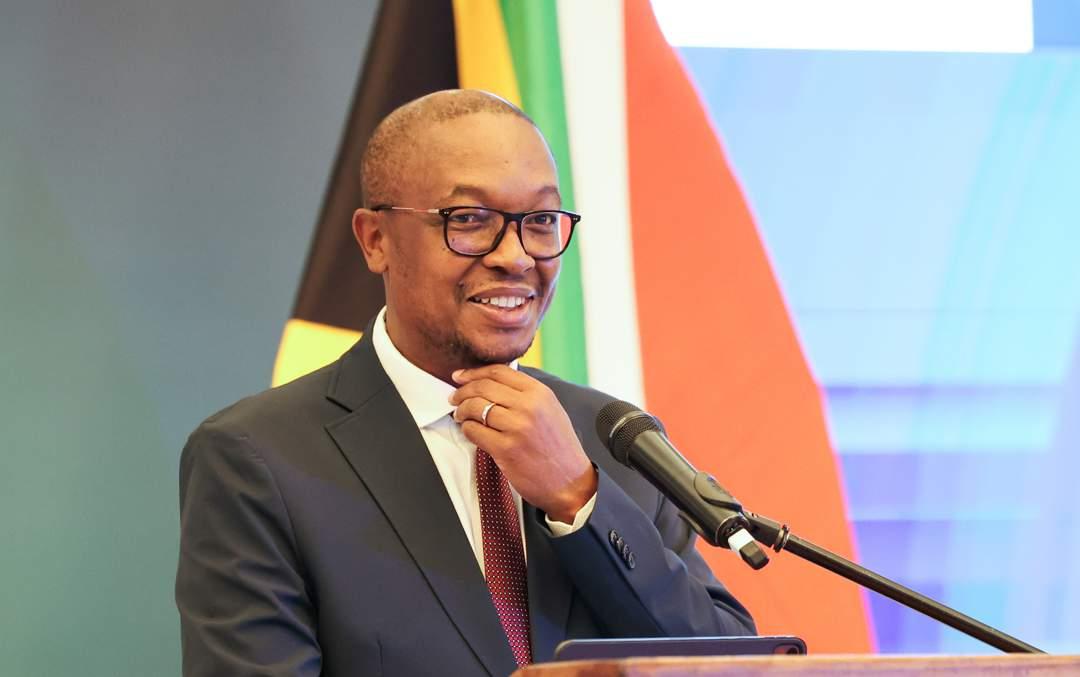
“South Africa’s Minister of Trade, Industry and Competition, Parks Tau, says the country’s Broad-Based Black Economic Empowerment (B-BBEE) framework must move beyond compliance certificates and ownership transactions towards meaningful economic participation, productive ownership and sustainable black-owned businesses. The government is reviewing the framework to strengthen its economic impact, improve opportunities for small businesses and expand participation in manufacturing, supply chains and exports.”
South Africa reviews B-BBEE policy to promote sustainable black-owned businesses and inclusive economic growth
JOHANNESBURG, 26 November 2026 – South Africa’s economic transformation agenda is entering an important period of policy review as government seeks to strengthen Broad-Based Black Economic Empowerment (B-BBEE), improve opportunities for black-owned businesses and ensure that economic transformation produces measurable benefits across the country.
The review is increasingly focused on moving beyond administrative compliance and towards meaningful ownership, productive business participation, industrial development and sustainable employment creation. Trade, Industry and Competition Minister Parks Tau has emphasised that the next phase of B-BBEE must deliver real economic outcomes rather than simply reward companies for meeting formal empowerment requirements.
The policy direction emerged prominently during the two-day Practice and Policy Conference on B-BBEE held in Johannesburg on 23 and 24 November 2026. The conference brought together government representatives, business leaders, academics, development finance institutions and economic policy specialists to examine the achievements, shortcomings and future direction of South Africa’s transformation framework.
The discussions were held under the theme, The Next Chapter: Evidence, Reform and the Path to Meaningful Inclusion.
Government wants transformation to produce measurable economic outcomes
Speaking at the conference, Minister Parks Tau explained that the original phase of B-BBEE had established an important foundation for economic transformation by introducing empowerment requirements into legislation, business scorecards and corporate decision-making.
However, government believes that the policy must now evolve to address the persistent barriers preventing historically disadvantaged entrepreneurs from building sustainable businesses and participating meaningfully in the productive economy.
Tau’s central message was that transformation must increasingly be measured through ownership that provides genuine control, productive assets, manufacturing capacity, supplier participation and export opportunities.
His position represents an important shift in emphasis. Rather than measuring success primarily through compliance documentation, the government wants to examine whether empowerment policies are helping businesses become commercially sustainable and competitive.
The minister also stressed that the review should strengthen B-BBEE rather than abandon its constitutional and economic transformation objectives.
This distinction is particularly important because South Africa continues to experience substantial differences in access to capital, business ownership, employment opportunities and participation in major economic sectors.
The government’s challenge is therefore to ensure that transformation requirements translate into opportunities that can be experienced by entrepreneurs, workers, suppliers and communities.
Black-owned businesses need greater access to productive opportunities
One of the central issues emerging from the conference was the sustainability of black-owned businesses.
Although empowerment policies have created opportunities for businesses to participate in corporate procurement and government supply chains, many enterprises continue to experience difficulties expanding beyond smaller contracts.
Access to finance, reliable customers, appropriate infrastructure, technology and business development support remains essential for enterprises seeking to grow.
A company may achieve the necessary empowerment credentials but still struggle to obtain the working capital required to purchase equipment, employ additional workers, increase production or fulfil larger contracts.
This demonstrates why the policy review is considering the relationship between ownership, enterprise development and industrialisation.
Government wants more black-owned enterprises to participate directly in manufacturing, agriculture, mining supply chains, professional services, construction and other productive industries.
The intention is to create businesses that can operate independently, generate revenue, employ workers and compete in domestic and international markets.
The emphasis on productive ownership also raises questions about the quality of business partnerships. Genuine empowerment should provide entrepreneurs with meaningful decision-making authority and opportunities to participate in the long-term growth of companies.
Consequently, the review could have important implications for how businesses structure partnerships, supplier development programmes and ownership arrangements.
Small and medium-sized enterprises remain essential to economic growth
The position of micro, small and medium-sized enterprises (MSMEs) was another major issue discussed during the conference.
These enterprises are particularly important because they create employment, support local economic activity and provide opportunities for entrepreneurs who might otherwise struggle to enter established industries.
Competition Commission representative James Hodge highlighted findings from the Commission’s May 2026 Concentration Tracker Report. According to the figures presented at the conference, MSMEs account for approximately 44% of employment in South Africa and are twice as employment-intensive as large businesses.
Nevertheless, many smaller enterprises face obstacles when attempting to expand their operations and compete with established companies.
The ability to enter a market does not automatically mean that a business can grow into a significant competitor. Smaller enterprises may obtain initial contracts but subsequently struggle to access financing, distribution networks, technology and larger commercial opportunities.
This creates an important policy challenge.
South Africa needs an environment in which successful small businesses can progress into medium-sized enterprises and eventually become established competitors in major industries.
The Competition Commission’s recommendations therefore place greater emphasis on supporting businesses that have already demonstrated commercial potential.
This could involve improved access to finance, more effective enterprise development programmes and stronger competition enforcement.
Such interventions could help address market concentration and allow emerging businesses to compete more effectively.
Financing remains a major obstacle
Access to finance remains one of the most significant challenges affecting the development of black-owned enterprises.
Businesses require capital to acquire machinery, purchase inventory, employ workers, develop technology, secure premises and expand production.
However, conventional financing arrangements can be difficult for smaller companies to access, particularly when they lack sufficient collateral, long trading histories or established relationships with financial institutions.
The conference discussions highlighted the importance of development finance institutions and other funding mechanisms in addressing these challenges.
Institutions such as the Industrial Development Corporation and the National Empowerment Fund have an important role in supporting enterprise development and productive investment.
However, financial assistance must be accompanied by effective business support.
Entrepreneurs need access to financial management expertise, market information, business planning, technology and commercial networks. Without these supporting services, businesses may struggle to convert financing into long-term growth.
A stronger B-BBEE framework could therefore place greater emphasis on whether funding programmes are helping enterprises increase production, improve productivity and create sustainable employment.
Economic concentration remains a structural challenge
Another important issue raised during the conference was the concentration of economic power in established sectors.
Former Statistician-General Dr Pali Lehohla argued that meaningful transformation would remain limited while economic leadership and influence continued to be concentrated in particular industries, particularly mining and financial services.
His contribution highlighted the need to address structural economic barriers rather than relying exclusively on ownership transactions and compliance measurements.
South Africa’s economic transformation challenge is closely connected to the distribution of productive opportunities.
Businesses operating in concentrated markets may find it difficult to enter established supply chains, obtain contracts or compete against companies with significant financial and operational advantages.
Lehohla also highlighted agriculture and local procurement as potential opportunities for expanding economic participation.
For example, stronger domestic agricultural supply chains could help small farmers and food producers supply institutions such as schools.
This approach could create opportunities for farmers, transport businesses, food processors and local distributors while keeping more economic value within communities.
It also demonstrates how government procurement can be used to support industrial development and local entrepreneurship.
Government rejects abandoning transformation policies
The B-BBEE review is taking place amid domestic and international debate about South Africa’s empowerment requirements.
Tau acknowledged pressure surrounding the country’s transformation policies, including concerns raised in the United States regarding empowerment and ownership requirements.
Nevertheless, the minister maintained that South Africa would not abandon its transformation objectives in exchange for trade concessions.
He argued that B-BBEE is rooted in the country’s constitutional and human rights framework.
This position indicates that government intends to defend the fundamental purpose of economic transformation while examining how the policy can be implemented more effectively.
The distinction between defending the objectives and reviewing implementation is important.
A policy can retain its central objectives while changing regulations, measurement systems and administrative processes to improve results.
The government’s stated intention is to make empowerment more credible, effective and closely connected to economic development.
For businesses, this means that the policy review should be monitored carefully because potential changes could influence procurement decisions, ownership structures, investment strategies and supplier relationships.
Public participation and evidence will influence future reforms
The government has also emphasised that the next phase of B-BBEE development must be informed by evidence and public participation.
Acting Deputy Director-General of Transformation and Competition at the Department of Trade, Industry and Competition, Dr Susan Mangole, said the framework should benefit all South Africans and be informed by reliable information.
The department intends to work with Statistics South Africa and other stakeholders to strengthen the evidence supporting future policy decisions.
Public consultations are also expected to give businesses, entrepreneurs, workers and communities opportunities to contribute their experiences and recommendations.
This is important because the effects of economic transformation differ across industries, provinces and business sizes.
A small agricultural enterprise, for example, may experience different challenges from a technology startup, a manufacturing company or a professional services firm.
Policy adjustments must therefore consider the different conditions affecting businesses across the country.
According to the government, a policy brief will be submitted to the department and the Presidency within 30 days following the conference. Full conference proceedings are expected within 60 days, while an edited academic publication is planned for 2027.
Draft regulatory changes provide another opportunity for input
The broader review is also taking place alongside regulatory processes affecting the B-BBEE framework.
The Department of Trade, Industry and Competition published draft amended B-BBEE regulations in Government Gazette No. 55718 on 13 November 2026.
The notice invites interested parties to submit comments within 30 days of publication, with the stated deadline of 13 December 2026.
This provides another opportunity for businesses, professional organisations, civil society and other interested stakeholders to participate in shaping the regulatory environment.
Companies affected by B-BBEE requirements should examine the draft regulations and consider obtaining appropriate professional advice before submitting comments or changing their compliance arrangements.
The regulatory process and the wider policy conference discussions are connected, but they should not be confused: the publication of draft regulations does not mean that every proposed change has already become law.
What the policy review could mean for South African businesses
The outcome of the B-BBEE review could influence several areas of the business environment.
For large corporations, the changes could affect procurement strategies, enterprise and supplier development programmes, ownership arrangements and relationships with emerging businesses.
For small and medium-sized enterprises, stronger implementation could create opportunities to access larger contracts, financing and established supply chains.
For entrepreneurs, the emphasis on productive ownership could encourage investment in manufacturing equipment, technology, agricultural production and other activities that generate long-term economic value.
Financial institutions and development finance organisations could also face increased expectations to support businesses with genuine growth potential.
However, successful implementation will depend on clear regulations, transparent funding arrangements, effective monitoring and accountability.
Businesses will need predictable policy requirements to make investment decisions and establish long-term partnerships.
Government, meanwhile, will need to ensure that policy reforms do not create unnecessary administrative burdens that disproportionately affect smaller enterprises.
The challenge is to establish a framework that encourages meaningful transformation while supporting business competitiveness, investment and economic growth.
Conclusion: A critical opportunity to reshape economic transformation
South Africa’s B-BBEE review represents an important opportunity to strengthen the relationship between economic transformation and sustainable business development.
Minister Parks Tau’s emphasis on meaningful ownership, productive assets, industrialisation and exports signals that government wants the next phase of empowerment to deliver more measurable economic benefits.
The discussions surrounding MSME financing, market concentration, supplier development and industrial participation demonstrate that transformation cannot be achieved through compliance requirements alone.
It requires an economic environment in which entrepreneurs can establish businesses, access capital, secure customers, employ workers and compete successfully.
The coming months will therefore be important as government considers conference recommendations, receives public input and develops proposals for the future framework.
Ultimately, the success of the review will depend on whether it translates into more sustainable black-owned enterprises, stronger local industries, increased employment and broader economic participation.
For South African businesses, investors and entrepreneurs, the message is clear: the future of B-BBEE is increasingly focused on turning formal empowerment commitments into productive economic opportunities.
The central test will be whether the revised framework can deliver meaningful transformation while building a stronger, more competitive and inclusive South African economy.



