




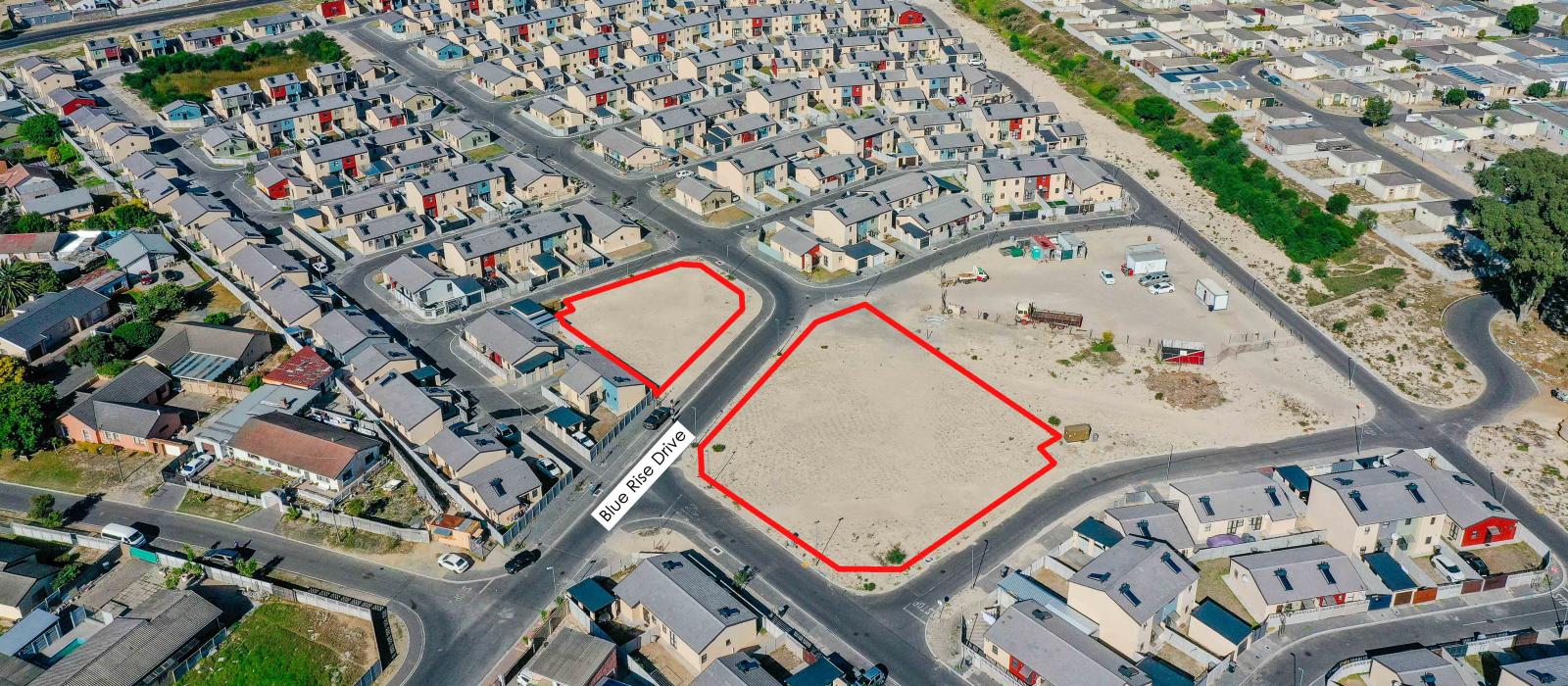
“The City of Cape Town is preparing to oppose a South African Human Rights Commission application seeking to stop the release of 49 municipal properties intended for residential, commercial and industrial development. The dispute has raised important questions about affordable housing, public land management, transparency, economic development and the responsibilities of government institutions in ensuring that municipal land benefits communities.”
Cape Town’s 49 Municipal Land Sites Face Legal Challenge as Affordable Housing and Economic Development Plans Come Under Scrutiny
South Africa | Real Estate – Land | 1 November 2026
Cape Town’s municipal land management strategy has become the focus of an important legal dispute after the South African Human Rights Commission (SAHRC) initiated proceedings seeking to stop the release of 49 municipal properties earmarked for residential, commercial and industrial development. The City of Cape Town has announced that it will vigorously oppose the application, arguing that releasing suitable public land is essential to addressing housing shortages, stimulating investment and creating employment opportunities.
The dispute has placed the future of municipal land development under the spotlight, particularly as South Africa continues to experience significant pressure on affordable housing, urban infrastructure and access to well-located residential properties. It also raises wider questions about how public land should be managed, who should benefit from its development and how government institutions can balance competing public interests.
The 49 municipal properties at the centre of the dispute
The dispute involves 49 municipal properties that the City of Cape Town intends to make available for different development purposes. According to the municipality, 28 of these properties are residentially zoned and intended to help address housing demand in several communities.
The identified residential areas include Mitchells Plain, Maitland, Goodwood, Kraaifontein, Somerset West and Durbanville. These locations are significant because access to appropriately located residential land can influence housing affordability, commuting costs and opportunities for economic participation.
The remaining properties include opportunities for commercial and industrial development. Areas identified for these activities include Atlantis, Delft, Parow and Mitchells Plain.
The municipality maintains that the properties have undergone land release processes, including public participation and a public auction process conducted in February 2026. It argues that making suitable land available for development can create opportunities for businesses, developers, investors and communities.
However, the SAHRC’s application has introduced uncertainty around the process. The legal challenge could affect the timing of individual developments while questions surrounding the release of public land are considered.
Affordable housing remains a major priority
One of the most important considerations in the dispute is Cape Town’s continuing need for affordable housing.
Like many growing urban centres in South Africa, Cape Town faces pressure from population growth, housing demand and the increasing cost of residential accommodation. Lower-income households frequently struggle to access formal housing in locations that offer convenient access to employment, education, healthcare and public transport.
The City says it has already released 14 municipal sites specifically for affordable housing purposes. Six of these sites are located in the inner city, where residential development could allow more people to live closer to employment opportunities and essential services.
According to the municipality, the 14 sites have a potential combined development capacity of approximately 7,000 residential units. These include around 4,000 affordable housing units and 2,500 social housing units.
These figures demonstrate the potential contribution that municipal land can make towards increasing housing supply. Nevertheless, land availability alone does not guarantee that homes will be completed. Developers must still secure financing, planning approvals, construction resources and the necessary infrastructure.
A further 39 properties are reportedly in the development pipeline. Together, these sites could accommodate approximately 40,000 residential units, including substantial affordable housing opportunities.
Eleven of the properties in this pipeline are located in the central business district. Their development could contribute to urban regeneration and encourage more residential activity in established commercial areas.
Public land as an economic development asset
Beyond housing, the municipal land release programme has implications for Cape Town’s wider economy.
Commercial and industrial land can support business expansion, attract private investment and create employment opportunities. For example, appropriately located industrial properties can accommodate manufacturing operations, logistics facilities, warehouses and other business activities.
The City maintains that its programme has generated 70 commercial and industrial opportunities during the current term of office. It has also created 55 opportunities involving social care and community facilities.
These developments demonstrate that municipal property can serve multiple public purposes rather than remaining unused.
The City has further reported that land releases generated approximately R628 million during the current term of office. According to the municipality, this revenue is channelled back into public services and infrastructure.
This approach highlights the potential financial value of municipal land when it is managed strategically. Instead of allowing suitable properties to remain undeveloped, local government can use them to support investment, increase economic activity and generate resources for service delivery.
However, successful implementation depends on ensuring that land transactions are transparent, legally compliant and aligned with the needs of surrounding communities.
Measures introduced to encourage affordable development
The City has introduced several measures intended to make affordable housing developments more financially viable.
These include discounted municipal land prices, assistance with bulk infrastructure, rates discounts for social housing developments and reduced utility costs for tenants.
Such measures are important because affordable housing projects frequently face financial constraints. Developers must balance construction expenses, land acquisition costs, infrastructure requirements and the rental or selling prices that target households can realistically afford.
The municipality is also encouraging mixed-use and mixed-income developments. Under these approaches, commercial activities and higher-income residential units can help subsidise more affordable accommodation within the same broader development.
This can reduce dependence on direct government grants while supporting more integrated urban communities.
Another initiative involves supporting smaller developers through planning reforms and a R20 million incentive fund. The funding is intended to help micro-developers cover bulk infrastructure connection costs.
Small-scale developers can play an important role in increasing the supply of affordable rental accommodation, particularly in established neighbourhoods and communities where larger development projects may not be commercially attractive.
National funding shortages threaten housing delivery
Despite the municipality’s land release initiatives, access to national housing funding remains a significant challenge.
The City says national grant funding for affordable housing has declined by 41.1% since 2017 when adjusted for inflation and population growth.
This reduction creates difficulties for social housing institutions and developers that depend on government financial support to deliver affordable rental accommodation.
The municipality has identified approximately 2,500 social housing opportunities in the central business district and surrounding areas that could move towards construction if the necessary funding became available.
It also reports that six funding applications for developments on City-released land have been submitted since the approval of funding for Maitland Mews in 2021, without further approvals being secured.
This situation illustrates the difference between making land available and delivering completed homes.
Even when suitable municipal properties have been identified and planning processes have progressed, projects can remain stalled without adequate financial resources.
The funding challenge therefore requires cooperation between national government, municipalities, social housing institutions, private developers and financial institutions.
Existing developments demonstrate the potential of municipal land
The City has pointed to several completed residential developments as evidence that releasing suitable municipal land can produce tangible results.
These include more than 200 social rental units at Maitland Mews, over 1,000 units at Goodwood Station and more than 400 units at Bothasig Gardens.
Such developments demonstrate how underutilised or strategically located land can contribute to increasing the supply of formal accommodation.
They also highlight the importance of integrating residential development with existing transport networks, employment centres and public infrastructure.
For residents, well-planned housing can reduce commuting expenses and improve access to essential services. For businesses, additional residential development can increase local economic activity and support demand for retail and other services.
Nevertheless, future developments must consider infrastructure capacity, environmental protection, transport requirements and the needs of existing communities.
Legal challenge raises questions about public accountability
The SAHRC application introduces an important institutional dimension to the dispute.
The Human Rights Commission has a constitutional role in promoting and protecting human rights in South Africa. Its involvement in matters concerning public land and housing highlights the importance of ensuring that government decisions are consistent with constitutional responsibilities.
The City, meanwhile, argues that its land release processes have involved extensive engagement and public participation.
Mayor Geordin Hill-Lewis has criticised the timing of the application, arguing that the commission raised its concerns after the municipality had responded to earlier enquiries and after the properties had undergone land release procedures.
The mayor has also indicated that the City intends to oppose the application.
It is important, however, to distinguish the municipality’s position from the outcome of the legal proceedings. The City’s intention to oppose the application does not establish that the SAHRC’s concerns are unfounded. Equally, the application itself does not establish that the municipal land releases are unlawful.
The legal process will be important in determining how the competing concerns should be addressed.
Implications for property investors and developers
For property investors and developers, the dispute provides an important reminder that municipal land opportunities must be evaluated alongside legal, regulatory and financial considerations.
Developers interested in acquiring public land should examine zoning permissions, title conditions, development restrictions, infrastructure availability and any legal proceedings that could affect a property.
Investors must also consider whether proposed developments are commercially sustainable and whether there is sufficient demand for the intended residential, commercial or industrial space.
For affordable housing developers, access to suitable land can create opportunities to build long-term rental portfolios and support growing urban communities.
However, uncertainty surrounding property transactions can delay investment decisions and increase development costs. Clear communication from public authorities and predictable legal procedures are therefore important for maintaining investor confidence.
The future of municipal land development in South Africa
The Cape Town dispute reflects a wider national challenge concerning the productive use of public land.
South Africa needs more affordable housing, stronger urban infrastructure and investment that can create employment. Municipal land can contribute to these objectives when it is released through transparent processes and supported by effective development planning.
At the same time, public property is an important community asset. Decisions concerning its disposal or development must consider public benefit, legal obligations, environmental concerns and the needs of affected residents.
The outcome of the SAHRC proceedings could therefore have implications beyond the 49 properties involved.
It may influence how municipalities approach public land disposal, community consultation, affordable housing initiatives and development partnerships in the future.
Conclusion
Cape Town’s decision to defend its proposed release of 49 municipal properties has brought the relationship between public land management, affordable housing and economic development into national focus.
The municipality argues that its programme can unlock residential opportunities, attract investment, create employment and generate revenue for public services. Its reported housing pipeline demonstrates the scale of development that could potentially be achieved if suitable land, infrastructure and financing are brought together.
However, the legal challenge also highlights the importance of accountability, transparency and public oversight when government assets are involved.
Ultimately, the success of South Africa’s land development strategy should not be measured simply by the number of properties released or their financial value. It should be measured by completed homes, sustainable businesses, employment opportunities, secure communities and improved access to essential services.
As the legal dispute progresses, Cape Town’s 49 municipal properties will remain an important example of the opportunities and challenges associated with unlocking public land for inclusive economic and residential development.



