




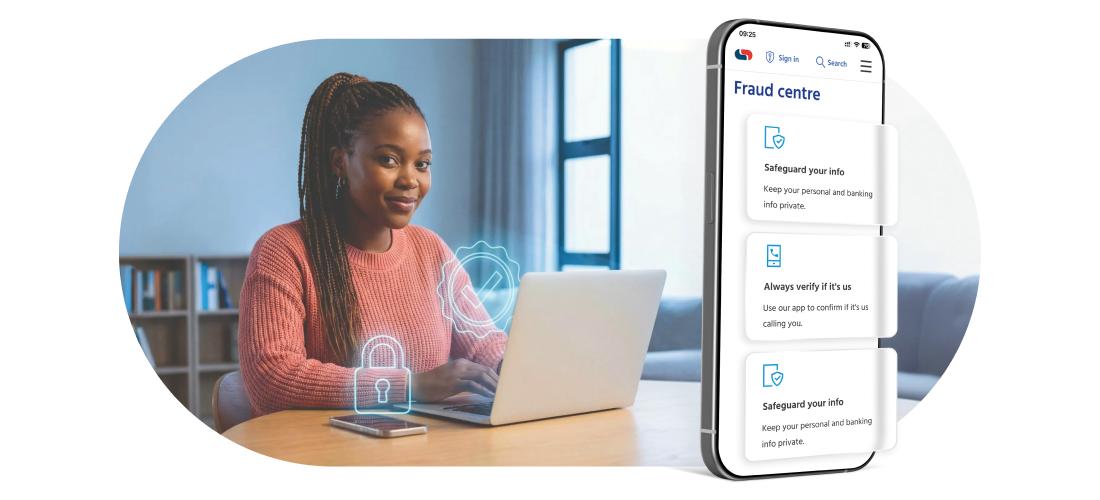
“Capitec has warned South African consumers that criminals are increasingly exploiting artificial intelligence, impersonation and emotional manipulation to steal money and confidential personal information. The bank urges customers to verify unusual payment requests independently, protect their banking credentials, keep applications updated and contact their bank immediately when they suspect fraud.”
Capitec Warns South Africans as AI, Impersonation and Psychological Manipulation Fuel Banking Fraud
Growing sophistication of financial crime
South Africa’s banking customers are facing increasingly sophisticated financial scams as criminals combine digital technology, impersonation and psychological manipulation to obtain money and confidential information. Capitec has issued a warning highlighting how fraudsters exploit fear, urgency, excitement and personal vulnerability to persuade people to make financial decisions they might otherwise question.
The warning was shared by Nick Harris, Capitec’s Head of Financial Crime, and Jean Rossouw, the bank’s Head of CSI and Financial Education. Their message is that financial crime is not restricted to inexperienced internet users or people unfamiliar with banking technology. Anyone can become a target when criminals successfully manipulate trust and emotions.
The development highlights an important challenge for South Africa’s banking industry. Although digital banking allows customers to transfer money, pay bills and manage accounts conveniently, the same connected environment provides criminals with additional opportunities to impersonate trusted institutions and exploit weaknesses in customers’ security habits.
Artificial intelligence changes the fraud landscape
Artificial intelligence is increasingly relevant to the financial crime conversation because it can support the creation of convincing messages and impersonation attempts. Criminals may use technology to improve the appearance, language or credibility of communications intended to deceive victims.
However, the central concern raised by Capitec is broader than AI alone. Fraudsters combine technological tools with established manipulation techniques, creating situations in which victims feel compelled to act before verifying the information they receive.
A message claiming that an account is compromised, for example, may encourage a customer to respond immediately. A supposed investment opportunity may promise unusually attractive returns, while a message from an apparently familiar contact may request an urgent transfer.
In each case, the objective is to reduce the time available for independent verification.
Customers therefore need to recognise that professional language, familiar names, convincing branding and realistic-looking messages do not automatically establish authenticity. Instead, the legitimacy of a request should be confirmed through an independent communication channel.
Why emotional manipulation remains effective
Financial scams frequently exploit circumstances that affect a person’s ability to evaluate risk calmly. Harris highlighted how grief, financial pressure and the desire to improve one’s circumstances can make people more susceptible to particular types of fraud.
Someone who has recently lost a loved one, for instance, may become vulnerable to a romance scam in which a criminal gradually establishes an emotional relationship before requesting money. Similarly, individuals struggling financially may be attracted to investment schemes promising rapid profits or a reliable route out of debt.
Young people entering employment can also encounter scams involving supposed job opportunities, account verification or requests to receive and transfer money on another person’s behalf.
These examples demonstrate why financial education must address human behaviour alongside technical security. Telling customers to create stronger passwords is important, but it does not fully address the pressure victims experience when someone they believe they trust asks for immediate assistance.
Capitec’s warning encourages families and friends to discuss fraud openly. Creating an environment in which people can ask questions without embarrassment may help prevent rushed decisions and make it easier for victims to seek assistance early.
WhatsApp impersonation creates additional risks
Messaging applications have become important communication tools for South African households and businesses. However, criminals may exploit these familiar platforms by taking control of accounts or impersonating people known to their targets.
According to the report, compromised WhatsApp accounts can be used to contact victims’ friends, relatives and colleagues with apparently legitimate requests. Messages may ask for money, request a one-time password, direct recipients towards suspicious links or instruct them to purchase gift vouchers and share redemption codes.
The danger is that recipients may trust the request because it appears to originate from someone they know.
A familiar profile photograph or telephone number should not be treated as conclusive proof of identity. When a message is unusual, unexpected or urgent, customers should contact the person using a previously verified number or another trusted communication method.
For businesses, similar precautions can help prevent fraudulent supplier-payment instructions and false requests supposedly issued by managers. Employees should independently verify changes to banking details before authorising payments, especially where the request introduces urgency or secrecy.
Essential steps for protecting banking accounts
Capitec recommends several practical measures to reduce exposure to financial crime. First, customers should use strong, unique PINs and passwords instead of predictable combinations such as birthdays or simple number sequences.
Banking credentials should not be stored in easily accessible phone notes, text messages or contact entries. Customers should also keep their banking applications updated and activate available security features.
These steps can reduce avoidable security weaknesses, although no single measure guarantees complete protection.
Before making a transfer, customers should establish whether the recipient and the reason for payment are genuine. This is especially important when someone claims that banking details have changed or that money must be moved to protect an account.
Consumers should also approach online shopping cautiously. Fraudulent advertisements, marketplace listings and unusually attractive offers can be used to encourage payments for goods or services that do not exist.
Visiting trusted websites directly, rather than following suspicious links, provides an additional layer of protection. Customers should carefully examine payment requests and avoid disclosing confidential information to people whose identities have not been independently verified.
Banks will never require customers to reveal confidential credentials
One of the most important warnings concerns requests for PINs, passwords and one-time passwords. Customers should never disclose these credentials to someone claiming to represent their bank.
Capitec also warns against instructions to transfer money into a supposed safe account or perform banking-app actions to protect funds. Such requests should be treated as serious warning signs.
Customers who receive suspicious calls or messages should stop the interaction and contact their bank through an official channel. They should not rely on telephone numbers, links or contact details supplied by the person making the questionable request.
The distinction matters because impersonation attempts can create the appearance of an official security procedure while directing customers towards actions that benefit criminals.
A legitimate concern about an account should be investigated through the bank’s established channels, rather than by following instructions from an unexpected caller or message.
Lost and stolen phones require immediate action
Mobile devices increasingly serve as gateways to banking applications, payment services, email accounts and messaging platforms. Losing a phone can therefore create several interconnected security risks.
Rossouw advised consumers to contact their bank immediately if a cellphone is lost or stolen, rather than notifying only the mobile network operator.
Customers should follow the bank’s official guidance for securing their accounts and protecting access to banking services. They should also consider the security of email and messaging accounts that could be used to reset passwords or impersonate them.
Acting quickly can reduce the opportunity for criminals to exploit an exposed device or use compromised accounts to target other people.
Financial institutions face a shared responsibility
The warning also highlights the relationship between individual behaviour and the wider responsibilities of financial institutions.
Banks must continue developing effective fraud-detection systems, communicating clearly with customers and providing accessible channels for reporting suspicious transactions. Customers, meanwhile, need practical guidance that helps them identify scams before authorising payments.
Financial education is particularly important because criminals adapt their methods as technology and customer behaviour change. Advice that concentrates exclusively on suspicious spelling or obviously fraudulent messages may not be sufficient when an impersonation attempt looks convincing.
Education should therefore emphasise verification, independent decision-making and the importance of refusing unexpected requests for confidential information.
Banks can also help by making security guidance readily available through their official websites, applications and customer-support channels.
For consumers, understanding the warning signs is valuable even when their primary bank is not Capitec. Impersonation, emotional manipulation and fraudulent payment instructions can affect customers across different institutions.
Implications for consumers and South Africa’s digital economy
Confidence is essential to the continued adoption of digital financial services. Customers need to feel that electronic payments and mobile banking are convenient without becoming careless about the risks associated with them.
Successful scams can cause more than immediate financial losses. Victims may experience emotional distress, disrupted household finances and reduced confidence in online transactions. Small businesses may also suffer when fraudulent payments affect working capital or interrupt relationships with suppliers.
These risks make prevention a shared priority for banks, consumers, businesses and financial educators.
Families can help by discussing suspicious messages before money is transferred. Employers can introduce verification procedures for payment instructions, while individuals can establish a habit of independently checking unexpected requests.
Importantly, customers should not assume that age or technical confidence makes them immune to fraud. Digital familiarity does not necessarily protect someone from emotional manipulation, and experienced banking customers can still be deceived by a convincing impersonation.
Conclusion: Verification remains the strongest first response
Capitec’s warning serves as a timely reminder that modern banking fraud often depends on manipulating people rather than simply breaking into computer systems.
Artificial intelligence and digital communication tools may make deception more convincing, but customers can reduce their exposure by slowing down, checking identities independently and refusing to disclose confidential banking information.
Anyone receiving an unusual payment request should contact the supposed sender through a trusted, separately verified channel before acting. Customers who suspect that their accounts or devices have been compromised should contact their bank immediately using official contact details.
For South Africa’s banking sector, the challenge is to combine secure technology with effective financial education. For customers, the most important principle is straightforward: never allow an unexpected message, urgent demand or attractive promise to replace independent verification.



