




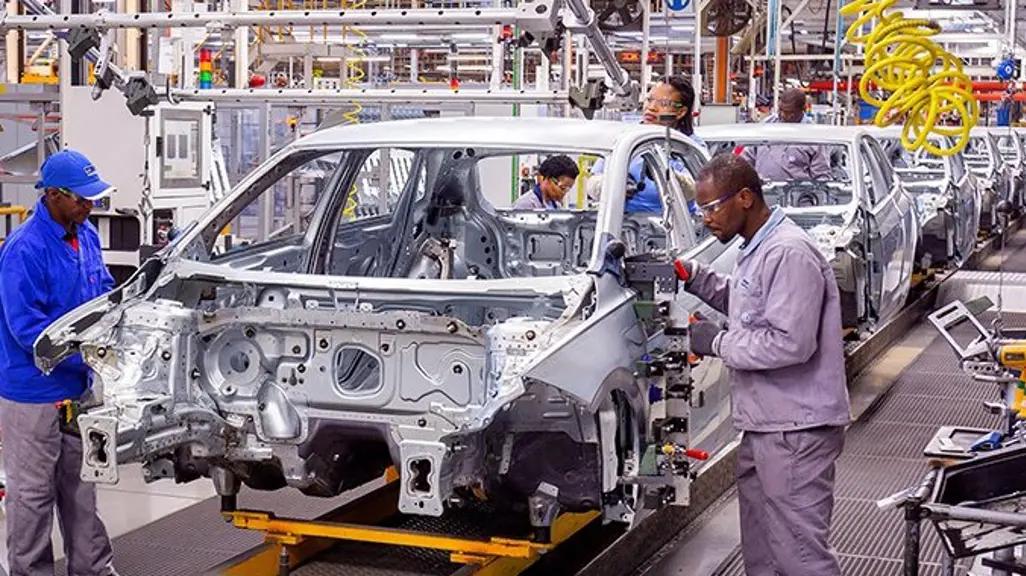
“South Africa plans to phase out policy support for manufacturers that assemble vehicles from semi-knocked-down kits imported from abroad, encouraging companies to invest in more comprehensive local production. The government’s strategy seeks to increase domestic content in vehicles from an average of 38% to 60%, create jobs and improve the country’s competitiveness in global automotive trade.”
South Africa Moves to Strengthen Local Automotive Manufacturing by Phasing Out Support for Imported Vehicle Kits
South Africa is preparing to reshape an important part of its automotive industry by phasing out policy support for vehicle assembly operations that depend on importing semi-knocked-down vehicle kits. The decision, announced by Trade, Industry and Competition Minister Parks Tau on 15 October 2026, signals a renewed effort to encourage deeper local manufacturing, strengthen domestic supply chains and improve the contribution of the automotive sector to economic growth.
The policy change comes as South Africa faces mounting pressure to protect industrial capacity, attract new investment and create employment in a challenging global trading environment. Although imported vehicle components remain important to manufacturers, the government wants companies benefiting from industrial incentives to undertake more substantial production activities inside the country.
According to Reuters, the revised approach forms part of a broader automotive industry strategy intended to increase domestic content in vehicles from approximately 38% to 60%, double employment in the sector and raise South Africa’s share of global vehicle production to 1% by 2035. These targets demonstrate the importance attached to manufacturing as a source of exports, investment and economic development.
Government Targets Deeper Local Production
Semi-knocked-down assembly involves importing vehicles in relatively advanced stages of completion, with manufacturers performing a limited amount of assembly locally. While such operations can establish a presence in a domestic market, they may generate fewer local manufacturing opportunities than facilities that produce vehicles using a wider range of locally manufactured components.
The government’s proposed phase-out is intended to encourage a transition towards more comprehensive manufacturing. Under this approach, manufacturers would face stronger incentives to establish production facilities, source components domestically and develop relationships with South African suppliers.
The distinction matters because automotive manufacturing supports activities beyond the final assembly line. Local production can generate demand for steel, plastics, glass, electronic components, tyres, wiring systems, seats, industrial equipment, logistics and specialised engineering services.
When more of these activities take place domestically, a larger proportion of automotive expenditure can circulate through the local economy. Suppliers may expand their operations, workers can acquire technical skills, and smaller manufacturers may gain opportunities to participate in established industrial supply chains.
However, achieving these benefits will require more than changing the rules governing vehicle assembly. Manufacturers must also be able to operate competitively, access reliable transport infrastructure and obtain components at prices that allow them to compete with imported vehicles.
Understanding the Difference Between SKD and CKD Assembly
The policy debate centres on the difference between semi-knocked-down assembly, commonly known as SKD, and complete-knocked-down manufacturing, or CKD.
SKD operations typically involve importing vehicles or substantial vehicle assemblies in a form that requires relatively limited work before completion. CKD manufacturing generally involves assembling vehicles from a more extensive collection of components, with the possibility of greater local sourcing and manufacturing activity.
The government intends to tighten the definition of qualifying CKD manufacturing to ensure that companies receiving policy support undertake meaningful production rather than simply completing limited assembly tasks.
This distinction is important for trade policy because tariff arrangements and industrial incentives can influence where manufacturers locate production activities. If imported kits receive favourable treatment while companies investing in extensive local production face higher costs, the policy framework may unintentionally discourage deeper industrial investment.
Industry representatives have argued that some SKD arrangements benefit from import classifications that reduce duties on certain components, including engines. They contend that these arrangements can allow companies to enter the market without making investments comparable to those required for full-scale manufacturing.
BMW Group South Africa and Toyota South Africa Motors have previously expressed support for phasing out SKD operations in favour of stronger CKD production, according to Reuters. Their position reflects a broader concern that the country should reward investments that develop manufacturing capacity rather than arrangements primarily focused on assembling imported products.
Nevertheless, SKD operations can serve commercial purposes, particularly when manufacturers are testing markets or producing limited volumes. The policy challenge is therefore to establish a transition that encourages industrial development without unnecessarily disrupting existing businesses or reducing consumer choice.
Domestic Content and Employment Are Central Priorities
Increasing local content from 38% to 60% represents one of the most significant ambitions associated with the automotive policy changes.
Domestic content measures the proportion of a product’s value attributable to local inputs and activities. Raising that share would require manufacturers and suppliers to expand the range of goods and services produced within South Africa.
Potential opportunities include component manufacturing, metal fabrication, vehicle electronics, tooling, industrial maintenance, software-related automotive systems and specialised logistics. Businesses supplying these activities could benefit if manufacturers commit to sourcing more inputs locally.
Employment is another important consideration. Automotive production supports direct jobs at assembly plants, but it also sustains employment throughout supplier networks and related services.
Greater domestic production could create opportunities for engineers, technicians, machine operators, production planners, quality-control specialists, logistics personnel and apprentices. It could also support small and medium-sized enterprises that provide parts, repairs, packaging, transport and other industrial services.
The government’s ambition to double automotive employment therefore depends on whether policy changes generate additional investment and production, rather than merely shifting existing activity between manufacturing categories.
Training will be particularly important. Modern vehicle production increasingly involves electronics, automation, precision engineering and sophisticated quality-control systems. South African workers and suppliers must develop these capabilities if domestic production is to become more competitive.
At the same time, increasing local content may prove difficult if certain components are significantly cheaper to import. Manufacturers will need sufficient production volumes, dependable suppliers and predictable demand to justify establishing new domestic operations.
Trade Policy Faces a Delicate Balancing Act
The planned changes illustrate a central challenge for South African trade policy: balancing access to international products with the development of competitive domestic industries.
Imports can provide consumers and businesses with lower prices, wider product choices and access to technologies that are not readily available locally. They also supply manufacturers with components needed to produce goods for domestic and export markets.
However, when imports replace locally manufactured products on a large scale, domestic producers can lose sales, reduce production or postpone investment. The consequences can extend beyond individual factories to suppliers, workers and industrial communities.
The government’s position is that public policy should encourage manufacturers to establish deeper production operations in South Africa. Yet successful implementation will require careful consideration of how incentives, customs duties, import rules and industrial development objectives interact.
Tariffs alone cannot guarantee competitiveness. If domestic manufacturers face high electricity costs, expensive financing, inefficient logistics or lengthy regulatory processes, protection from certain imports may not be enough to attract new investment.
Conversely, excessively restrictive measures could raise input costs for businesses that depend on imported components and ultimately make locally assembled vehicles more expensive.
The policy’s effectiveness will therefore depend on whether it creates incentives for genuine investment while maintaining a competitive and predictable trading environment.
Automotive Exports and International Competitiveness
South Africa’s automotive industry has an important role in international trade, making the competitiveness of local production central to the government’s ambitions.
Manufacturers must be able to serve domestic customers while also competing in overseas markets. Increasing local content could strengthen industrial capabilities, but only if locally produced components meet international standards for quality, price and reliability.
A stronger domestic supplier network could reduce dependence on selected imported inputs and help manufacturers respond more effectively to supply disruptions. It could also create opportunities for South African companies to supply automotive businesses operating elsewhere in Africa and beyond.
However, export success requires manufacturers to satisfy international buyers consistently. Production costs, delivery schedules, technical standards and access to international distribution networks all influence purchasing decisions.
The government’s target of increasing South Africa’s share of global vehicle production to 1% by 2035 is therefore ambitious. Achieving it will depend on new investment, improved productivity, market access and a stable operating environment.
Manufacturers will also need confidence that South Africa can support production over the long term. Automotive facilities require substantial capital expenditure, and companies generally assess infrastructure, labour availability, policy stability and potential export demand before committing funds.
Government Reviews Automotive Incentives
Alongside the phase-out of SKD support, the government is reviewing the Automotive Production and Development Programme with industry representatives, component manufacturers and organised labour.
This review provides an opportunity to examine whether existing incentives encourage the desired investment and production outcomes. It could also help identify barriers preventing local suppliers from expanding and participating more extensively in automotive manufacturing.
The government has indicated that additional protection for certain light commercial vehicles may be investigated. Reuters reported that Tau intended to instruct the International Trade Administration Commission of South Africa to examine the ladder-frame light commercial vehicle segment before a final decision on further support.
Any additional protection would need to be accompanied by reciprocal commitments relating to production, localisation, employment, transformation, exports and investment.
Such commitments could help ensure that assistance delivers measurable economic benefits. Nevertheless, the details of implementation, eligibility and enforcement will be important in determining how effectively the revised arrangements work.
Challenges Facing Manufacturers and Consumers
The transition will not be without risks. Companies currently operating under SKD arrangements may need to reconsider their business models, while prospective investors will have to evaluate the costs of establishing more extensive manufacturing facilities.
For smaller manufacturers, the investment required to increase local production could be substantial. Access to finance, technical expertise and reliable suppliers will influence whether these businesses can adapt successfully.
Consumers could also be affected if changes to production arrangements increase vehicle prices or limit the availability of particular models. Policymakers will need to monitor these risks while pursuing the longer-term objective of building a stronger industrial base.
At the same time, established manufacturers may welcome a more consistent policy framework that rewards deeper investment and reduces advantages associated with limited assembly operations.
The overall outcome will depend on how the government balances industrial development with competition, affordability and the country’s wider trade commitments.
Outlook for South Africa’s Trade Economy
South Africa’s decision to phase out support for imported vehicle kits represents a significant attempt to strengthen the connection between industrial incentives and domestic economic activity.
The policy offers opportunities to expand supplier networks, develop technical skills, increase manufacturing investment and improve the automotive sector’s contribution to exports. However, those benefits will depend on the availability of competitive infrastructure, skilled workers, affordable finance and reliable industrial inputs.
Businesses will be watching the implementation timetable, the revised definition of CKD manufacturing and the results of the broader incentive review. These details will help determine how quickly manufacturers must adapt and what investment opportunities emerge.
Ultimately, South Africa’s success will be measured not simply by a reduction in SKD operations, but by whether the changes lead to additional production, stronger local suppliers, sustainable employment and more competitive exports.
The policy direction is clear: the government wants automotive companies to contribute more substantially to the domestic economy. Turning that ambition into measurable results will require coordinated action from policymakers, manufacturers, workers and suppliers.
For South Africa, the challenge is to ensure that stronger local manufacturing becomes a foundation for international competitiveness rather than an expensive substitute for it.



