




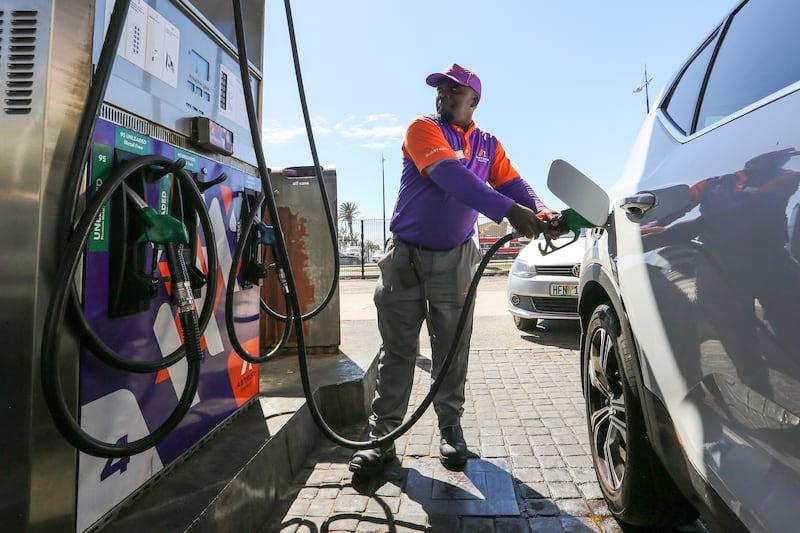
“South Africa’s economic activity declined for a second consecutive month in October 2026 as elevated fuel prices, constrained household purchasing power and higher business operating costs continued to weaken economic conditions. The PayInc Economic Index fell 0.7% month-on-month to 103.1, highlighting how fuel costs influence consumer spending, production, transportation and the pricing of everyday goods and services.”
South Africa’s Economic Activity Remains Under Pressure as High Fuel Costs Squeeze Consumers and Businesses
South Africa’s economic recovery continues to face significant obstacles as elevated fuel prices, weakening consumer purchasing power and rising business operating costs weigh on economic activity. Latest economic indicators show that the country’s economy experienced another monthly decline in October, highlighting the growing pressure on households, retailers, manufacturers and transport-dependent businesses.
The PayInc Economic Index declined by 0.7% month-on-month in October to 103.1, following a 0.4% decrease in September. Although the index remained 0.4% above its level a year earlier, its consecutive monthly declines indicate that economic momentum has weakened considerably during the second half of 2026.
The development is particularly important because it illustrates how microeconomic pressures affecting individual consumers and businesses can influence broader economic performance. Rising production costs, reduced household spending power and changing purchasing behaviour are increasingly shaping activity across South Africa’s markets.
Fuel Prices Continue to Influence Household Spending
Fuel remains one of the most significant expenses affecting South African households and businesses. The country’s dependence on imported crude oil and petroleum products exposes domestic consumers to international supply disruptions, geopolitical instability and fluctuations in global energy prices.
The conflict involving the United States and Iran has contributed to instability in international oil markets, disrupting supply expectations and increasing petroleum costs. Consequently, South African motorists and businesses have experienced substantial increases in fuel expenditure.
According to reporting published by Business Day on November 12, domestic petrol prices have increased by more than 48% since the conflict began in late February, while diesel prices have risen by more than 66%.
These increases have important consequences for household budgets. Consumers who spend more on petrol, public transport and commuting have less money available for groceries, clothing, entertainment, household appliances and other discretionary purchases.
For lower-income households, the effects can be particularly severe because transportation and food frequently account for substantial proportions of monthly expenditure.
As fuel prices increase, consumers may respond by purchasing cheaper products, reducing shopping frequency, postponing purchases or abandoning nonessential spending altogether.
Such behavioural adjustments are important microeconomic developments because they demonstrate how consumers respond to changes in prices and disposable income.
Businesses Face Higher Operating Costs
The impact of expensive fuel extends beyond motorists to businesses operating throughout South Africa’s economy.
Manufacturers depend on electricity, transportation, machinery, raw materials and distribution networks to produce and deliver goods. Higher diesel and petrol costs therefore increase expenses across production and logistics chains.
Mining companies require substantial transportation and machinery inputs, while agricultural businesses depend on fuel for planting, harvesting, irrigation equipment and moving produce to markets.
Retailers also experience higher distribution costs because products must be transported from manufacturers, warehouses and suppliers to stores.
Small businesses face additional challenges because they often have limited financial reserves and less bargaining power when negotiating transportation contracts, supplier prices or commercial financing.
When operating costs rise, businesses generally have several possible responses: absorb the additional expenditure, increase selling prices, reduce production, improve efficiency or limit employment and investment.
Each option carries consequences.
Businesses that increase prices risk losing customers to competitors. Those that absorb higher expenses may experience declining profitability. Meanwhile, companies that reduce production or employment could contribute to weaker economic activity.
This creates a difficult environment for enterprises attempting to maintain competitiveness while protecting consumers from additional price increases.
Manufacturing Weakness Highlights the Pressure
South Africa’s manufacturing sector has been particularly vulnerable to the combination of expensive fuel and weaker economic demand.
Statistics South Africa reported that factory output contracted by 3.5% year-on-year in September 2026. The largest declines were recorded in motor vehicles, parts and accessories, and other transport equipment.
Other manufacturing categories, including basic iron and steel, nonferrous metal products, metal products and machinery, also recorded declines.
Manufacturing performance matters because the sector supports employment, exports, industrial investment and numerous businesses supplying intermediate goods and services.
When production declines, manufacturers may reduce purchases from suppliers, operate machinery less intensively, postpone capital expenditure and reconsider recruitment.
These adjustments can affect smaller businesses throughout industrial supply chains.
A manufacturer producing fewer vehicles, for example, may purchase fewer components from suppliers. Those suppliers may subsequently reduce production, overtime or hiring.
Consequently, weakness in one market can spread into other industries through commercial relationships.
The manufacturing challenges also highlight the importance of production costs in determining competitiveness. Businesses facing higher transportation expenses and expensive inputs may struggle to maintain prices against international competitors.
Consumers Become More Price Sensitive
Higher living costs are changing purchasing behaviour across South Africa’s consumer markets.
When household budgets become constrained, consumers increasingly compare prices, search for promotions and substitute expensive products with cheaper alternatives.
Retailers operating in essential goods markets may benefit from consumers trading down to lower-priced products, while premium retailers can experience weaker demand for discretionary merchandise.
Recent company reporting illustrates these pressures.
Reuters reported on November 11 that Woolworths Holdings recorded only a 0.2% increase in group turnover and concession sales over its latest 19-week reporting period. The retailer attributed weak consumer spending to higher fuel prices and persistent cost-of-living pressures.
The development demonstrates how macroeconomic pressures translate into commercial outcomes for individual companies.
Consumers are not necessarily abandoning shopping altogether. Instead, they may be adjusting the composition of purchases, reducing spending on nonessential items or prioritising necessities.
This distinction is important because retail sales growth can weaken even when consumers continue purchasing substantial quantities of essential goods.
Electronic Payments Reveal Changing Shopping Patterns
Despite declining economic activity, South Africa’s electronic payment transactions reached a record 212.1 million in October, according to PayInc.
The transaction volume increased from 197.3 million in September and was 12.3% higher than a year earlier.
The nominal value of transactions also increased, rising from approximately R1.447 trillion in September to R1.528 trillion in October.
These figures present an interesting picture of consumer behaviour.
Higher transaction volumes do not necessarily indicate stronger consumer purchasing power. Instead, consumers may be conducting smaller purchases more frequently.
For example, households could purchase groceries weekly rather than monthly, buy airtime in smaller amounts or divide payments between different transactions.
Such behaviour can increase transaction counts without representing an equivalent increase in real consumption.
The distinction between transaction volume and transaction value is therefore important when interpreting economic activity.
Competition and Pricing Remain Important
Fuel-related cost increases also raise questions about competition and price adjustments in South African markets.
When transportation costs rise, businesses may increase prices to protect margins. However, the extent to which higher costs are passed on to consumers depends on market competition, customer sensitivity and the availability of alternative suppliers.
In competitive markets, companies may struggle to increase prices because customers can switch to cheaper alternatives.
In markets with limited competition, businesses may have greater flexibility to pass costs onto consumers.
South Africa’s Competition Commission has previously raised concerns about food prices remaining elevated even when certain agricultural input costs decline.
Its September 2026 cost-of-living report highlighted concerns about pricing behaviour in several food markets and questioned whether consumers consistently benefit when production costs fall.
The regulator has also examined the relationship between producer prices, retail prices and business margins in essential food markets.
These concerns are relevant because food affordability remains a major issue for households experiencing pressure from transportation, electricity and other essential expenses.
Effective competition can help encourage businesses to improve efficiency, reduce unnecessary costs and provide better value to consumers.
Lower International Oil Prices Offer Some Relief
There are emerging signs that international oil markets could become less expensive.
Business Day reported that Brent crude prices had declined to approximately $91 per barrel, compared with nearly $117 on October 30.
The decline reflects changing expectations surrounding geopolitical developments and the possibility of improved oil supply conditions.
If international oil prices remain lower, South African consumers and businesses could benefit from reductions in petrol and diesel prices during December and January 2027.
Lower fuel prices would improve household disposable income and reduce operating costs for transport companies, manufacturers, agricultural businesses and retailers.
However, the final domestic fuel price depends on several factors, including international petroleum prices, exchange-rate movements, fuel levies and other regulated components.
Therefore, a decline in global crude prices does not automatically translate into an equivalent reduction at South African filling stations.
The duration and magnitude of any relief will depend on whether international prices remain stable and whether currency conditions support lower import costs.
Employment and Household Income Remain Central Challenges
South Africa’s weak economic activity is occurring against a background of persistent unemployment and limited income growth for many households.
Official unemployment increased from 33.6% in the second quarter of 2026 to 33.7% in the third quarter.
Employment increased by approximately 101,000 people, but the number of unemployed individuals also increased by 97,000 as the labour force expanded.
These developments underline the difficulty of improving household purchasing power when employment opportunities remain insufficient.
Employment is particularly important for microeconomic activity because wages determine the resources households can allocate to goods and services.
When employment opportunities are limited, businesses face weaker demand, while consumers experience difficulty maintaining living standards.
This creates a cycle in which weak demand discourages investment and employment, further constraining household spending.
Small Businesses Need Greater Resilience
Small and medium-sized enterprises are among the businesses most exposed to higher operating costs.
Many smaller enterprises operate in transport, retail, food services, construction, agriculture and distribution markets where fuel represents an important expense.
Their ability to adjust prices may be limited by customer affordability and competition.
For these businesses, improving operational efficiency can become essential.
Strategies may include consolidating deliveries, reducing unnecessary travel, negotiating supplier contracts, adopting digital payment systems and improving inventory management.
However, efficiency improvements cannot entirely compensate for prolonged increases in fuel costs, weak demand or structural infrastructure challenges.
Access to financing and reliable transportation infrastructure remains important for businesses seeking to maintain operations and expand employment.
Outlook for the Festive Trading Season
The approaching festive season presents both opportunities and risks for South African retailers.
Businesses traditionally expect increased spending during November and December as consumers purchase food, clothing, gifts and travel-related services.
Nevertheless, higher fuel prices and constrained household finances could limit the extent of seasonal spending.
Consumers may concentrate purchases on necessities, compare promotional offers more carefully and avoid expensive discretionary products.
Retailers will consequently need to balance inventory planning, pricing strategies and operating expenses against uncertain demand.
Businesses that provide affordable products and demonstrate strong value could attract consumers seeking to stretch their budgets.
Conclusion
South Africa’s latest economic indicators demonstrate how elevated fuel prices, constrained household purchasing power and increasing production expenses are affecting individual markets and businesses.
The 0.7% monthly decline in the PayInc Economic Index reinforces concerns about weakening economic momentum, while manufacturing contraction and subdued retail performance illustrate the challenges confronting producers and consumers.
Although declining international oil prices offer potential relief, a sustained improvement in economic activity will depend on broader developments involving employment, investment, competition, infrastructure efficiency and household incomes.
For South African consumers and businesses, the immediate priority remains managing costs while navigating an economic environment characterised by uncertainty and limited purchasing power.
Ultimately, stronger economic activity requires conditions that enable households to spend confidently, businesses to operate competitively and producers to expand investment and employment.



