




“The South African rand remained broadly steady during early Friday trading as softer oil prices and firmer commodity prices provided support, while investors positioned themselves ahead of the country’s upcoming inflation figures and the South African Reserve Bank’s monetary policy decision. Market participants are closely watching the inflation outlook, international commodity movements and currency stability to assess the likely direction of interest rates and the implications for South African financial markets.”
South African Rand Steady as Investors Await Inflation Data and Interest-Rate Decision
South Africa’s financial markets entered Friday, 13 November 2026, with investors closely monitoring the rand, international commodity prices and the country’s upcoming inflation figures as preparations intensified for the South African Reserve Bank’s next monetary policy decision. The currency remained broadly steady during early trading, supported by softer oil prices and firmer commodity prices, while market participants continued assessing the implications of inflation developments for interest rates, equities and the broader investment environment.
The latest currency movements reflect a financial market environment in which domestic economic conditions and international developments increasingly influence investment decisions. Although the rand’s relative stability offered some reassurance to investors, uncertainty surrounding inflation, borrowing costs and global financial conditions continued to shape market expectations.
Rand Stability Reflects Changing Market Expectations
The South African rand was broadly steady during early Friday trading, according to Reuters, as investors positioned themselves ahead of important domestic economic announcements expected during the following week.
The currency’s performance attracted particular attention because exchange-rate movements influence several important components of the South African economy, including import costs, inflation, corporate profitability and investor confidence.
A stable rand can help reduce uncertainty for businesses importing machinery, fuel, technology equipment and other internationally traded goods. Moreover, currency stability can provide temporary relief for companies whose operating expenses are sensitive to fluctuations in the exchange rate.
However, market participants remain cautious because exchange-rate stability can change quickly when international financial conditions shift or domestic economic indicators surprise investors.
The rand’s performance is therefore being closely evaluated alongside commodity prices, global interest-rate expectations and the outlook for South Africa’s economic growth.
Inflation Data Takes Centre Stage
One of the most important developments influencing South African financial markets is the upcoming inflation release.
Inflation remains a central consideration for monetary policy because it determines the purchasing power of households, influences business operating costs and affects the Reserve Bank’s assessment of price stability.
Investors are particularly interested in whether inflationary pressures are easing sufficiently to support a more favourable interest-rate environment.
Lower inflation could strengthen expectations that monetary policy will eventually become less restrictive, potentially supporting consumer spending, investment activity and financial market sentiment.
Conversely, unexpectedly strong inflation could complicate the outlook for interest rates and encourage investors to reassess the valuation of equities, bonds and other financial assets.
The inflation announcement is therefore expected to provide important information about the direction of the South African economy.
For businesses, the figures could help clarify whether cost pressures associated with fuel, transport, food and imported products are becoming more manageable.
For households, inflation developments remain closely connected to affordability, disposable income and the cost of servicing debt.
Reserve Bank Decision Remains a Major Market Catalyst
South Africa’s upcoming monetary policy decision is another significant factor influencing financial markets.
The South African Reserve Bank uses interest rates to influence inflation and maintain price stability. Its decisions affect borrowing costs across the economy, including mortgages, consumer credit, business loans and government financing.
Investors will be evaluating the relationship between inflation developments and the Reserve Bank’s policy objectives.
If inflation remains elevated, policymakers may need to maintain restrictive monetary conditions for longer than financial markets anticipate.
However, a sustained improvement in inflation could create greater flexibility for monetary policy over time.
The consequences extend beyond the banking sector.
Interest-rate expectations influence the valuation of listed companies, particularly businesses whose profitability depends heavily on consumer spending, borrowing activity or capital-intensive investment.
Financial institutions, retailers, property companies and infrastructure businesses may therefore experience changing investor sentiment as expectations surrounding monetary policy evolve.
Commodity Prices Provide Support
Commodity markets remain particularly important for South Africa because the country exports significant quantities of precious metals and other mineral resources.
International commodity prices influence export revenues, mining profitability, foreign-exchange earnings and government revenue.
Reuters reported that softer oil prices and firmer commodity prices helped support the rand during Friday’s early trading.
This relationship illustrates the importance of global commodity conditions for South Africa’s currency and financial markets.
Higher prices for selected export commodities can improve foreign-exchange inflows and strengthen the country’s external financial position.
Nevertheless, commodity movements are not uniformly positive.
South Africa imports substantial quantities of petroleum products, making oil prices an important determinant of domestic inflation and operating costs.
Consequently, declining oil prices can reduce pressure on transport costs, manufacturing expenses and household budgets.
The combination of supportive export commodity prices and softer oil prices could therefore provide a favourable environment for the rand, although the overall effect depends on the composition and sustainability of these movements.
Johannesburg Stock Exchange Investors Remain Cautious
The Johannesburg Stock Exchange continues to reflect the interaction between international financial conditions and domestic economic developments.
Recent trading illustrates the sensitivity of South African equities to commodity movements, investor sentiment and corporate earnings expectations.
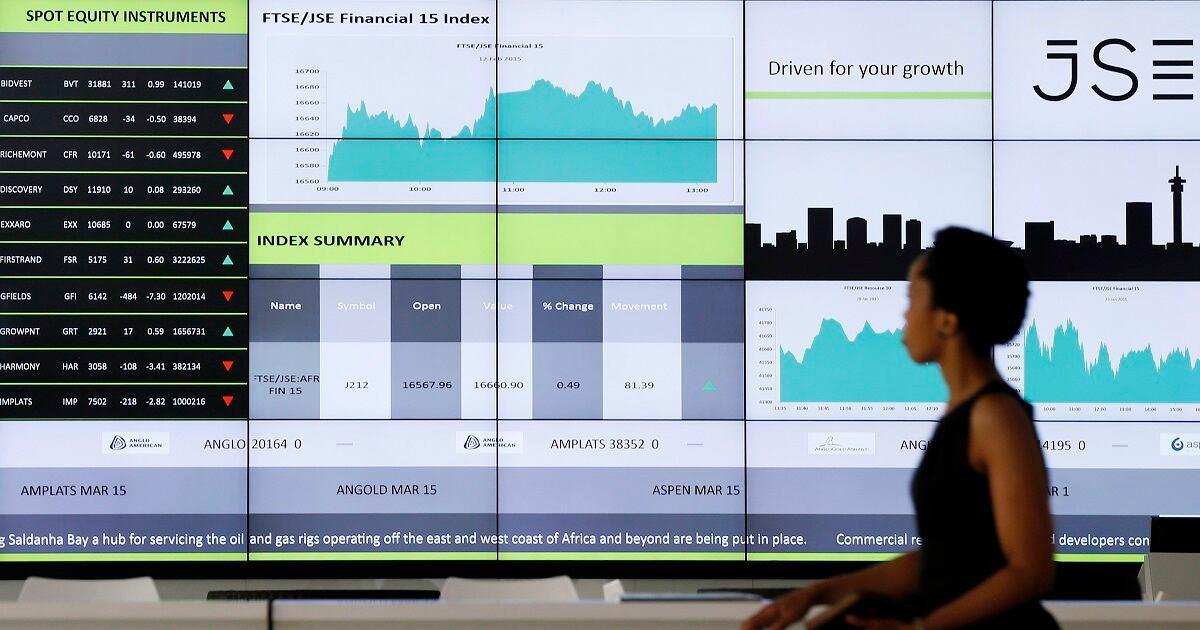
According to market reporting published on Friday, the JSE All Share Index closed Thursday at approximately 112,895 points, representing a decline of about 0.49%.
The Top 40 Index also ended lower, reflecting pressure across major listed companies.
These developments followed weakness in several market sectors, particularly resources and technology.
Investors are consequently evaluating whether improving currency stability and commodity conditions can provide sufficient support to equities amid continuing concerns about inflation and economic growth.
The forthcoming economic announcements could influence market direction by changing expectations surrounding borrowing costs, household spending and corporate profitability.
Retail Sector Highlights Consumer Spending Challenges
The retail sector remains an important indicator of South Africa’s economic conditions because consumer spending represents a substantial component of economic activity.
Recent developments involving Woolworths Holdings have highlighted continuing challenges facing South African retailers.
Reuters reported on 11 November that Woolworths recorded a modest 0.2% increase in group turnover and concession sales during its latest 19-week trading period.
The company attributed weak consumer conditions partly to rising fuel prices and cost-of-living pressures.
The announcement contributed to concerns about consumer demand and the sustainability of retail earnings growth.
Retail companies remain exposed to household affordability, employment conditions, food inflation and borrowing costs.
When consumers face rising expenses, discretionary purchases often become more constrained, affecting retailers selling clothing, household products and other non-essential goods.
Investors are therefore monitoring retail trading updates to determine whether consumer demand is improving or deteriorating.
The sector’s performance may also provide important information about the effectiveness of economic policies intended to support household purchasing power.
Bond Markets and Borrowing Costs
South African government bonds remain another important component of the financial market environment.
Bond yields respond to inflation expectations, monetary policy, international interest rates and perceptions of government creditworthiness.
When investors anticipate higher interest rates, bond yields may increase, placing downward pressure on existing bond prices.
Higher yields can also raise financing costs for governments and businesses.
South Africa’s bond market is particularly sensitive to international developments because foreign investors participate in domestic financial markets and evaluate South African assets against investment opportunities elsewhere.
A stronger US dollar, rising international bond yields or increased global risk aversion can influence capital flows into and out of emerging markets.
Consequently, the relationship between domestic inflation, the rand and international interest rates remains central to the outlook for South African bonds.
Global Financial Conditions Continue Influencing South Africa
South African financial markets do not operate independently of international developments.
Changes in global monetary policy, commodity prices and investor risk appetite frequently influence emerging-market currencies and equities.
When international investors become more cautious, capital may move towards assets perceived as safer, placing pressure on emerging-market currencies.
Conversely, improved global sentiment can encourage investment in markets offering attractive yields or growth opportunities.
The rand’s relative stability during Friday’s early trading therefore needs to be interpreted within the broader international financial environment.
South Africa’s economic fundamentals remain important, but global developments can amplify or offset domestic market movements.
Investors are accordingly monitoring international inflation data, central-bank decisions and commodity-market developments alongside South African economic indicators.
Investment Outlook: Inflation and Monetary Policy in Focus
The immediate outlook for South African financial markets will depend significantly on the forthcoming inflation announcement and the Reserve Bank’s monetary policy decision.
Currency stability, commodity prices and investor confidence may provide support, but uncertainty surrounding inflation and borrowing costs remains an important consideration.
The Johannesburg Stock Exchange could experience changing sector performance as investors reassess earnings expectations and valuations.
Companies with strong balance sheets, sustainable cash flows and manageable debt obligations may attract greater attention during periods of uncertainty.
Meanwhile, businesses exposed to fuel costs, consumer demand and interest-rate-sensitive spending may face additional scrutiny.
For households and businesses, the direction of inflation and interest rates will remain closely connected to financial planning, borrowing decisions and investment activity.
Conclusion
South Africa’s financial markets are entering an important period of economic reassessment as investors await inflation data and the Reserve Bank’s next monetary policy decision.
The rand’s relative stability during early Friday trading reflects support from softer oil prices and firmer commodity prices, although international financial conditions and domestic economic uncertainties remain significant influences.
The coming economic announcements could provide greater clarity regarding inflation, borrowing costs and the outlook for economic growth.
For investors, businesses and households, developments in currency markets, equities and interest rates will remain essential indicators of South Africa’s economic direction.
The immediate market outlook is therefore characterised by cautious optimism, continued monitoring of economic fundamentals and heightened attention to the relationship between inflation, monetary policy and financial market stability.



