




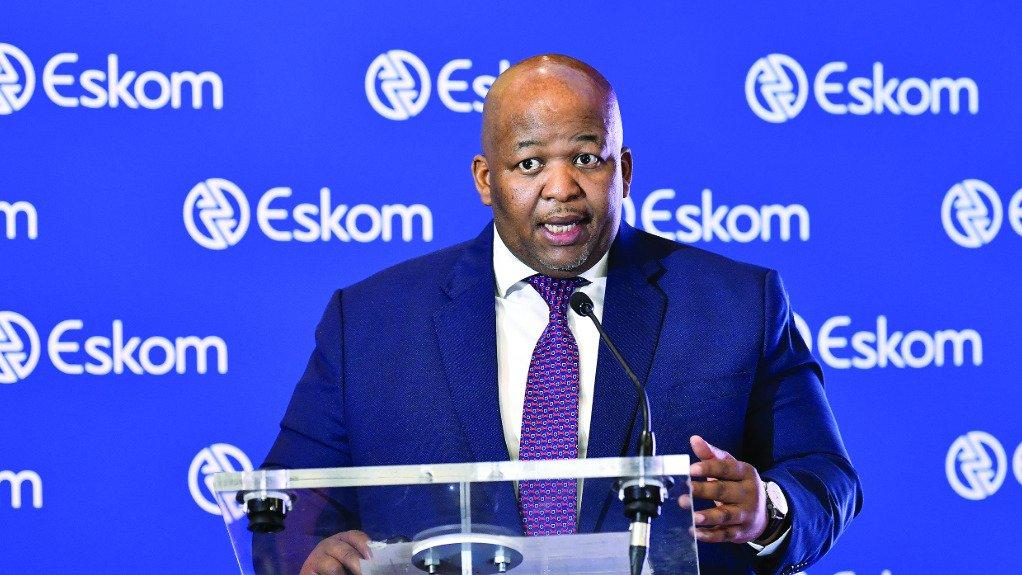
“Eskom is preparing to adapt its business model as electricity-market reforms open South Africa’s power sector to more generators, distributors and electricity traders. Chief executive Dan Marokane says the utility intends to explore new revenue opportunities in renewable energy, data-centre supply, electric-vehicle charging and regional electricity exports while retaining a major role in the country’s power system.”
Eskom Revamps Its Strategy as South Africa’s Electricity Monopoly Fades
South Africa’s electricity sector is entering a new phase as Eskom prepares to reshape its strategy for a market in which the state utility will no longer be the only dominant force. In a report published on 15 October, Mining Weekly, citing Reuters, said Eskom executives were preparing to discuss the company’s future direction as electricity-sector reforms continue. The change marks an important shift for a utility that has historically controlled most of the country’s generation and played a central role in the transmission and distribution system.
Eskom chief executive Dan Marokane has indicated that the utility is moving away from the idea that it must own or operate every part of the electricity value chain. Instead, the company intends to identify areas where its infrastructure, experience and scale can help it remain commercially relevant as private generators, distributors and traders expand. The transition is not simply a response to competition; it is also an attempt to create new sources of income while South Africa changes how electricity is produced, moved and sold.
A changing electricity market
For decades, Eskom’s position at the centre of the national power system shaped the country’s electricity market. However, reforms promoted by President Cyril Ramaphosa are designed to create a more open and competitive sector. The unbundling process, including the separation of key functions, is intended to make the system more transparent and allow a wider range of participants to contribute to supply.
Greater competition could reduce Eskom’s share of electricity generation over time. Marokane has said Eskom still supplies more than 85% to 90% of the country’s electricity, but he recognises that new entrants are taking a portion of the market. Where a monopoly faces competition in an economy that is not growing rapidly, the incumbent cannot rely on existing market share alone. It must improve performance, develop services and find customers whose needs it can meet better than competitors.
From crisis management to new opportunities
South Africa endured years of rolling power cuts as Eskom’s power stations struggled with maintenance problems, breakdowns and operational weaknesses. Those outages disrupted households, factories, mines, shops and public services, while forcing many businesses to invest in backup generation. The power situation has since stabilised, according to the report, and Marokane says Eskom now has between three and five gigawatts of excess generating capacity.
That improvement is significant, but it does not mean the country’s energy challenges have disappeared. Additional capacity can coexist with local grid constraints, changing demand patterns and a need for investment in transmission. Households and companies have also installed solar panels and battery systems, reducing the amount of electricity they purchase from Eskom at certain times. These changes have helped alter the balance between supply and demand.
For Eskom, the task is to turn greater system stability into a durable business advantage. Reliable generation remains essential, but a more competitive market will require the company to be flexible about how it earns revenue. Supplying new types of customers, developing renewable projects and using its existing assets more effectively could help offset the impact of lost market share.
Data centres and digital demand
One opportunity identified by Marokane is supplying electricity to data centres. These facilities support cloud computing, digital services, online platforms and artificial-intelligence workloads. They can require large and dependable supplies of power, making energy availability an important consideration when developers choose locations and plan expansions.
However, the opportunity depends on more than having generation capacity available. Data-centre operators need confidence in reliability, connection timelines, electricity costs and the ability of the network to deliver power to particular sites. Eskom and other relevant institutions will need to coordinate grid access and infrastructure planning so that new demand can be connected without creating bottlenecks for existing customers.
Electric vehicles and charging infrastructure
Eskom is also considering a role in electric-vehicle charging. As electric mobility develops, drivers and fleet operators will need charging facilities in cities, along major routes and at workplaces or commercial centres. A well-planned charging network could create a new electricity market while helping reduce transport emissions where vehicles are powered by increasingly cleaner electricity.
The utility’s potential involvement would need to complement, rather than crowd out, other businesses that may build and operate charging stations. Its strengths could include power-system knowledge, access to infrastructure and the ability to work with large commercial customers. The commercial case will depend on demand, charging utilisation, connection costs and the pace at which electric vehicles become more common.
Renewable energy and the transition
Although Eskom’s generation fleet remains heavily dependent on ageing coal-fired power stations, Marokane sees a role for the utility in providing more renewable energy. Businesses increasingly face pressure to reduce the emissions associated with their operations, and some customers want electricity solutions that help them meet sustainability targets.
Eskom could participate through renewable generation and related services, while the broader market brings more private investment into wind and solar projects. Integrating these sources requires planning because their output varies with weather and time of day. Storage, flexible generation, transmission upgrades and better system coordination can help balance supply and demand.
Regional electricity exports
Marokane also sees opportunities to increase electricity exports to neighbouring countries. The report notes that demand in the Southern African Power Pool has increased, partly because drought has affected hydropower availability in Zambia. Eskom has been able to supply electricity to the copper belt as mining activity expands, and there is interest in access to surplus power in the Democratic Republic of the Congo.
Regional trade could help Eskom use available generation more productively and earn revenue from customers beyond South Africa. It may also support regional economic integration by helping neighbouring economies meet electricity needs. But export opportunities depend on cross-border transmission capacity, dependable supply, payment arrangements and the ability to meet domestic demand first.
What the shift means for consumers and business
A more competitive market could create choices for large customers and encourage new investment in generation and services. Competition may also put pressure on suppliers to improve efficiency, respond to customers and develop new products. Yet market reform does not automatically guarantee lower prices or a reliable service. Outcomes will depend on regulation, network investment, fair access and the financial health of the organisations operating the system.
There are also questions about how the utility manages its existing workforce, assets and obligations while entering new activities. A strategic shift needs credible investment plans, transparent governance and measurable milestones. If new ventures absorb capital without producing sustainable returns, they could weaken rather than strengthen the company. Conversely, disciplined investment in areas where Eskom has a clear advantage could help it adapt to structural change.
The road ahead
Eskom’s strategic discussions are taking place at a time when the electricity market is changing on several fronts: private generation is growing, customers are installing their own energy systems, renewable energy is expanding and new industries are creating different patterns of demand. The utility’s response will help shape how effectively South Africa manages this transition.
The emerging strategy suggests a broader view of Eskom’s role: not an organisation that must own every asset, but one that can generate electricity, support new demand, develop renewable energy and trade power where commercially and nationally appropriate. If implemented carefully, that approach could create new revenue streams and help the company remain central to South Africa’s energy future. Its success will ultimately be measured by practical results: dependable electricity, responsible investment, stronger infrastructure and a system capable of serving both current consumers and the industries that will drive future growth for consumers across South Africa.



