




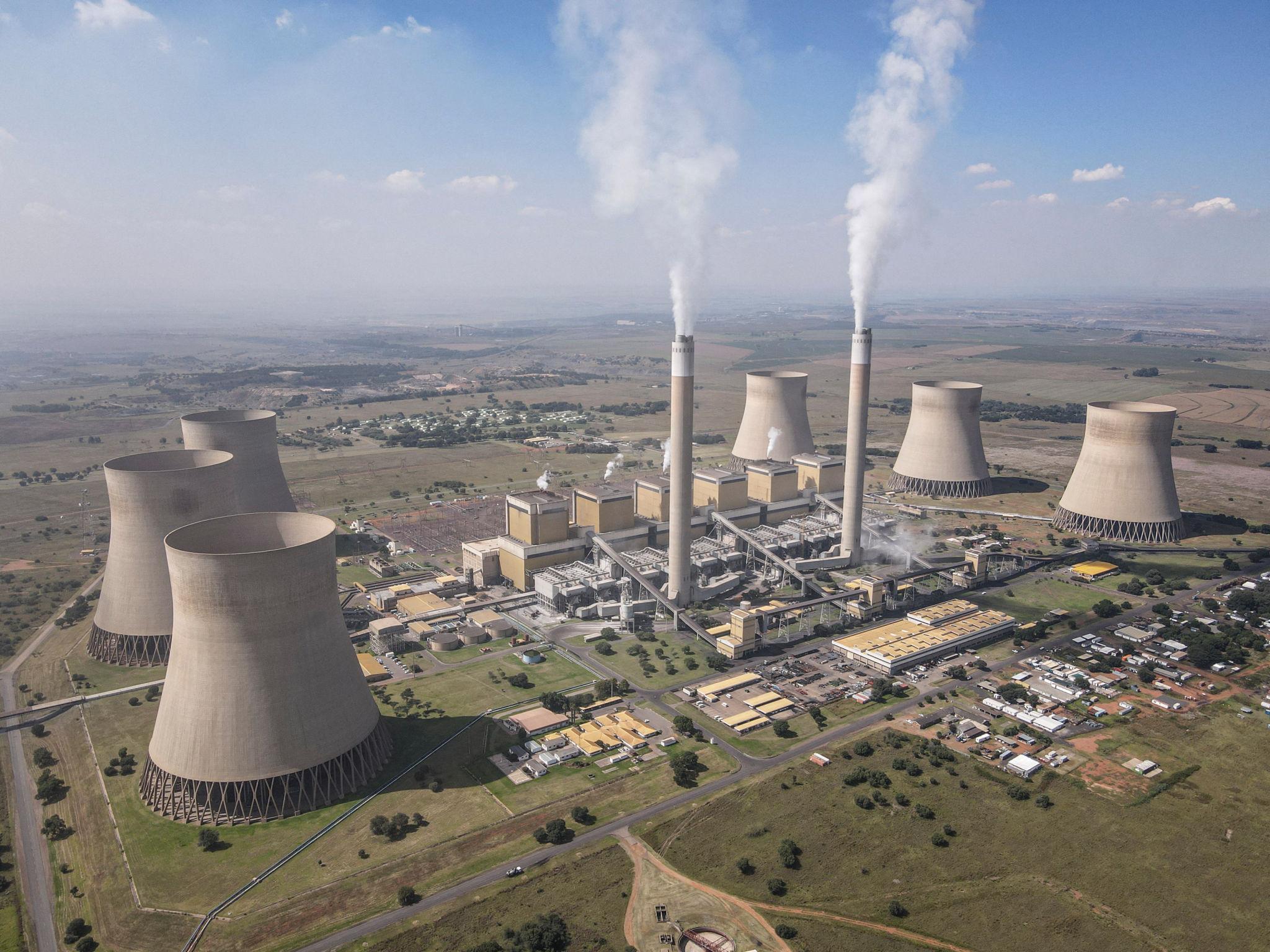
“Eskom reported that its financial-year-to-date Energy Availability Factor reached 68.2%, the highest level in six years, while diesel expenditure fell by R4.87 billion compared with the corresponding period in the previous year. The utility also reported fewer unplanned outages and substantial progress in reducing electricity load restrictions affecting customers.”
Introduction: A significant shift in electricity generation
South Africa’s electricity sector is showing signs of improvement as Eskom reports stronger power station performance, lower reliance on expensive diesel generation and progress towards reducing electricity supply restrictions. These developments are important for households, businesses and industries that depend on a reliable national power system.
In an announcement published on 16 October 2026, Eskom reported that its financial-year-to-date Energy Availability Factor (EAF) had reached 68.2%, its highest level in six years. The utility also reported a reduction of R4.87 billion in diesel expenditure compared with the corresponding period a year earlier.
Although these figures are encouraging, the challenge facing South Africa is not simply to keep the lights on today. The country must maintain reliable generation over the long term, expand electricity infrastructure, manage energy costs and ensure that future economic growth is supported by adequate supply.
The latest figures therefore provide an important measure of progress, but sustained improvements will be necessary before the energy sector can fully support the country’s industrial, commercial and social ambitions.
Understanding Eskom’s energy availability improvement
The Energy Availability Factor measures the proportion of a power station fleet’s potential generating capacity that is available to produce electricity over a specified period.
Eskom’s reported financial-year-to-date EAF of 68.2% represents an improvement from 62.63% during the corresponding period of the previous financial year. The utility also reported an improvement of 12.8 percentage points compared with the same period three years earlier, equivalent to approximately 6,536 megawatts of generation capacity returned to the grid.
These figures matter because installed generation capacity does not automatically translate into electricity that can be supplied to consumers. A power station may have a substantial rated capacity but contribute less electricity when equipment failures, maintenance requirements or technical problems prevent it from operating.
Consequently, improving availability can strengthen the electricity system without requiring every additional megawatt to come from a newly constructed power station.
However, an EAF figure should not be interpreted as a direct measurement of the percentage of national electricity demand being met. Actual supply also depends on demand, plant output, transmission constraints, other generation sources and the operating conditions of the wider grid.
For businesses, the practical benefit of stronger generation availability is the possibility of more predictable electricity supply. Manufacturers can plan production more confidently, retailers can reduce disruption, and service providers can operate equipment with fewer interruptions.
Nevertheless, the benefits depend on the improvements continuing over time rather than being limited to a short reporting period.
Fewer unplanned outages support grid stability
Unplanned outages remain one of the most important indicators of electricity-sector performance because unexpected equipment failures can remove significant amounts of generating capacity from the national grid.
Eskom reported that average unplanned outages between 9 and 15 October 2026 declined to 7,707MW, compared with 10,646MW during the corresponding period a year earlier. This represented a reduction of approximately 28% over the weekly comparison.
Reducing unexpected outages gives system operators greater flexibility when balancing electricity supply and demand. It can also reduce pressure to activate emergency generation resources or take other short-term measures to protect the grid.
Power station reliability is particularly important during periods when electricity demand increases. Industrial operations, commercial buildings, residential consumption and weather-related changes can all affect how much electricity the system must provide.
If generating units remain operational for longer periods, Eskom can make better use of its existing infrastructure. Meanwhile, maintenance teams can plan interventions more effectively, although planned maintenance remains essential to prevent equipment deterioration.
There is an important distinction between reducing outages and eliminating them. Large power stations contain complex mechanical, electrical and control systems, and unexpected failures cannot be ruled out entirely.
The long-term objective should therefore be a generation fleet that combines strong day-to-day performance with effective maintenance, reliable spare-parts supply and rapid technical responses when problems occur.
Diesel expenditure falls as emergency generation declines
One of the most significant financial developments in Eskom’s announcement was the reduction in diesel expenditure.
The utility reported spending approximately R1.18 billion on diesel during the financial year to 15 October 2026, compared with R6.05 billion over the corresponding period in the previous year. The difference was R4.87 billion, representing a decline of approximately 80.47%.
Diesel-fired open-cycle gas turbines can provide electricity relatively quickly when the power system needs additional capacity. However, their fuel costs make them expensive resources to operate for extended periods.
When the main generation fleet performs better, Eskom can reduce its dependence on these emergency resources. This can improve operating economics and reduce exposure to fuel-price volatility.
Lower diesel spending does not automatically mean that electricity tariffs will fall. Eskom’s overall financial position also depends on operating costs, debt, capital investment, maintenance expenditure, revenue collection and other financial obligations.
Nevertheless, the reported reduction represents a potentially valuable improvement in the utility’s operating environment.
The financial benefits could become more significant if reliability gains are sustained over several financial years. Reduced emergency fuel use could help the utility direct resources towards essential maintenance, infrastructure renewal and other measures intended to improve electricity supply.
The key question is whether these savings can be maintained while electricity demand grows and the generation fleet continues to age.
Load reduction remains a challenge for affected communities
While national electricity supply has improved, some customers continue to experience load reduction.
Load reduction is different from national loadshedding. It generally involves limiting electricity supply to particular areas or customers to protect local distribution infrastructure when networks face excessive demand or other operating constraints.
Eskom reported that the number of customers affected by load reduction had declined from approximately 1.69 million to 193,556. This represented an 88.6% reduction, with approximately 1.5 million customers no longer affected by the intervention. The utility said that seven provinces had achieved full elimination and that it was working towards eradicating load reduction by March 2027.
For communities previously affected by restrictions, progress could improve household routines, small-business operations and access to essential services.
Electricity interruptions can be particularly disruptive for businesses that rely on refrigeration, electronic payment systems, communications equipment or machinery. In residential areas, unreliable supply can also affect studying, cooking, security and other daily activities.
However, eliminating load reduction requires more than improving generation capacity. Local distribution networks must also be able to handle demand safely.
Transformers, cables, substations and related equipment can become overloaded when demand rises or infrastructure deteriorates. Electricity theft, illegal connections and inadequate maintenance can create additional pressures in some areas.
Therefore, progress towards the March 2027 target will depend on continued investment and effective local network management, alongside improved generation performance.
What the improvements mean for South African businesses
Reliable electricity is a critical foundation for economic activity. When power becomes more predictable, companies can plan production schedules, maintain service levels and reduce some of the costs associated with interruptions.
For manufacturers, improved supply can help reduce downtime and protect production targets. For retailers, it can support payment systems, lighting, refrigeration and distribution operations. For agriculture, dependable electricity is important for irrigation, cold storage, processing and other activities.
Small and medium-sized enterprises may benefit particularly from fewer interruptions because they often have limited resources to invest in generators, battery systems or other backup solutions.
However, electricity reliability is only one part of the cost of doing business. Companies must also manage tariffs, connection costs, fuel prices, financing conditions and the availability of suitable infrastructure.
Furthermore, businesses that require highly reliable supply may continue investing in backup systems even when national generation conditions improve. Their decisions will depend on local reliability, the financial consequences of outages and the cost of alternative power sources.
The broader economic opportunity is to establish a dependable electricity system that supports new investment, employment and industrial production.
Renewable energy and the future electricity mix
Although Eskom’s latest operational improvements focus heavily on the existing generation fleet, South Africa’s longer-term energy security will also depend on diversifying electricity sources.
Renewable energy, particularly wind and solar power, can contribute additional generation capacity and reduce dependence on fossil fuels. However, solar and wind output varies with weather conditions and the time of day.
This creates a need for complementary resources that can maintain supply when renewable generation declines or demand rises.
Battery storage can absorb electricity when supply is abundant and release it when needed, depending on the system design and storage capacity. Pumped-storage facilities can also store energy by moving water to a higher reservoir and releasing it through turbines when electricity is required.
On 13 October 2026, Eskom announced a partner-selection process for the proposed Tubatse Pumped Storage Scheme in Limpopo. The project is planned to provide 1.5GW of generating capacity and approximately 21GWh of storage, with the ability to generate at full output for up to 14 hours. These are proposed project specifications, not evidence that the facility is already operational.
Such projects illustrate how South Africa could combine improvements to existing power stations with new storage and renewable-energy infrastructure.
However, major projects require financing, technical development, environmental approvals, construction and suitable grid connections. Their contribution will depend on successful delivery and integration into the electricity system.
The importance of transmission and distribution infrastructure
Generation capacity alone cannot guarantee reliable electricity delivery. Power must also travel through transmission networks and local distribution infrastructure before reaching households and businesses.
South Africa’s future electricity system will require investment in grid capacity to connect new generation projects, particularly in areas with strong wind and solar resources.
Without adequate transmission infrastructure, electricity projects can face connection delays or restrictions on how much power they can deliver. Distribution constraints can also prevent communities from benefiting fully from additional national generation.
Planning must therefore coordinate generation, storage, transmission and distribution investment.
The country also needs transparent procurement processes, predictable regulatory arrangements and appropriate financing structures to encourage investment from public and private participants.
Effective planning can reduce the risk of constructing generation assets that cannot deliver their full value because network capacity is unavailable.
Fuel prices remain an additional economic risk
Electricity reliability is only one part of South Africa’s wider energy challenge. Fuel prices also influence transport costs, household budgets, business expenses and inflation.
In a separate report published on 21 October 2026, Reuters reported that South Africa’s annual consumer inflation rate increased to 4.5% in September from 4.4% in August. Transport inflation rose to 10.8%, and the report linked pressure on transport costs to higher fuel prices. Petrol prices had risen approximately 5% in September before increasing by about 12% in October.
These developments demonstrate why energy policy must address both electricity and liquid fuels.
Lower diesel spending by Eskom can improve the utility’s operating costs, but it does not protect households and businesses from international oil-price movements. South Africa remains exposed to global fuel markets and currency fluctuations.
Higher transport and fuel costs can affect food distribution, agricultural production, manufacturing and commuting expenses.
For this reason, energy security requires a broad approach that considers electricity generation, fuel supply, infrastructure, affordability and the economy’s exposure to international markets.
Environmental considerations and the transition away from coal
South Africa’s existing electricity system remains heavily dependent on coal-fired generation. Improving the reliability of coal power stations can support short-term supply security, but it does not eliminate the environmental challenges associated with coal combustion.
Coal generation produces greenhouse gas emissions and other pollutants. Environmental performance therefore needs to remain part of the country’s energy planning, alongside reliability and affordability.
Renewable-energy deployment, energy storage, grid modernisation and improved energy efficiency can contribute to a gradual transition towards a lower-carbon electricity system.
The transition must also consider workers, communities and businesses that depend on coal-related economic activity. Skills development, industrial diversification and investment in affected regions will be important to ensure that the transition creates sustainable economic opportunities.
A balanced strategy should avoid treating reliable electricity and environmental responsibility as competing objectives. Instead, it should seek to maintain dependable supply while progressively improving the composition and performance of the generation fleet.
What to watch in the coming months
Several indicators will help determine whether Eskom’s recent gains represent a lasting improvement.
First, the Energy Availability Factor should be monitored over successive reporting periods. Consistent performance would provide stronger evidence of structural improvement than a single favourable figure.
Second, unplanned outages need to remain under control while planned maintenance continues. Deferring necessary maintenance simply to improve short-term availability could create more serious reliability problems later.
Third, diesel expenditure should be assessed alongside generation performance and total operating costs. Lower emergency fuel use is valuable, but the overall financial position must remain sustainable.
Fourth, progress on eliminating load reduction should be measured at community level. National improvements are important, but affected customers need to see reliable service in their own areas.
Finally, the development of new generation, storage and transmission infrastructure will determine how well the electricity system accommodates future demand.
These indicators can help distinguish short-term improvements from the deeper changes required to create a more resilient energy sector.
Conclusion: Progress must translate into lasting energy security
Eskom’s October 2026 performance figures provide encouraging evidence that improved power station reliability can strengthen South Africa’s electricity supply and reduce reliance on expensive emergency generation.
The reported 68.2% financial-year-to-date Energy Availability Factor, R4.87 billion reduction in diesel expenditure and 88.6% decline in customers affected by load reduction are meaningful developments.
Nevertheless, these gains should be treated as progress rather than proof that all energy-sector challenges have been resolved. Maintaining reliable generation, completing essential maintenance, strengthening distribution networks and expanding transmission capacity remain critical priorities.
South Africa will also need to balance its existing generation fleet with investment in renewable energy, storage and other appropriate technologies. At the same time, rising fuel costs demonstrate the importance of protecting the economy against external energy-price shocks.
Ultimately, the success of the country’s energy strategy will be measured by whether households receive dependable and affordable electricity, businesses can operate with confidence, and new infrastructure supports sustainable economic growth.
Eskom’s latest figures offer grounds for cautious optimism. The next challenge is to turn improved operational performance into a durable, affordable and resilient energy system for all South Africans.



