




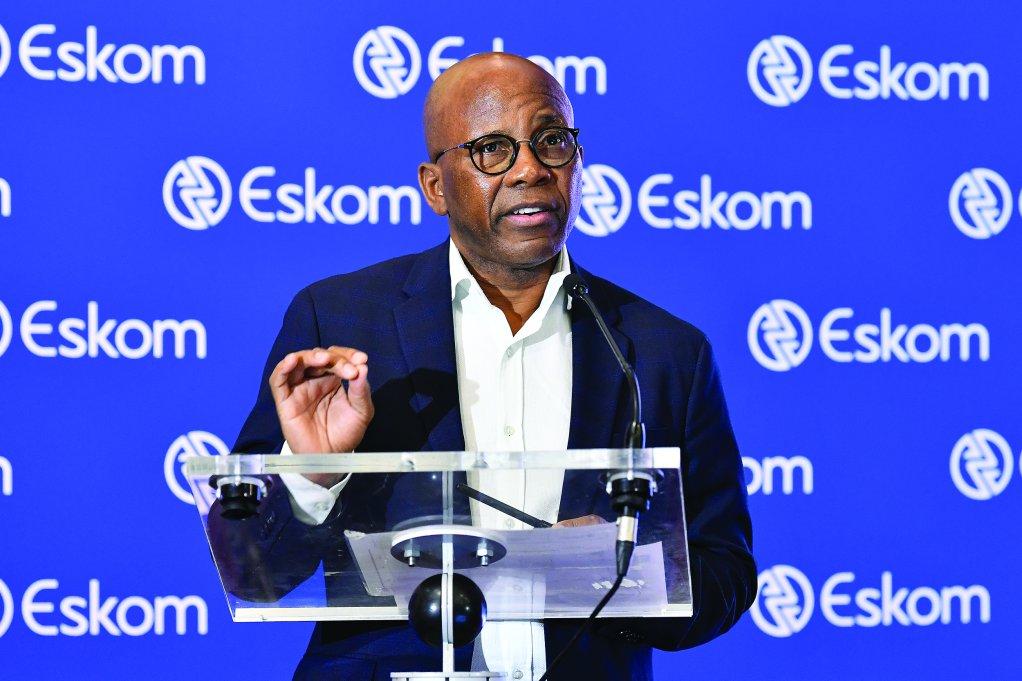
“South Africa’s electricity and energy authorities are shifting Eskom’s immediate priority from restoring generation performance toward reducing the cost of electricity for households and businesses while building a financially sustainable utility. Electricity Minister Kgosientsho Ramokgopa has instructed the Eskom board to develop three-, five- and ten-year plans covering generation, the transmission grid, investment and Eskom’s role in a more competitive electricity market.”
South Africa’s electricity sector is entering a new phase as Eskom moves beyond the emergency objective of restoring generation performance and turns its attention to the cost of electricity, financial sustainability and the utility’s role in a changing power market.
The development emerged from a series of announcements by Electricity and Energy Minister Kgosientsho Ramokgopa concerning the future of Eskom and the continuation of Mteto Nyati as chairperson of the utility’s board. The latest reporting on the issue was published by Eyewitness News on 26 September 2026, while government and other South African energy publications reported on the underlying announcements on 25 September.
The shift is significant because South Africa’s electricity debate has historically been dominated by the problem of supply shortages and load-shedding. Eskom’s generation recovery has substantially changed that immediate picture. The utility has reported improved availability, while South Africa has gone for an extended period without scheduled national load-shedding. The policy discussion is consequently moving toward another major challenge: how to provide electricity that is not only available, but also financially sustainable and affordable.
Ramokgopa said Eskom now needs to move beyond simply restoring generation performance. According to Eyewitness News, the board has been given a new priority of bringing down the cost of electricity for households and businesses. The minister also wants Eskom to address system losses, revenue leakage, procurement value, maintenance and project delivery.
The government’s broader concept is being described as “Eskom 2.0.” It represents a transition from a utility focused primarily on stabilising its ageing generation fleet to one expected to operate successfully in a more competitive electricity sector.
From electricity shortages to affordability
For many years, Eskom’s biggest challenge was whether enough electricity could be generated to meet national demand. The resulting load-shedding became one of South Africa’s most significant economic and social challenges.
The recent improvement in Eskom’s generation performance has changed the immediate circumstances. Eskom reported that its weekly Energy Availability Factor reached 70.44% for 18 to 24 September, marking a second consecutive week above 70%, according to reporting published on 25 September.
Eskom has also reported that its financial-year-to-date Energy Availability Factor has reached levels that it describes as the highest in six years. Earlier September figures from the utility showed a financial-year-to-date EAF of 67.78%, compared with 61.71% during the corresponding period of the previous year.
These figures are important because availability is directly linked to how much generating capacity is available to supply the grid. Improvements in plant performance can reduce the need for expensive emergency generation and provide greater stability for businesses and households.
However, greater reliability does not automatically mean cheaper electricity.
That distinction is now central to South Africa’s energy debate.
Ramokgopa has therefore instructed Eskom’s board to focus on reducing costs while maintaining reliability. Eyewitness News reported that the utility’s new approach includes reducing system losses and revenue leakage, obtaining better value from procurement and maintenance, and improving the delivery of projects.
Eskom’s financial sustainability
Another major issue is Eskom’s financial position.
BusinessTech reported that Eskom recorded a R30-billion profit and that board chair Mteto Nyati said the utility was not planning to return the money to customers through an immediate electricity price reduction. Instead, the utility intends to retain and invest profits in its future operations, including renewable-energy development.
That position illustrates the difficult balance facing the power utility.
On one side, consumers and businesses face significant electricity costs and are interested in relief. On the other, Eskom needs substantial investment to maintain existing infrastructure, expand the grid, develop new generation and adapt to a changing electricity market.
The government therefore wants the utility to become financially sustainable rather than depending on repeated state support or sustained high tariff increases.
Ramokgopa said Eskom cannot rely on repeated government bailouts or continued double-digit tariff increases as its business model. The objective is instead to establish an Eskom capable of operating sustainably while supporting economic growth and allowing new participants into the electricity sector.
This places considerable importance on the utility’s ability to control costs.
A changing electricity market
South Africa’s electricity industry is gradually becoming more diversified.
Historically, Eskom dominated electricity generation and supplied the overwhelming majority of the country’s power. Increasingly, however, independent power producers, private renewable-energy projects, electricity traders and other market participants are becoming part of the system.
Engineering News reported on 25 September that the country’s electricity tariff structure and electricity-market reforms will influence how renewable-energy assets are developed over the coming decade. The publication also reported developments involving wind generation, grid expansion and reforms to the electricity market.
This transition means Eskom’s future role will be different from its traditional position as a vertically integrated state utility.
The government expects the company to prepare for additional generation capacity, expand and strengthen the electricity grid, improve relationships with customers and adapt to the arrival of new generators and electricity traders. SAnews reported that these elements form part of the government’s expectations for “Eskom 2.0.”
The grid will be particularly important.
South Africa can add substantial quantities of solar and wind generation, but that electricity must be connected to the national transmission system and delivered to areas where it is required. Transmission investment, therefore, is becoming just as important as the construction of new generation projects.
Eskom leadership continues
The government’s plans will be implemented under continued leadership from Mteto Nyati.
Ramokgopa announced that Nyati would remain chairperson of the Eskom board for another three years. The government said continuity was important as Eskom moves from the generation-recovery phase into a longer-term period focused on financial sustainability, energy security and the utility’s role in the evolving electricity market.
The decision comes at an important moment for the company.
Eskom has made progress in improving generation availability, but it still faces structural challenges involving debt, municipal payments, electricity theft, infrastructure investment and changing customer behaviour.
The utility also has to respond to the increasing number of customers and businesses generating some of their own electricity, particularly through rooftop solar and larger private renewable-energy projects.
These changes can reduce demand for Eskom electricity while simultaneously increasing the importance of the national grid.
Municipal debt remains a major challenge
Electricity affordability cannot be considered separately from the financial problems affecting municipalities and Eskom.
Municipalities collect electricity revenue from many households and businesses and, in turn, have obligations toward Eskom. Where municipalities struggle to collect payments, the resulting financial pressure can affect their ability to settle their Eskom accounts.
The government has therefore identified revenue collection and financial discipline as important parts of the Eskom reform agenda.
The affordability question is also connected to social support.
Ramokgopa recently proposed changing the way free basic electricity reaches qualifying poor households. Reporting from South African media said the government is considering a system under which Eskom could distribute the benefit more directly rather than relying entirely on municipalities. Approximately R21 billion is allocated annually for free basic electricity, according to the minister.
The proposal illustrates the broader policy challenge: electricity must be commercially sustainable while remaining accessible to households that cannot afford rising energy costs.
What the new strategy means for households and businesses
For households, the immediate significance of Eskom’s new strategy is that electricity affordability is becoming a central policy objective.
However, the announcement does not mean electricity prices will immediately fall.
Instead, the government’s approach is based on improving Eskom’s financial and operational structure so that the utility can reduce cost pressures over time.
For businesses, reliable electricity remains essential for production, investment and employment. Companies have increasingly invested in their own renewable-energy capacity partly to manage electricity costs and supply risks.
A more competitive electricity market could create additional opportunities for private investment, renewable-energy developers and electricity traders.
Engineering News has reported growing activity in renewable energy and grid development, including a 900 MW wind development taking shape in Mpumalanga and continuing discussion around the infrastructure needed to support South Africa’s renewable-energy targets.
The next three, five and ten years
One of the most important elements of the latest announcement is the requirement for Eskom to develop long-term roadmaps.
According to Eyewitness News, the board has been instructed to prepare three-, five- and ten-year plans addressing future generation, the electricity grid, investment and Eskom’s position in a more competitive electricity market.
These time horizons are significant because energy infrastructure requires long planning and construction periods.
A power station, transmission line, battery-storage facility or major renewable-energy project cannot normally be developed quickly enough to respond to an immediate crisis. Long-term planning is therefore essential if South Africa wants to avoid returning to the emergency conditions that characterised earlier periods of load-shedding.
The plans will also have to account for changes in technology, electricity demand, renewable generation, storage, transmission infrastructure and customer behaviour.
The road ahead
South Africa’s energy challenge is therefore changing.
The country is no longer discussing electricity solely in terms of whether enough megawatts are available on a particular evening. The debate is increasingly about the cost of those megawatts, the sustainability of the utility providing them, the infrastructure required to connect new generation and the structure of the electricity market itself.
Eskom’s recent operational improvements provide a different starting point for this next phase. The utility has reported substantially better generation availability, lower reliance on diesel and a prolonged period without national load-shedding.
The government’s challenge now is to ensure that those operational gains translate into a sustainable electricity system.
The new emphasis on affordability does not remove the need for investment. Instead, it raises questions about how investment should be financed, how electricity prices should be structured, how losses and debt should be addressed, and how public and private energy companies should interact.
For consumers, the central issue will remain straightforward: reliable electricity at a cost households and businesses can afford.
For Eskom, achieving that objective will require more than improving individual power stations. It will require changes across generation, transmission, finance, procurement, revenue collection, customer management and market participation.
The “Eskom 2.0” programme therefore represents a broader transition in South Africa’s electricity sector. The immediate battle to restore generation performance has given way to a longer-term effort to create an electricity system that is reliable, financially sustainable and capable of supporting investment and economic activity.
The results will depend on how effectively the announced reforms are translated into infrastructure, financial improvements and measurable reductions in the underlying cost of supplying electricity.



