




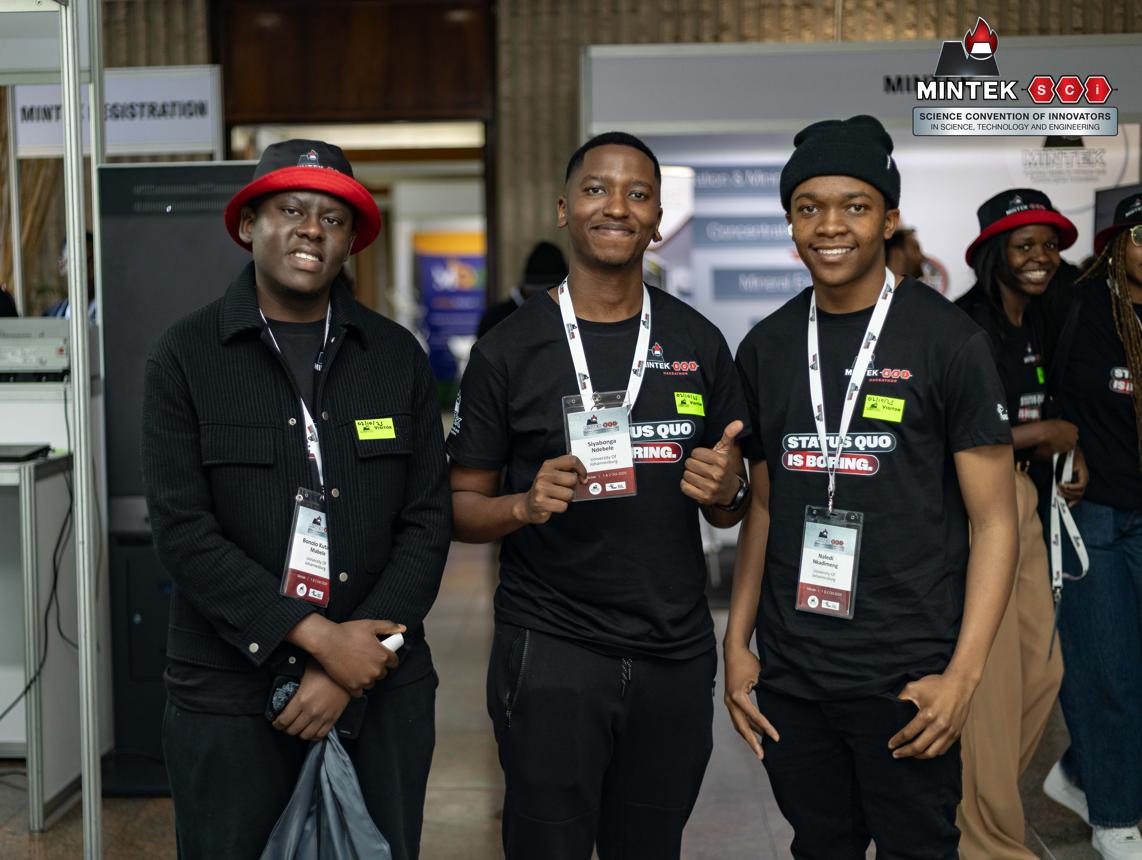
“Mintek and the National Research Foundation are preparing the third Mintek SCi – Science Convention for Innovators in Engineering, Science and Technology, bringing together emerging researchers, industry, government and academia in Randburg from 29 September to 2 October 2026. The programme will focus on critical minerals, energy, emerging technologies, sustainability and circular economy solutions, with activities including a disruptive research roundtable, graduate hackathon and main symposium.”
South Africa Looks to Emerging Researchers to Push Innovation From Research Into Real-World Solutions
South Africa is preparing to place emerging scientists and innovators at the centre of discussions about the country’s future technological and industrial development, with Mintek and the National Research Foundation (NRF) joining forces for the 2026 Mintek SCi science convention.
The initiative is significant because it seeks to connect scientific research with practical industrial challenges at a time when South Africa’s minerals, energy and manufacturing sectors are facing rapid technological change. The third Mintek SCi will take place across several events in Randburg, Gauteng, from 29 September to 2 October 2026.
The programme is being held under the theme “The Next Frontier: Emerging Scientists Driving Change” and will bring together more than 300 emerging researchers, industry representatives, government stakeholders and other participants in South Africa’s science, technology and innovation ecosystem.
According to the NRF, the programme is designed to strengthen collaboration between research institutions and industry while creating opportunities for emerging researchers to move their ideas closer to practical application. The partnership also builds on a memorandum of understanding signed between Mintek and the NRF in 2025 covering research, innovation, human-capacity development and related areas.
Innovation Focused on South Africa’s Mineral Future
One of the most important elements of the programme is its focus on the minerals sector.
South Africa has a long-established mining and mineral-processing industry, but the sector is undergoing major changes as demand grows for minerals associated with advanced manufacturing, digital technologies and the global energy transition.
The Mintek SCi programme therefore places critical minerals among its four central themes. Research areas include sustainable extraction, mineral processing and beneficiation, recovery from low-grade ores and secondary resources, and circular-economy approaches.
The emphasis reflects a broader shift in the role of innovation. Rather than concentrating solely on extracting more resources, researchers and companies are increasingly examining how minerals can be processed more efficiently, recovered from waste and used more sustainably.
Mintek’s programme describes the event as an opportunity to connect research, innovation and industry around these challenges. Its dedicated disruptive research roundtable will examine how government, academia, industry, civil society and science councils can collaborate differently to address future mineral-sector problems.
The roundtable, scheduled for 29 September at the Fairways Hotel in Randburg, will focus on what organisers describe as a “quadruple helix” approach to science and innovation. Discussions are intended to move through several stages, including collaboration, research, implementation and commercialisation.
Emerging Technology Takes Centre Stage
Technology will form another major part of the 2026 programme.
The emerging-technologies theme covers areas including artificial intelligence and machine learning, process modelling and simulation, advanced process control, digital twins, smart operations and advanced materials.
These technologies are increasingly relevant to mining and mineral processing because they can potentially improve monitoring, production planning, operational efficiency and decision-making.
Digital twins, for example, can provide digital representations of physical systems, allowing organisations to model processes and examine possible changes before implementing them in physical environments. Artificial intelligence and machine learning can similarly be applied to large volumes of operational data.
However, the Mintek SCi programme does not present technology as an isolated solution. Instead, it places emerging technologies alongside critical minerals, energy and sustainability.
That combination is important because industrial innovation often requires several technologies and disciplines to work together.
Energy Innovation Forms Another Major Pillar
Energy is also one of the four central themes of the convention.
Research areas listed for the programme include renewable-energy applications, fuel-cell technologies, energy storage, hydrogen technologies and energy efficiency in mineral processing.
For South Africa, these issues have particular industrial relevance. Energy-intensive industries such as mining and mineral processing must increasingly consider the cost, reliability and environmental impact of energy use.
The development of energy-storage technologies and hydrogen applications could therefore become increasingly important to industrial research.
The conference programme provides a platform for researchers to present work in these areas while receiving feedback from academics, industry specialists and other participants.
The aim is not simply to showcase scientific work but to encourage connections that can help promising research move beyond academic discussion.
Sustainability and the Circular Economy
Sustainability is the fourth major theme of Mintek SCi 2026.
According to Mintek, this area will cover water treatment and management, mine rehabilitation and closure, asbestos rehabilitation, sustainable water use, carbon-emissions reduction, decarbonisation, resource efficiency and circularity.
These issues are increasingly connected to innovation because industrial development has to address both economic and environmental considerations.
The circular economy concept is particularly relevant to mineral industries because materials that were previously considered waste may contain recoverable resources or have potential secondary uses.
Research into water management is similarly important in mining regions, where industrial operations and surrounding communities may depend on the same limited water resources.
By incorporating these subjects into the same innovation programme as critical minerals and emerging technologies, Mintek SCi creates a broader discussion about how South Africa can develop industrial technologies while addressing environmental challenges.
Graduate Hackathon to Turn Ideas Into Solutions
A major feature of the programme will be the Mintek SCi Graduate Hackathon, scheduled for 1 and 2 October.
The hackathon will challenge emerging researchers and innovators to develop practical responses to real-world problems in the minerals sector. Finalist teams will then present their solutions during the main symposium on 2 October.
This approach is notable because hackathons typically encourage participants to move rapidly from identifying a problem to developing and presenting a potential solution.
For young researchers, such an environment can provide experience beyond conventional academic research. Participants can work collaboratively, test ideas and consider how scientific concepts might eventually become usable products, services or industrial processes.
The initiative also reflects a wider challenge for innovation ecosystems: research does not automatically become commercial technology.
Researchers may need access to industry partners, funding, intellectual-property support, technical expertise and potential customers before an invention can reach the market.
Building Connections Between Research and Industry
The NRF says the partnership with Mintek is intended to help bridge the gap between academic research and industrial application.
The convention will bring together emerging researchers from Mintek, universities, industry and other research institutions. Participants will have opportunities to present their work, receive peer feedback and develop professional networks.
The main symposium on 2 October will include technical sessions, keynote addresses, a panel discussion, graduate hackathon pitches and awards.
Its programme is divided into sessions dealing with critical minerals, energy, emerging technologies and sustainability and circular economy.
This structure provides researchers with access to audiences beyond their immediate academic fields.
Why Young Researchers Matter to South Africa’s Innovation System
The emphasis on researchers aged 35 and under is another defining feature of the initiative.
The Mintek SCi platform is intended to give early-career researchers an opportunity to present their work and build professional relationships with established researchers and industry professionals.
Developing this pipeline is important because scientific innovation depends on a continuous supply of researchers, engineers and technical specialists.
South Africa has universities, science councils and specialised research organisations that produce scientific knowledge, but converting that knowledge into economic and social value requires connections between institutions.
Events such as Mintek SCi can provide one mechanism for creating those connections.
A Broader National Innovation Challenge
The Mintek-NRF initiative comes within a wider South African policy environment that places science, technology and innovation at the centre of economic development.
The Department of Science, Technology and Innovation announced a R10.4-billion budget for 2026/27, with priorities including research infrastructure, skills development, artificial intelligence, energy security, space, vaccine manufacturing and innovation. The department has also highlighted the importance of stronger partnerships between government, industry and research institutions.
Against this backdrop, Mintek SCi represents a practical example of how research organisations can create platforms for collaboration.
Its focus on minerals is particularly relevant to South Africa because the country has substantial mineral resources and an established industrial base. The challenge is increasingly about how to use scientific knowledge and technological innovation to improve competitiveness, sustainability and value creation.
Looking Ahead
The 2026 Mintek SCi programme will begin with the disruptive research roundtable on 29 September, followed by the graduate hackathon on 1–2 October and the main symposium on 2 October.
The significance of the programme will ultimately depend not only on the ideas presented but also on what happens after the event.
If promising research can lead to partnerships, further funding, pilot projects, intellectual-property development or commercial products, the convention could contribute to a longer innovation pipeline.
For South Africa, that pipeline is increasingly important. The country’s future competitiveness will depend not only on its natural resources but also on its ability to develop technologies, skills and businesses capable of creating greater value from those resources.
Mintek and the NRF are therefore using the 2026 convention to bring emerging scientists closer to the industrial challenges they may eventually be expected to solve.
The event’s focus on critical minerals, energy, emerging technologies and sustainability illustrates how closely these challenges are now connected. From artificial intelligence and digital twins to hydrogen, resource recovery and circular-economy technologies, innovation is increasingly becoming a multidisciplinary process.
The Mintek SCi programme provides one platform for those disciplines to meet.
As South Africa prepares for the convention, the central question is not simply what new ideas researchers can produce, but how effectively those ideas can move from laboratories and universities into practical applications that address real industrial and societal needs.
That transition—from research to innovation, and from innovation to implementation—will remain one of the key challenges for South Africa’s science and technology ecosystem.



