




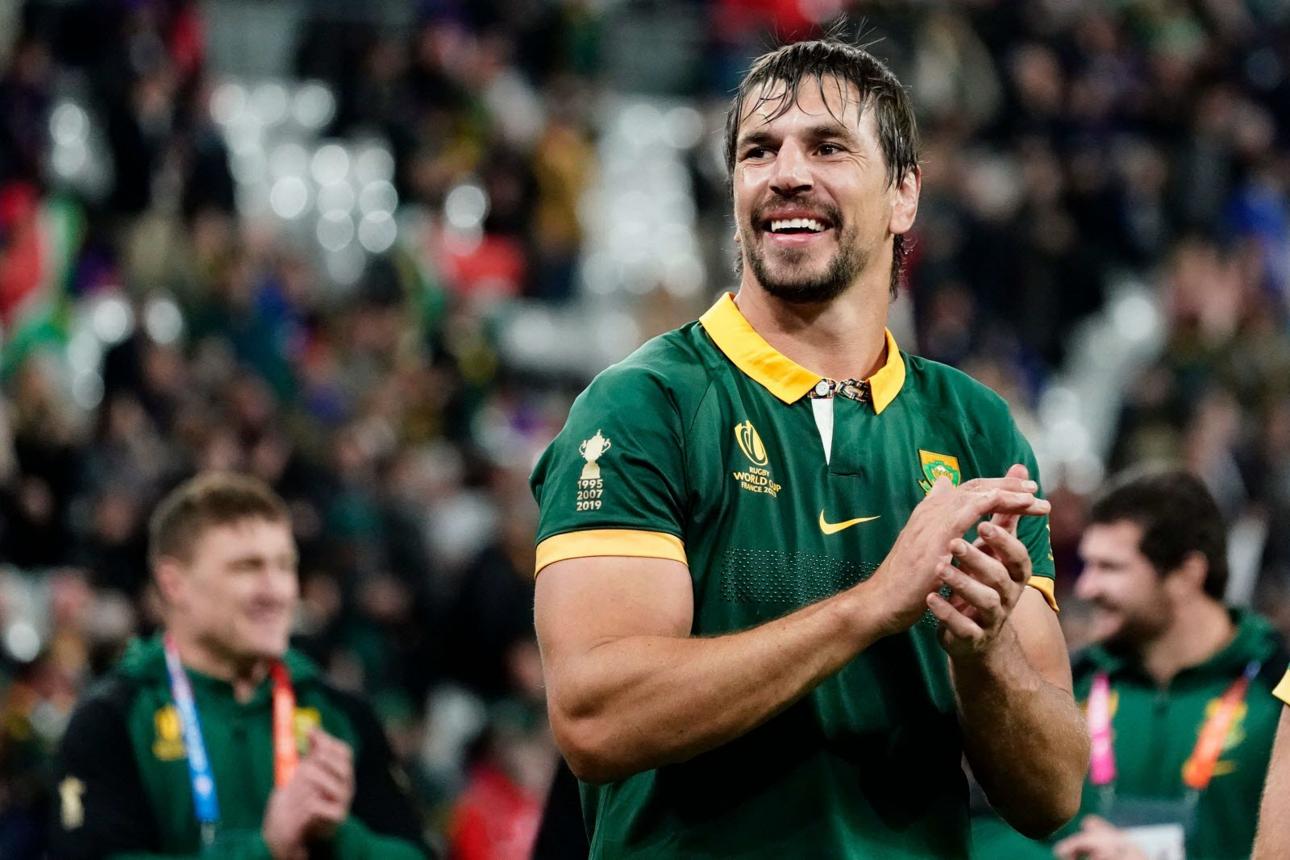
“South Africa have strengthened their preparations for the Nations Championship encounter against France with the inclusion of experienced lock Eben Etzebeth, following Salmaan Moerat’s withdrawal because of back spasms. Meanwhile, uncapped flyhalf Yaqeen Ahmed has returned home with a shoulder injury, creating another important selection development as the Springboks prepare for one of their biggest European fixtures of the season.”
Springboks recall Eben Etzebeth as South Africa prepare for crucial France Nations Championship showdown
South Africa’s preparations for their upcoming Nations Championship encounter against France have received a significant boost following the return of experienced lock Eben Etzebeth to the national squad. The Springboks are entering an important stage of their European campaign after delivering an emphatic victory against Italy, while changes to their personnel have placed additional attention on squad depth, player fitness and tactical planning.
The announcement that Etzebeth will join the Springboks in France comes at a particularly important moment for head coach Rassie Erasmus. South Africa are preparing for a demanding international fixture against France, a team renowned for its physical strength, tactical sophistication and ability to exploit weaknesses in opposition defensive structures.
According to SA Rugby’s official announcement on 8 November, Etzebeth has been called into the squad and will join the team in France. At the same time, young flyhalf Yaqeen Ahmed has returned to South Africa following a shoulder injury. These developments have introduced important changes to the Springboks’ preparations ahead of their next international assignment.
Etzebeth’s return strengthens Springbok leadership
Etzebeth remains one of South Africa’s most influential rugby players. His experience, physical presence, leadership qualities and understanding of international rugby make him an important asset for the national team.
The veteran lock has accumulated extensive experience at the highest level of international competition. His return provides the Springboks with additional leadership within the forward pack, particularly as the team prepares to confront France’s powerful set-piece arrangements.
Reuters reported that Etzebeth was initially ruled out of the November internationals because of injury concerns. However, his recovery has enabled South Africa to bring him back into the squad for the matches against France and Ireland.
At 35, Etzebeth remains South Africa’s most-capped player, with 147 international appearances reported in connection with his latest recall. His experience is particularly valuable during demanding European tours, where international teams face different playing conditions, tactical challenges and physical demands.
His availability also provides Erasmus with greater flexibility when selecting the starting lineup and managing substitutions.
International rugby increasingly requires teams to maintain exceptional physical intensity throughout matches. Consequently, experienced forwards who understand the tactical demands of the game can play a decisive role in maintaining discipline, communication and performance consistency.
Etzebeth’s return therefore represents more than an individual selection decision. It strengthens South Africa’s overall preparation and provides the coaching team with additional options for managing the upcoming contest.
Springboks arrive in France following impressive Italian victory
The Springboks enter the France encounter following a convincing 66-7 victory against Italy in Turin on 7 November.
South Africa scored nine tries during the match, demonstrating their attacking capabilities and ability to dominate opponents when their forward pack and attacking structures operate effectively.
The result continued the Springboks’ unbeaten Nations Championship record following their victories against England, Scotland and Wales during the July fixtures.
The match against Italy was particularly significant because South Africa established an enormous advantage during the first half. Their 45-0 halftime lead demonstrated the effectiveness of their attacking execution and defensive pressure.
Although the second half was less dominant, the Springboks maintained control and completed an impressive performance.
The victory also strengthened South Africa’s position in the competition and provided valuable confidence ahead of the remaining European fixtures.
However, Erasmus and his coaching staff will understand that France presents a substantially different challenge.
Italy’s defensive difficulties during the encounter allowed South Africa to exploit attacking opportunities with considerable effectiveness. France are expected to offer greater resistance, particularly in their defensive organization, breakdown competition and ability to contest possession.
The Springboks will consequently need to maintain their attacking precision while improving their ability to sustain pressure against a more physically demanding opponent.
Injury developments introduce additional selection considerations
While Etzebeth’s return represents encouraging news, the Springboks have also experienced an important setback involving young flyhalf Yaqeen Ahmed.
The uncapped 20-year-old has returned to South Africa after sustaining a shoulder injury during preparations.
Ahmed had been included in the wider Springbok squad as part of the team’s investment in emerging talent. His involvement offered an opportunity to gain experience within an international environment and develop familiarity with the team’s tactical systems.
However, his injury has prevented him from continuing with the European campaign.
According to Reuters, Erasmus has decided against calling up a direct replacement for Ahmed. The coach believes the existing squad provides sufficient cover at flyhalf, allowing the Springboks to continue preparations without making another personnel addition.
This decision demonstrates the importance of squad versatility in modern international rugby.
South Africa have frequently relied on players capable of covering multiple positions, particularly when injuries affect specialist selections.
Although Ahmed’s absence reduces the opportunities available to the young flyhalf, it also highlights the unpredictable nature of international rugby and the importance of maintaining competitive depth throughout a long season.
The coaching staff will continue monitoring the fitness of available players before finalising the matchday squad.
France present a demanding tactical examination
France are among the most formidable opponents in international rugby.
Their combination of physical forwards, powerful ball carriers, technically accomplished backs and attacking creativity makes them difficult to contain.
The French national team traditionally places considerable emphasis on gaining territory, controlling possession and creating opportunities through structured attacking movements.
Against South Africa, France will likely attempt to challenge the Springboks physically while exploiting opportunities through their backline.
The contest is expected to feature intense competition at the scrum, lineout and breakdown.
South Africa’s forward pack will therefore play an important role in determining the outcome.
Etzebeth’s inclusion could prove particularly valuable in these areas because of his experience, defensive work and ability to contribute to lineout arrangements.
The Springboks will also need to maintain discipline.
France possess attacking players capable of capitalising on defensive mistakes, particularly when opposition teams concede penalties or lose defensive organization.
Consequently, South Africa’s ability to maintain concentration throughout the match will be critical.
The coaching staff will likely place significant emphasis on tactical execution, communication and defensive alignment during the final preparations.
Rassie Erasmus faces important selection decisions
Erasmus remains central to South Africa’s preparations because of his ability to develop tactical strategies and manage a large group of international players.
The Springbok coach has consistently demonstrated a willingness to make strategic selection decisions depending on the opposition and the requirements of individual matches.
Etzebeth’s return provides another important option.
His availability could influence the composition of the forward pack, particularly in the second-row positions.
The coaching staff must determine whether the experienced lock is sufficiently prepared to begin the match or whether his contribution would be more effective from the replacements’ bench.
Such decisions depend on fitness assessments, training performance and the tactical requirements of the contest.
The Springboks also need to consider the physical demands associated with playing consecutive international matches during a European tour.
Managing player workloads is essential because fatigue can affect performance, recovery and injury risk.
South Africa’s depth allows Erasmus to consider different combinations while maintaining competitive standards.
Nevertheless, France’s quality means that the Springboks cannot afford to underestimate the importance of selecting their strongest available team.
Nations Championship ambitions increase the importance of the fixture
The Nations Championship represents an important opportunity for South Africa to measure their performance against leading international rugby nations.
The competition brings together teams from the northern and southern hemispheres, creating additional opportunities for meaningful international contests.
For the Springboks, the European fixtures provide an opportunity to reinforce their standing among the world’s leading rugby teams.
Their victory against Italy has strengthened their position, but the remaining matches present more demanding challenges.
France and Ireland are both capable of testing South Africa’s defensive organization, attacking structures and physical resilience.
The Springboks will therefore approach these encounters with considerable determination.
Success against France would provide another important result and reinforce the team’s confidence ahead of the remaining international commitments.
It would also demonstrate the effectiveness of South Africa’s preparation and squad management during the European campaign.
The Nations Championship is particularly important because it provides a structured opportunity for teams to compete against strong international opposition rather than relying exclusively on isolated test matches.
For supporters, the competition offers a clearer picture of how national teams compare across different playing conditions and tactical approaches.
South African rugby benefits from experienced leadership
Etzebeth’s return also highlights the continuing importance of experienced players within the Springbok system.
International rugby requires more than physical ability.
Players must understand complex tactical arrangements, maintain communication under pressure and demonstrate composure when matches become unpredictable.
Experienced international players can help younger teammates develop these qualities.
Etzebeth has spent years competing against some of the strongest forward packs in international rugby.
His experience can therefore contribute significantly to the development of emerging players within the national squad.
South Africa’s rugby structure has frequently relied on a combination of experienced leaders and younger players to maintain competitiveness.
This approach allows the team to develop future international stars while preserving the standards established by established Springbok players.
Ahmed’s initial inclusion in the squad illustrated the importance of providing opportunities to emerging talent.
Although his injury has interrupted that opportunity, his involvement remains part of the broader development process.
South African rugby will continue requiring young players to gain international experience as the national team prepares for future competitions.
Supporters anticipate another major Springbok performance
The Springboks’ convincing victory against Italy has generated considerable interest in their upcoming encounter with France.
South African supporters will be hoping that the team can maintain the attacking momentum demonstrated in Turin.
The return of Etzebeth is likely to attract additional attention because of his reputation and influence within the national team.
However, supporters will also recognise that France represent a significantly more difficult challenge.
The upcoming contest will require the Springboks to demonstrate their ability to perform consistently against elite opposition.
A strong performance would reinforce confidence in the team’s preparation and provide encouragement ahead of the remaining Nations Championship fixtures.
For South African rugby, the match represents another opportunity to demonstrate the depth, resilience and competitiveness of the national programme.
Conclusion: Etzebeth’s return strengthens South Africa’s European campaign
The Springboks’ decision to bring Eben Etzebeth back into the squad represents an important development ahead of their Nations Championship encounter against France.
His experience, leadership and physical qualities provide valuable reinforcement for South Africa’s forward pack.
Meanwhile, Yaqeen Ahmed’s injury highlights the challenges associated with maintaining squad fitness during an intensive international campaign.
South Africa will nevertheless approach the France encounter with confidence following their emphatic victory against Italy.
The coaching staff must now balance player availability, tactical preparation and selection decisions while ensuring that the team remains competitive throughout the European tour.
France will provide a demanding examination of the Springboks’ capabilities, particularly in the forward exchanges and defensive organisation.
Ultimately, South Africa’s success will depend on their ability to combine physical dominance with disciplined execution and attacking precision.
With Etzebeth returning and the squad preparing for another major international challenge, the Springboks have an opportunity to strengthen their position in the Nations Championship and demonstrate why they remain among the most formidable teams in world rugby.



