




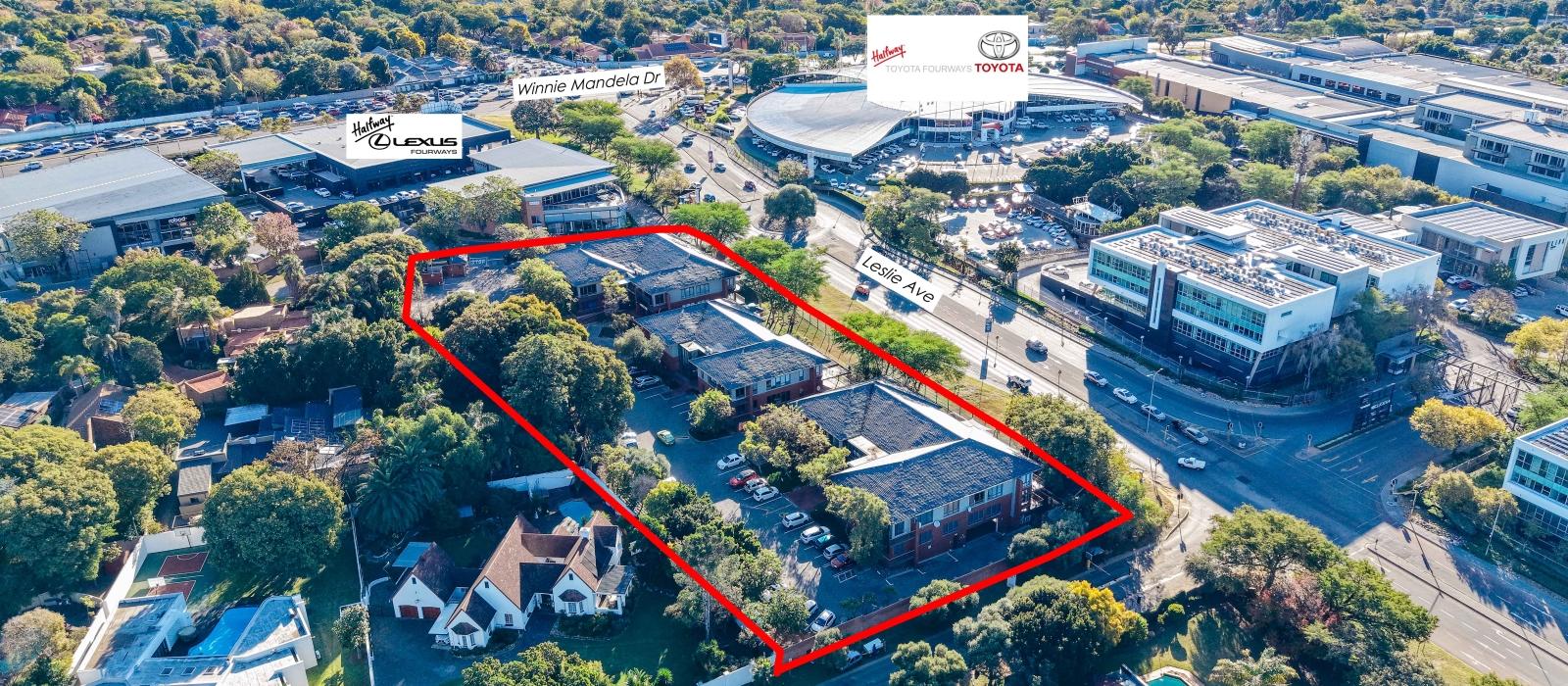
“A 7,382-square-metre development landholding at 18–22 Sparrow Drive in Fourways, Johannesburg, is heading to auction on 22 October 2026, offering existing Residential 3 development rights and prominent frontage along Winnie Mandela Drive. The seller has also applied for enhanced zoning that could permit a five-storey hotel or multi-family residential development with approximately 8,858 square metres of bulk and an indicative yield of about 118 rooms or suites, subject to municipal approval.”
South Africa’s property development market is gaining another closely watched opportunity in Johannesburg, where a 7,382-square-metre Fourways landholding is being positioned for sale at Broll Auctions and Sales’ penultimate auction of 2026. The site, at 18–22 Sparrow Drive, has existing residential development rights and a pending application that could substantially increase its development potential. The property is scheduled for auction on 22 October 2026, making it one of the more notable development-focused offerings in the latest South African real estate market activity.
The Fourways opportunity stands out because it combines an established urban location, existing zoning rights, prominent road exposure and the possibility of additional development rights. According to Broll’s property information, three of the four parcels, covering about 6,000 square metres, are zoned Residential 3. An approved Surveyor-General consolidation diagram is already in place for these parcels, although final registration remains subject to municipal clearance requirements and applicable bulk-services contributions.
Under the existing development parameters, the Residential 3 portion has a floor area ratio of 0.8, a 50% coverage allowance and a three-storey height limit. These rights translate into a baseline development bulk of approximately 5,906 square metres. For a developer, that means the property is not simply vacant land waiting for an entirely new planning process: a substantial development framework already exists, subject to the applicable approvals, registrations and infrastructure obligations.
The site’s location is another important factor. It has frontage and visibility along Winnie Mandela Drive, one of the prominent routes through the Fourways node, while Sparrow Drive provides additional access and exposure. The property is also close to a signalised intersection at Leslie Avenue and Sparrow Drive. In development economics, visibility, accessibility and the ability to connect efficiently to established road infrastructure can materially influence the attractiveness of a site, particularly for residential, hospitality or mixed-use projects.
What makes the opportunity more significant is a pending rezoning application. The seller has applied for the full 7,382-square-metre property to be rezoned to a Special zoning that would accommodate Residential 3 uses, including hotel and multi-family residential development and related ancillary uses. If approved, the proposed parameters would increase the maximum height from three to five storeys and raise the floor area ratio from 0.8 to 1.2.
The proposed development bulk would consequently rise to about 8,858 square metres. Broll indicates an indicative yield of approximately 118 rooms or suites under the proposed hotel or multi-family residential concept. However, this potential should not be confused with an approved development right. The rezoning application remains subject to the municipal planning process, and a purchaser would need to assess the application, conditions and approval risks before relying on the enhanced development scenario.
That distinction is particularly important for investors. Property development value is often determined not only by land size but also by what can legally and practically be built on the site. Existing rights provide a more tangible foundation for underwriting, while proposed rights represent additional upside that may or may not be realised. A sophisticated buyer would therefore examine both scenarios separately: the value of the land under the current rights and the potential value if the proposed rezoning succeeds.
The Fourways site also illustrates the broader development dynamics affecting Johannesburg’s established growth nodes. Fourways has experienced substantial residential, retail, office and hospitality development over the years, supported by major roads, employment areas, schools, shopping centres and surrounding suburbs. Developers are increasingly interested in locations where new projects can be integrated into existing urban infrastructure rather than relying on entirely new infrastructure networks.
This can make well-positioned infill and redevelopment sites particularly valuable. Instead of developing far outside an established node, a developer can potentially place additional residential or hospitality capacity within an area that already has an identifiable customer base and transport connections. Nevertheless, established infrastructure does not eliminate development costs. Water, electricity, sewer capacity, traffic impacts, stormwater management, environmental considerations, municipal contributions and construction costs must all be evaluated.
Broll says the site previously accommodated four residential dwellings and associated utility services, with Eskom boundary infrastructure already established. The dwellings have since been demolished, leaving a previously serviced residential development footprint. This history could be useful to prospective buyers because existing service infrastructure may reduce some of the uncertainty associated with developing completely untouched land, although the condition, capacity and current availability of those services would still need professional verification.
The auction itself is also significant because it reflects a continuing role for property auctions in bringing development land to the market. Auctions can provide a defined sales timetable and expose assets to multiple prospective purchasers. For development land, however, buyers need to complete due diligence before bidding because planning permissions, zoning conditions, title restrictions, servitudes, service capacity and municipal obligations can have a major effect on the final economics.
The Broll listing identifies two registered historical right-of-way servitudes benefiting Erf 298. Such legal details may appear technical, but they can directly affect how a site is accessed, consolidated and developed. A developer considering a hotel, apartment scheme or mixed-use project would need to understand how existing servitudes interact with the proposed development layout and whether additional approvals or amendments would be required.
The property’s potential hotel or multi-family residential use also reflects changing patterns in urban property demand. Residential development remains an important component of South Africa’s property market, while professionally managed apartment and serviced accommodation concepts can offer alternatives to conventional detached housing. The appropriate model will depend on market research, achievable selling or rental values, financing costs, construction costs and the planning rights ultimately secured.
Recent South African property data also point to a market in transition. Residential transaction activity weakened nationally in the second quarter of 2026, while Gauteng showed signs of improving activity. That creates a mixed environment for developers: demand is present in major urban nodes, but financing conditions, economic uncertainty and affordability remain important constraints. Development projects therefore require careful feasibility testing rather than assumptions that rising urban demand automatically guarantees profitability.
For Fourways specifically, the proposed additional bulk could make the land more attractive because it potentially allows greater value to be extracted from the same site. Moving from roughly 5,906 square metres of baseline bulk to a proposed 8,858 square metres would represent an increase of nearly 50%. Yet that additional value depends on successful planning approval and the ability to deliver the resulting scheme economically.
Investors will therefore likely focus on the gap between current rights and future potential. The key questions include whether the rezoning will be approved, what conditions will be attached, whether municipal services can accommodate the additional intensity, what traffic and environmental requirements may arise, and whether the intended hotel or multi-family market can support the required development costs.
The opportunity also comes at a time when Johannesburg’s property market continues to favour strategically located assets with flexible redevelopment possibilities. Sites that can support multiple end uses may attract a wider pool of developers than land restricted to a single specialised purpose. The Fourways property’s combination of residential rights and a proposed hotel or multi-family pathway gives potential purchasers several possible strategies, although each must be tested against planning and market realities.



