




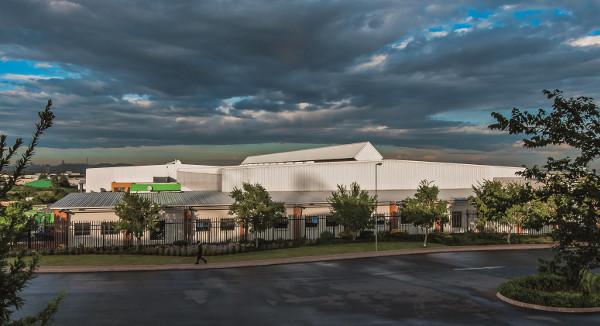
“Growthpoint Properties announced on 16 October 2026 that its 23-hectare Growthpoint Industrial Estate in Meadowdale, Germiston, is approaching completion following the development of a final 6,518-square-metre logistics facility for existing tenant DPD Laser Express Logistics. The new facility, scheduled for completion in June 2027, highlights the demand for modern logistics space and the importance of established industrial locations in supporting e-commerce and distribution operations.”
Growthpoint’s Industrial Estate Milestone Highlights South Africa’s Growing Demand for Modern Logistics Property
A strategic investment in warehousing, distribution and e-commerce infrastructure
South Africa’s industrial property sector continues to demonstrate the importance of well-located logistics facilities as businesses respond to changing distribution requirements, expanding e-commerce activity and growing expectations for faster parcel deliveries. Growthpoint Properties’ latest development at Growthpoint Industrial Estate in Meadowdale, Germiston, provides a significant example of how industrial property owners are adapting their portfolios to meet these needs.
Announced on 16 October 2026, the project involves a new 6,518-square-metre logistics facility for DPD Laser Express Logistics. The development will occupy the estate’s final vacant stand, completing an 18-year development programme that began in 2008. Growthpoint owns and develops the estate, which has become an established industrial and logistics location in Gauteng.
The new facility represents the final stage in the development of Growthpoint Industrial Estate, a 23-hectare industrial precinct in Meadowdale, Germiston. Since development began in 2008, the estate has accumulated approximately 85,000 square metres of gross lettable industrial and logistics space.
Its completion demonstrates how long-term property development strategies can establish mature industrial locations that accommodate businesses as their operational needs evolve. Rather than relying exclusively on new developments in untested locations, established property owners can expand existing facilities and introduce additional capacity where infrastructure, transport connections and tenant relationships are already in place.
According to Growthpoint, the estate is essentially fully let and accommodates 36 tenants. Businesses operating there include DPD Laser, Nebula Logistics Africa, Avon Justine and Skinchem. Several tenants have maintained a presence since the estate’s early development, illustrating the potential value of stable industrial locations for companies with continuing distribution requirements.
The latest project is therefore more than an additional warehouse. It represents the completion of a long-term industrial property strategy while reinforcing the role of established logistics precincts in South Africa’s commercial infrastructure.
E-commerce growth drives demand for additional warehouse capacity
A major factor behind the development is the growth of e-commerce and the associated need for efficient parcel distribution. As online shopping expands, courier companies must manage greater parcel volumes, coordinate deliveries across multiple destinations and move consignments through distribution facilities quickly.
These activities require specialised buildings rather than conventional storage space alone. A modern courier facility must support vehicle movements, parcel sorting, loading, unloading and the rapid transfer of consignments between transport routes.
DPD Laser’s existing premises at Growthpoint Industrial Estate can no longer accommodate its increasing operational requirements, according to Growthpoint’s announcement. The company therefore needed additional capacity close to its current operation, allowing it to expand without abandoning an established location.
The new facility is designed specifically around this requirement. Its cross-dock configuration will allow parcels to move efficiently through the building, reducing unnecessary handling and supporting the movement of goods between incoming and outgoing vehicles.
This illustrates an important development in the industrial property market: tenant demand increasingly depends on how effectively a building supports a particular business model. Location remains important, but loading infrastructure, internal circulation, building height and operational flexibility can be equally significant.
Construction timeline and long-term tenancy
Construction on the DPD Laser facility began in June 2026, with completion scheduled for the end of June 2027. DPD Laser is expected to take occupation from 1 July 2027 under a seven-year lease.
The arrangement gives the property owner a defined long-term tenancy while providing the logistics operator with additional space for its expanding business. It also demonstrates how industrial landlords can support existing customers through successive stages of growth.
For property investors, an established tenant expanding within an existing estate can offer advantages over developing a building without a committed occupier. A tenant-specific project can align building specifications with known operational requirements and reduce uncertainty about the intended use of the completed facility.
However, a long-term lease does not eliminate every investment risk. Construction costs, delivery schedules, operating expenses and the tenant’s future financial performance remain relevant considerations. The announced completion date is a planned milestone rather than confirmation that the building is already operational.
Nevertheless, the development offers a clear illustration of how relationships between landlords and tenants can shape industrial property investment decisions.
Purpose-built design supports efficient parcel distribution
The facility’s specifications reflect the operational demands of a modern courier business. The building will include 10 dock-height doors and 26 on-grade doors, enabling goods to move between the warehouse and vehicles using different loading arrangements.
It will also have a warehouse height of 11.5 metres to the eaves. This additional height can support effective use of internal space, while the building’s layout is intended to accommodate the rapid transfer of parcels through the distribution process. Warehouse and office space will form part of the development.
These features are important because industrial property performance depends partly on how efficiently occupiers can use the premises. Poorly configured loading areas, insufficient vehicle access or inadequate internal height can create operational bottlenecks and increase costs.
By designing the building around DPD Laser’s requirements, Growthpoint aims to provide a facility that serves the tenant’s immediate needs while remaining adaptable as operations develop.
The approach also highlights the difference between ordinary warehousing and specialised logistics property. Although both involve the storage and movement of goods, courier and distribution operations often require faster throughput, more loading positions and careful coordination of vehicle movements.
Consequently, industrial developers increasingly need to understand tenants’ business processes before finalising building specifications.
Transport connections strengthen Meadowdale’s industrial appeal
Meadowdale benefits from access to the R24 and N17 highways, connecting the area to important Gauteng transport routes. For logistics businesses, convenient road access can influence journey times, fleet productivity and the efficiency of distribution networks.
An established industrial location can also offer practical advantages beyond its immediate road connections. Existing tenants, developed infrastructure and a known operating environment may reduce the disruption associated with relocating an established business.
For DPD Laser, remaining within the estate allows the company to expand near its existing operation. This can help preserve operational continuity while providing the additional capacity required for higher parcel volumes.
For Growthpoint, the project demonstrates how industrial landlords can use available land within existing developments to retain tenants and accommodate expansion.
These benefits should not be interpreted as a guarantee of superior investment returns. Traffic congestion, transport costs, infrastructure reliability and competing warehouse developments can still influence the performance of an industrial property. Nevertheless, established locations with appropriate transport access remain strategically relevant to distribution companies.
Sustainability and operational resilience
The new building incorporates several features intended to improve its environmental performance and operational flexibility.
Polycarbonate sheeting will increase natural daylight inside the warehouse, while energy-efficient LED lighting will supplement illumination. The building will also include three 10,000-litre buffer water tanks for domestic use. Its roof has been designed to accommodate the future installation of solar panels.
These features are relevant in an industrial environment where lighting, water availability and electricity costs can affect operating expenses. Natural daylight and efficient lighting can help reduce electricity consumption, although actual savings will depend on operating schedules, building use and installed systems.
Similarly, the provision for future solar panels creates an opportunity for renewable-energy investment without requiring the roof to be redesigned from the beginning. However, the announcement describes solar readiness rather than a confirmed operational solar installation.
For industrial property owners, such design choices can improve a building’s adaptability as tenant requirements and environmental expectations evolve.
Operational resilience also involves managing water supply, security, maintenance and access. While the announced features address selected aspects of building performance, the overall resilience of the facility will depend on how the building is operated and maintained after occupation.
Implications for South Africa’s industrial property market
Growthpoint’s development reflects a wider shift towards industrial properties designed around modern supply chains. Courier companies, retailers, manufacturers and third-party logistics operators require facilities that enable them to receive, process and distribute goods efficiently.
This creates opportunities for property developers that can provide suitable space in established locations. However, demand is not uniform across every industrial node or building type. The commercial attractiveness of an individual property depends on factors such as location, tenant requirements, rental affordability, construction costs and competing supply.
Industrial investors must also distinguish between confirmed tenant demand and broader assumptions about e-commerce growth. A growing online retail market does not automatically mean that every warehouse will attract tenants or achieve strong rental increases.
Growthpoint’s project benefits from a specific occupier requirement: DPD Laser needs more space near its existing operation. The seven-year lease provides a defined framework for the new facility’s intended occupation, although its ultimate investment performance will depend on delivery, operating conditions and the continuing strength of the tenancy.
The development therefore offers a concrete example of demand translating into a purpose-built property project rather than relying solely on general market forecasts.
Economic considerations and employment opportunities
Industrial construction and logistics operations can contribute to economic activity through building work, maintenance, transport, security and distribution services. A new facility may create opportunities for contractors and suppliers during construction and support operational employment once the building becomes occupied.
Nevertheless, the number of jobs associated with this particular development has not been specified in the announcement. It would therefore be inappropriate to attach an unsupported employment figure to the project.
The broader economic significance lies in the role of efficient distribution infrastructure. Businesses need reliable facilities to move products between manufacturers, retailers and consumers. When logistics operations function effectively, they can help companies manage inventory, coordinate deliveries and respond to customer demand.
At the same time, industrial property investment cannot resolve every challenge facing South African businesses. Electricity expenses, transport constraints, skills availability, financing costs and wider economic conditions continue to influence business decisions.
Modern warehouses can improve the physical infrastructure available to companies, but their benefits ultimately depend on the efficiency of the broader supply chain.
Outlook for industrial property investors
The completion of Growthpoint Industrial Estate’s development programme marks an important milestone for the property owner and its tenants. More importantly, the DPD Laser facility illustrates the continuing relevance of established industrial locations that can accommodate business expansion.
For investors, the project highlights several considerations: the importance of securing tenants, designing buildings for practical operational requirements, maintaining transport accessibility and incorporating features that support future adaptability.
For logistics businesses, it demonstrates the value of locating additional capacity close to existing operations rather than automatically relocating to a different industrial node.
However, future performance will depend on the facility being completed as planned, DPD Laser taking occupation and the business continuing to require the space throughout the lease term.
Conclusion: Growthpoint’s new 6,518-square-metre logistics facility represents a significant milestone in Meadowdale’s industrial property development. By combining a long-term tenancy, purpose-built cross-dock infrastructure and access to established transport routes, the project illustrates how industrial real estate can respond to the practical demands of South Africa’s evolving logistics and e-commerce sectors.



