




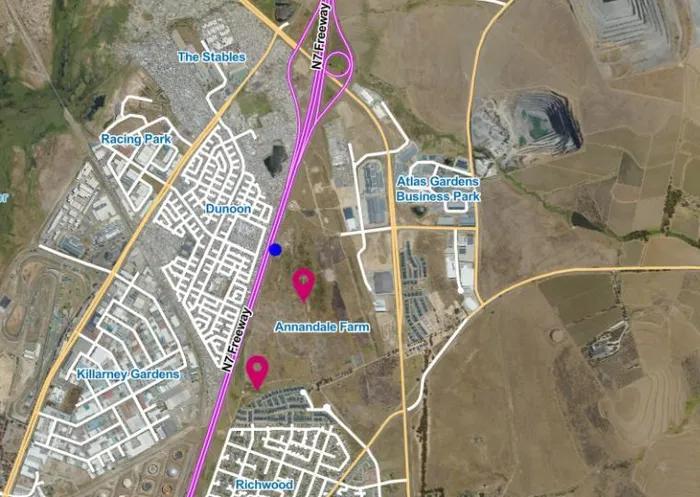
“A dispute over the proposed disposal and development of the City of Cape Town’s 71.8-hectare Annandale property has renewed debate about whether strategically located public land should prioritize affordable housing and social needs or generate revenue through private development. The city has described the site as an opportunity for housing partnerships, while the GOOD Party has challenged the proposed sale and the national Human Settlements Ministry has reportedly requested further information and a pause pending assessment.”
Public land becomes the centre of Cape Town’s affordable-housing debate
South Africa’s struggle to provide affordable housing has once again brought the management of public land into the national spotlight. In Cape Town, the proposed future of the Annandale property in Milnerton has raised important questions about municipal land ownership, private investment, housing delivery and the responsibility of government to ensure that public assets benefit communities.
The 71.8-hectare property, situated near Dunoon, is valued at approximately R256 million. Its size, location and potential development value make it a significant real estate asset. However, the controversy surrounding its proposed disposal illustrates a wider challenge facing South African cities: how to unlock the economic value of land without overlooking the needs of households struggling to find affordable accommodation.
On 13 October 2026, The Bulrushes reported that the GOOD Party said Human Settlements Minister Thembi Simelane had requested the City of Cape Town to defer the proposed transaction while the national department examined the matter. The dispute concerns whether the property should be sold to a private developer and how the land’s original funding purpose should influence decisions about its future.
The issue has consequences beyond one property transaction. It touches on urban planning, municipal accountability, land-use policy and the constitutional commitment to progressively realise access to adequate housing.
The background to the Annandale property
According to the GOOD Party’s account reported by The Bulrushes, the city acquired the land approximately nine years ago for nearly R185 million. The party alleges that the acquisition was intended to help relieve severe overcrowding in Dunoon, an area experiencing substantial housing pressure.
The reported current valuation of approximately R256 million represents a nominal increase of about R71 million compared with the original purchase price. However, that difference should not automatically be interpreted as a realised profit. A completed sale, transaction costs, development obligations, changes in land values and the costs of providing infrastructure would all affect the final financial outcome.
The central dispute is therefore not simply whether the municipality can obtain a higher price for the property. It is whether selling the land, and the conditions attached to that sale, would achieve an appropriate balance between financial considerations and the public interest.
The GOOD Party has argued that the property should be considered in light of the housing needs that originally motivated its acquisition. The party has also questioned whether the use of funds associated with urban settlement development is consistent with a transaction designed primarily to generate municipal revenue.
These are allegations and policy objections reported by the publication, rather than a final legal finding that the proposed transaction is unlawful.
Why the property matters to the housing market
Cape Town faces sustained demand for housing across different income groups. For lower-income households, the difficulty is not merely finding a property in which to live. It is securing accommodation that is affordable, appropriately located and connected to employment, schools, public transport and essential services.
Dunoon illustrates the importance of these considerations. When housing supply fails to keep pace with population growth and household formation, families may face overcrowding, long commutes, high transport expenses and limited access to secure housing.
Well-located public land can provide municipalities with an opportunity to respond to these pressures. Instead of requiring every development to begin with the expensive acquisition of private land, governments can make suitable sites available through structured partnerships with developers, housing agencies and other institutions.
The potential benefits depend on the conditions imposed. A development that produces substantial commercial returns but provides few homes affordable to the intended population may fail to address the problem that justified public intervention. Conversely, a project with unrealistic affordability requirements, inadequate infrastructure funding or unclear commercial terms may struggle to attract capable development partners.
The challenge is to establish a workable arrangement that makes housing delivery financially viable while securing meaningful public benefits.
The city’s affordable-housing approach
The City of Cape Town announced the Annandale opportunity on 6 August 2026 as part of its accelerated land-release programme. According to the municipal announcement, the site was being made available for proposals intended to maximise housing opportunities through sustainable, integrated development and public-private partnerships.
The city stated that the site had undergone preliminary feasibility assessments and invited developers to submit proposals by 10:00 on 21 October 2026. It also said its broader affordable-housing pipeline exceeded 12,000 homes across the metropolitan area. These are municipal-reported figures and programme claims, not independently verified totals of completed homes.
The distinction between a housing pipeline and completed accommodation is important. A site can be identified, assessed, advertised and awarded without immediately producing homes. Developers may still need to obtain planning approvals, secure finance, undertake environmental assessments, install bulk infrastructure and meet other legal requirements.
Consequently, the public value of a land-release programme should ultimately be judged by the homes delivered, their affordability, their location and the time required to bring them into occupation.
For Annandale, a transparent development process would need to establish the intended housing mix, the number of homes anticipated, the income groups to be served, infrastructure responsibilities and mechanisms for monitoring delivery.
Legal scrutiny and spatial justice
The dispute also raises questions about the legal obligations that apply when government considers disposing of strategically located land.
South Africa’s Constitution recognises access to adequate housing as a fundamental right and requires the state to take reasonable legislative and other measures, within available resources, to progressively realise that right. This does not mean every public property must automatically become a housing development. However, housing needs and the public purpose of land can be important considerations in decisions about government-owned assets.
The Bulrushes reported that the Human Settlements Ministry referred to earlier concerns about the disposal of public land suitable for housing and requested records concerning the Annandale acquisition and its funding. The minister reportedly sought an explanation of how the proposed development would benefit poorer households and requested that the city defer finalising the transaction while the department assessed the matter.
The publication also connected the controversy to a Constitutional Court judgment delivered in July 2026 concerning the disposal of Tafelberg School land. According to the report, the judgment established requirements for considering affordable and social housing needs before strategic public land is sold.
That broader legal context makes the Annandale debate particularly significant. Public authorities must consider not only whether a transaction can generate revenue but also whether the decision-making process properly accounts for housing demand and spatial transformation.
Nevertheless, the precise legal implications for Annandale depend on the applicable judgment, the transaction documents and the relevant municipal and national legal frameworks. The existence of a dispute does not, by itself, establish that a proposed transaction has been declared unlawful by a court.
The role of private developers
Private developers can contribute capital, construction expertise and project-management capacity that municipalities may not possess in sufficient quantities. Public-private partnerships can also distribute development risks and potentially accelerate delivery when responsibilities are clearly defined.
For Annandale, a competitive process could attract proposals involving affordable rental housing, subsidised ownership, mixed-income residential developments and supporting community facilities. These are possible approaches rather than confirmed features of an approved development.
A strong proposal would need to demonstrate that the housing would be accessible to its intended beneficiaries. It should also explain how the project would connect residents to transport, employment opportunities, healthcare, education and other services.
Municipal authorities could consider contractual safeguards, including minimum housing-delivery targets, affordability conditions, reporting obligations and penalties for failure to meet agreed milestones. Depending on the final arrangement, land value could also be linked to specified public benefits rather than assessed exclusively through the highest cash offer.
These measures would not eliminate every development risk. However, they could make it easier for the public to understand what the municipality expects in return for releasing a valuable public asset.
Financial considerations and municipal accountability
Land transactions can generate significant revenue for municipalities, but the financial assessment must extend beyond the difference between the purchase price and the proposed selling price.
The reported R185 million acquisition cost and R256 million valuation provide a starting point for public discussion. Nevertheless, a complete financial evaluation would need to consider inflation, the cost of holding the property, professional fees, infrastructure requirements, possible planning obligations and the opportunity cost of alternative uses.
Selling land may provide an immediate financial benefit, whereas developing housing through a partnership may generate public benefits over a longer period. Neither option is automatically superior. The appropriate decision depends on the expected housing outcomes, financial risks, legal obligations and long-term effects on the surrounding community.
Transparency is therefore essential. Publishing relevant feasibility assessments, procurement criteria, valuation information and proposed contractual obligations would help residents understand how the municipality reached its decision.
Public consultation is equally important, particularly where communities have longstanding housing needs. Residents should have meaningful opportunities to understand proposed development options, raise concerns and assess whether the final arrangement responds to local priorities.
The objective should be to make public land decisions understandable, evidence-based and accountable, rather than allowing disagreements to become a substitute for measurable housing delivery.
Implications for investors and the wider property sector
The Annandale controversy also carries lessons for investors interested in South African land and property development.
First, planning and regulatory risks should be assessed alongside location, valuation and potential rental income. A site may appear commercially attractive but still face delays if land-use decisions, public-interest considerations or government approvals remain unresolved.
Second, investors should establish the status of development rights before committing capital. Proposed rezoning, preliminary feasibility assessments and invitations for development proposals are not equivalent to final approval for construction.
Third, public-private partnerships require a clear understanding of the obligations attached to the land. Where affordability targets, infrastructure contributions or community benefits form part of a transaction, these conditions can influence project costs, financing arrangements and expected returns.
The controversy does not establish that private development is inappropriate. Rather, it demonstrates why a commercially viable project must also comply with the applicable legal framework and any enforceable public-benefit commitments.
For developers, banks, institutional investors and housing providers, the long-term opportunity lies in delivering projects that combine sustainable financial returns with housing that people can realistically afford.
What happens next?
As of 18 October 2026, the available reporting does not establish that the Annandale dispute has been conclusively resolved. The city’s original announcement set 21 October 2026 as the deadline for proposals, while the subsequent report described a request for the proposed transaction to be deferred pending the national department’s assessment.
The immediate questions are whether the municipality will proceed with the advertised process, whether further information will be released and whether the national department’s intervention will affect the proposed transaction.
The answers will help determine whether Annandale becomes a practical example of using public land to expand affordable housing or a prolonged dispute over the management of a valuable municipal asset.
A responsible assessment should distinguish between the submission of development proposals, the selection of a preferred bidder, the conclusion of a binding agreement and the eventual construction of homes. Each stage represents a different level of progress.
It will also be important to monitor the final development conditions, the extent of community participation and the affordability of any homes ultimately delivered.
Conclusion: Public land must deliver public value
The Annandale property dispute highlights one of South Africa’s most consequential real estate policy questions: how can government use valuable land to meet urgent social needs without undermining sound financial management or discouraging responsible private investment?
The reported R256 million valuation gives the property considerable financial significance, but its importance cannot be measured by market value alone. Its location, development potential and relationship to housing demand make it a strategic asset whose future could affect households and the surrounding property market for years.
Cape Town’s land-release programme demonstrates the potential of public-private partnerships to unlock development opportunities. At the same time, the concerns raised by the GOOD Party and the reported intervention by the Human Settlements Ministry underline the importance of transparent procedures, appropriate legal scrutiny and clearly defined public benefits.
Ultimately, the success of the Annandale project should be measured by what happens on the ground: whether suitable homes are built, whether those homes are affordable to the intended households, whether essential services are provided and whether the process respects the public purpose of the land.
South Africa needs more than valuable development sites and ambitious housing announcements. It needs credible projects that turn available land into completed homes and sustainable communities.
The next stage of the Annandale process will therefore be important not only for Cape Town but also for the wider debate about land governance, affordable housing and responsible real estate development across the country.



