




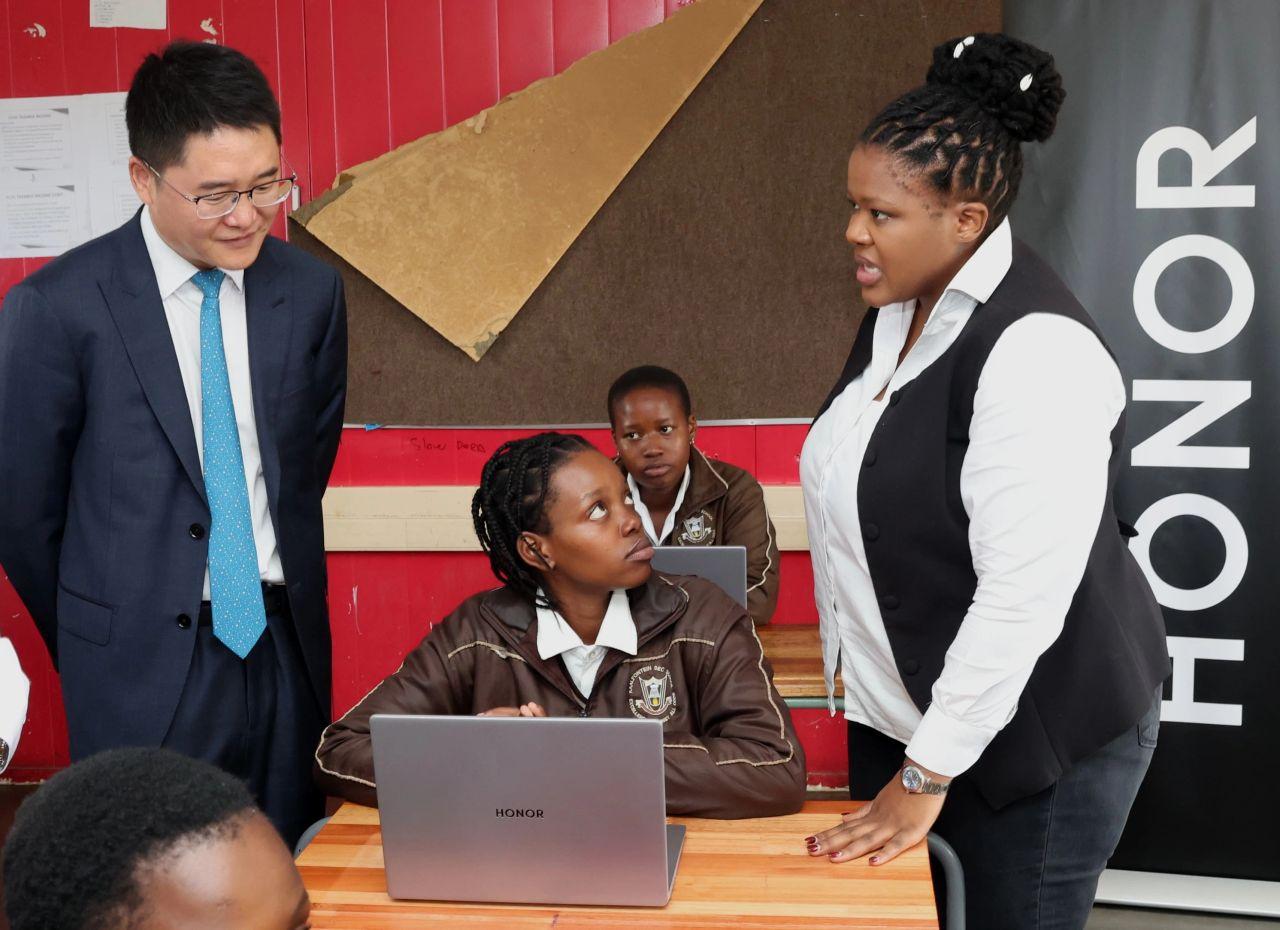
“HONOR South Africa has partnered with Optimas Robotics and South African innovator Evans Parson Zwane to launch a Cyberlab at the Kimberley Teachers Centre, expanding access to robotics, artificial intelligence and cybersecurity education. The initiative, supported by the Northern Cape Department of Education, aims to strengthen digital skills, encourage technological innovation and create opportunities for communities and students to participate in South Africa’s growing technology economy.”
HONOR and Optimas Robotics Bring AI and Robotics Education to Northern Cape Through Kimberley Cyberlab
South Africa’s efforts to expand access to artificial intelligence (AI), robotics and digital skills have received renewed attention following a partnership between HONOR Technologies Africa and Optimas Robotics that established a Cyberlab at the Kimberley Teachers Centre in the Northern Cape. The initiative, developed alongside South African technology entrepreneur Evans Parson Zwane, aims to introduce more learners, educators and community members to technologies increasingly influencing education, business and employment.
The project represents an important development in the country’s robotics and technology education landscape, particularly because it seeks to expand opportunities beyond major metropolitan centres. By providing a local environment for technology learning, the partnership hopes to strengthen digital participation while encouraging the development of homegrown innovation.
Kimberley Cyberlab Expands Access to Robotics Learning
The Cyberlab was launched in Kimberley on 29 October 2026 through a partnership involving HONOR South Africa, Optimas Robotics and the Northern Cape Department of Education. Abraham Vosloo, the province’s MEC for Education, delivered the keynote address at the launch.
The facility is intended to provide community members, teachers and students with opportunities to explore robotics, artificial intelligence, cybersecurity and other digital technologies. Students from Sol Plaatje University are also among the intended beneficiaries, allowing them to complement their academic learning with practical technology exposure.
The initiative forms part of HONOR South Africa’s broader national Cyberlab rollout, which focuses on expanding technology access and strengthening digital skills through community-oriented programmes.
Unlike conventional approaches that concentrate primarily on distributing digital devices, the Cyberlab initiative emphasises learning opportunities and practical engagement. Participants are expected to gain exposure to emerging technologies and develop an understanding of how these tools can be applied across different professional and educational environments.
The initiative also highlights the importance of making technological opportunities accessible to communities that may have fewer resources for specialised learning.
Local Robotics Entrepreneur at the Centre of Innovation
A significant aspect of the partnership is the involvement of Evans Parson Zwane, Founder and Chief Executive Officer of Optimas Robotics.
Optimas Robotics is a South African technology company focused on intelligent systems, robotics solutions, automation and technology education. Its portfolio includes humanoid service robots, AI-powered applications and educational programmes designed to introduce people to emerging technologies.
The partnership demonstrates how established technology companies can collaborate with local entrepreneurs to support innovation and broaden access to technology.
Zwane’s participation also highlights the importance of developing South African technological expertise rather than relying exclusively on imported solutions. Through Optimas Robotics, the entrepreneur is working to expand the practical application of intelligent technologies in sectors such as education, healthcare, government and business.
The Kimberley Cyberlab therefore represents more than a technology access point. It also provides an opportunity to introduce learners to the possibilities of technology entrepreneurship and innovation.
OptimasGPT Introduces Multilingual Educational AI
Another important component of the initiative is OptimasGPT, an educational artificial intelligence platform developed by Optimas Robotics.
According to the company, the platform is designed to support students, teachers, researchers and educational institutions through intelligent assistance, research support, document analysis and access to learning resources.
The platform is reported to support all 11 official South African languages, an important feature in a country characterised by significant linguistic diversity.
Multilingual technology has the potential to improve educational accessibility by allowing users to interact with digital tools in languages they understand more comfortably. In educational settings, language accessibility can influence how learners engage with information, communicate questions and develop confidence in technology.
However, the practical effectiveness of multilingual educational AI depends on factors such as language accuracy, appropriate learning content, accessibility and the quality of its responses. These aspects will be important in evaluating the platform’s performance as it becomes more widely used.
The introduction of OptimasGPT alongside robotics learning reflects an increasingly integrated approach to technology education, where artificial intelligence, automation and digital literacy are treated as interconnected areas of knowledge.
Robotics Education and South Africa’s Digital Economy
South Africa’s technology sector continues to face the challenge of developing the skills required to participate in an increasingly automated economy.
Robotics is becoming relevant across manufacturing, logistics, agriculture, healthcare, mining and education. These industries require people who understand not only how to operate technological systems but also how to maintain, develop, programme and improve them.
Educational initiatives that introduce robotics at an early stage can help learners explore engineering, computer science and technology-related careers.
The Kimberley Cyberlab could contribute to this objective by giving participants opportunities to encounter emerging technologies in a practical learning environment.
For teachers, technology exposure can also support the development of teaching approaches that integrate digital tools into classroom activities. For university students, the initiative may provide opportunities to connect theoretical knowledge with practical experimentation.
Nevertheless, meaningful skills development requires more than access to equipment. Continued mentorship, structured programmes, qualified instructors and opportunities for advanced learning will be essential to ensure that participants can progress beyond introductory exposure.
The partnership has not publicly detailed the Cyberlab’s full training schedule, enrolment capacity, equipment inventory or formal certification arrangements. These operational details will help determine the extent of its educational impact.
Digital Inclusion Beyond Major Urban Centres
The establishment of the Cyberlab in Kimberley carries particular significance for the Northern Cape.
Technology education opportunities are often concentrated around major economic centres, universities and established innovation hubs. Consequently, communities outside these locations may face additional barriers when seeking access to specialised digital learning.
A community-based facility can help address geographical barriers by providing a local environment where learners and residents can explore technology without necessarily travelling to another province.
The Northern Cape’s participation through the Department of Education also illustrates the importance of collaboration between government, educational institutions and private-sector organisations.
Such partnerships can help expand access to resources while encouraging the development of programmes that respond to local needs.
The initiative’s wider significance lies in the possibility of creating pathways from technology awareness to practical skills, entrepreneurship and employment.
From Technology Consumers to Technology Developers
HONOR South Africa has emphasised that digital inclusion involves more than access to devices and infrastructure. The company argues that young people should have opportunities to become developers, researchers and innovators rather than remaining consumers of technology.
This perspective is increasingly relevant as artificial intelligence and robotics influence economic competitiveness.
Countries that develop strong technological capabilities can potentially create new businesses, improve industrial productivity and develop solutions suited to their own social and economic conditions.
South Africa has a growing community of technology entrepreneurs, researchers and educational innovators working to address challenges through digital solutions.
Supporting these individuals through partnerships, learning facilities and investment can help strengthen the country’s innovation ecosystem.
Optimas Robotics’ involvement illustrates the potential role of local technology companies in translating innovation into educational opportunities.
The Cyberlab could also encourage participants to explore how robotics and AI might address practical challenges within their communities.
Challenges Facing Robotics and AI Education
Despite its potential benefits, expanding robotics education requires sustained investment and careful planning.
Technology facilities need appropriate equipment, reliable connectivity, technical maintenance and qualified personnel. Without these resources, educational initiatives may struggle to maintain consistent learning opportunities.
Accessibility is another important consideration. Programmes should ensure that participation is not restricted to learners who already possess advanced digital knowledge or financial resources.
Cybersecurity and responsible AI use must also form part of the learning process. Participants need to understand digital safety, information privacy, responsible technology use and the limitations of automated systems.
Educational AI platforms should be evaluated for accuracy, suitability and responsible handling of information. These considerations become especially important when technologies are used by children, students and educators.
Sustained partnerships between schools, universities, technology businesses and public institutions can help address these challenges.
Strengthening South Africa’s Robotics Innovation Ecosystem
The Kimberley Cyberlab adds to a broader national movement aimed at strengthening technology education and developing future-ready skills.
South Africa has increasingly recognised robotics and artificial intelligence as important components of its scientific, technological and economic development priorities.
Universities, technology companies and educational organisations are contributing to this process through research, training, competitions and innovation programmes.
The partnership between HONOR and Optimas Robotics demonstrates how private-sector investment and local entrepreneurial expertise can combine to support these objectives.
The initiative also highlights the importance of establishing technology learning opportunities in communities beyond traditional innovation centres.
As robotics becomes increasingly integrated into everyday economic activities, access to practical learning could help more South Africans understand emerging technologies and participate in their development.
Looking Ahead
The long-term success of the Kimberley Cyberlab will depend on its ability to provide sustained educational opportunities and translate technology exposure into measurable skills.
Regular training programmes, partnerships with educational institutions, access to mentors and opportunities for learners to develop practical projects could strengthen its contribution.
The facility may also create opportunities for further collaboration between technology companies, universities and community organisations.
For Optimas Robotics, the initiative provides a platform to expand educational engagement while demonstrating the potential applications of intelligent technologies.
For HONOR South Africa, it supports the broader objective of connecting digital inclusion with meaningful opportunities for learning and innovation.
Ultimately, the Cyberlab represents an investment in people as much as technology. By introducing robotics, artificial intelligence and cybersecurity to learners and communities in Kimberley, the partnership seeks to encourage participation in a digital economy increasingly shaped by automation and intelligent systems.
Its broader significance will be determined by whether participants can turn access into knowledge, knowledge into practical capabilities and those capabilities into opportunities for innovation, entrepreneurship and employment.
The initiative therefore offers an important example of how South Africa can strengthen its robotics education landscape through collaboration, local innovation and community-focused technology development.



