




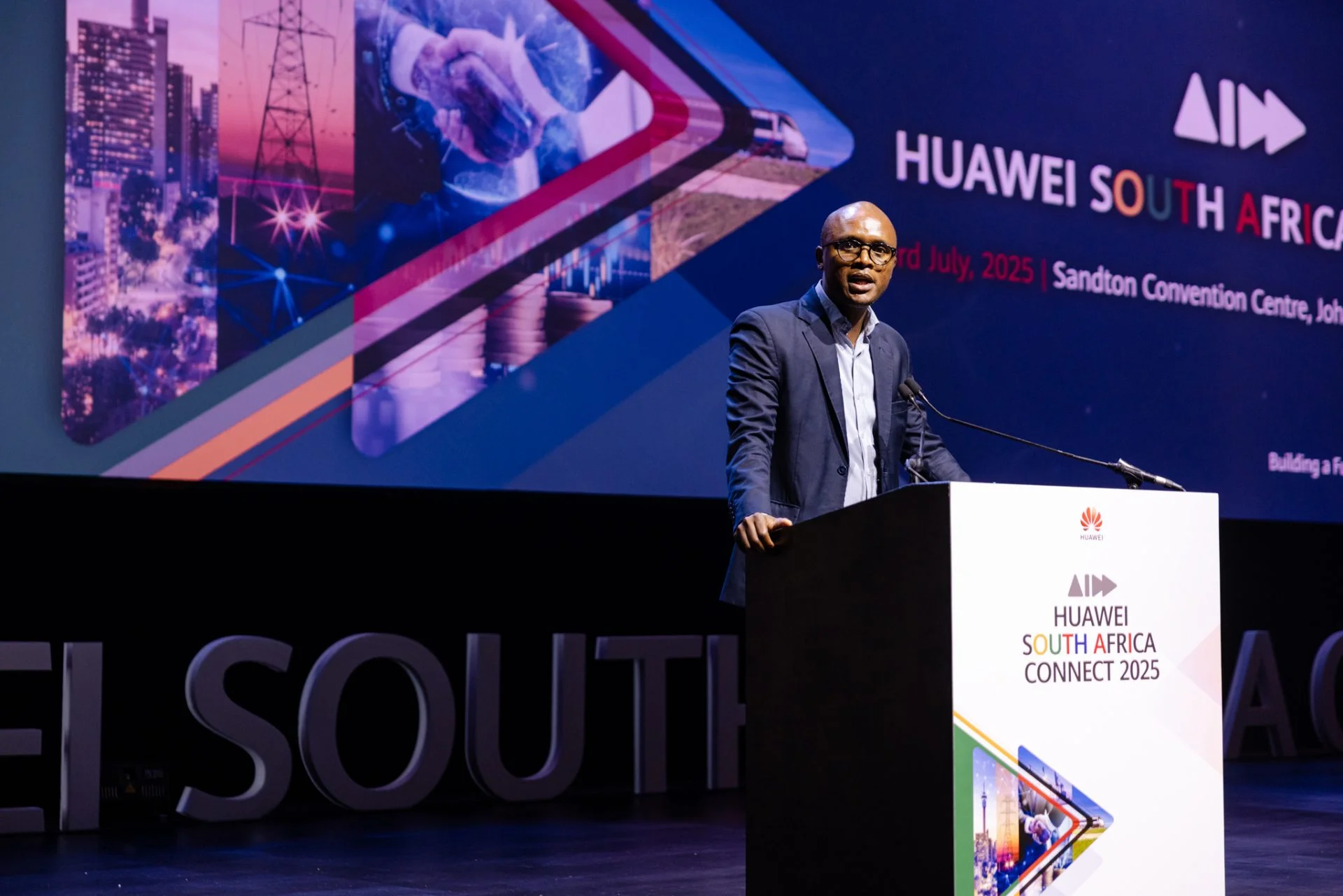
“The Huawei South Africa Connect 2026 Summit brought together over 2,900 leaders to discuss how South Africa can move beyond AI pilots into full-scale adoption across industries. With government backing and Huawei’s ACT framework, the country is positioning itself as a continental leader in AI innovation and digital transformation.”
South Africa is at a pivotal moment in its innovation journey. The Huawei South Africa Connect 2026 Summit, held under the theme “Where Innovation Shapes the Future”, showcased the country’s ambition to harness artificial intelligence (AI) as a driver of economic growth, social inclusion, and global competitiveness. With more than 2,900 leaders from government, academia, and industry in attendance, the summit underscored South Africa’s readiness to leapfrog into the next phase of digital transformation.
Government’s Vision for Inclusive AI
Solly Malatsi, Minister of Communications and Digital Technologies, emphasized that South Africa’s digital future must be about participation, not just technology. He argued that connectivity and affordable devices are immediate priorities to ensure equitable access to the digital economy. Malatsi urged stakeholders to view AI not as a threat but as an opportunity to solve pressing developmental challenges such as healthcare delivery, education access, and energy management. His remarks framed AI as a tool for social justice as much as for industrial efficiency.
Huawei’s Strategic Framework
Will Meng, CEO of Huawei South Africa, outlined a three-stage path to AI readiness:
- Informatisation: Building connectivity infrastructure.
- Digitalisation: Leveraging data for insights.
- Intelligence: Creating new economic value through AI applications.
Meng cited Huawei’s projects in China as proof that this phased approach can deliver tangible results. He also highlighted South Africa’s role as a founding member of the World AI Cooperation Organisation, signaling the country’s commitment to global collaboration.
The ACT Pathway
Nicholas Ma, Huawei’s Corporate Vice President, introduced the ACT framework—Assess, Calibrate, Transform—as a roadmap for enterprises moving from pilot projects to scaled AI adoption. The framework identifies high-value scenarios, calibrates AI models using quality industry data, and transforms operations through full integration. Globally, Huawei has identified over 1,000 production scenarios and built a developer community of more than four million. For South Africa, this means access to a tested methodology for scaling AI across sectors like finance, energy, telecommunications, and education.
Economic Potential
South Africa’s AI market is currently valued at over R50 billion and is expected to triple by 2030. This growth trajectory positions the country as a leader in Sub-Saharan Africa’s digital economy. The potential benefits include:
- Job creation in AI-driven industries.
- Improved public services through smart governance.
- Energy efficiency via AI-enabled grid management.
- Financial inclusion through AI-powered fintech solutions.
Challenges Ahead
Despite the optimism, challenges remain. These include:
- Bridging the digital divide to ensure rural and marginalized communities benefit.
- Building trust in AI systems, particularly in sensitive areas like healthcare and finance.
- Ensuring sustainable funding for innovation projects.
- Developing local talent to reduce reliance on imported expertise.
Global Context
South Africa’s innovation push aligns with global trends where AI is increasingly seen as a cornerstone of competitiveness. By joining international initiatives and fostering partnerships, the country is positioning itself not just as a regional leader but as a global player in AI innovation.
Conclusion
The Huawei South Africa Connect 2026 Summit marks a turning point in the nation’s innovation journey. With government support, industry frameworks, and international collaboration, South Africa is poised to scale AI adoption across sectors. The challenge now lies in ensuring inclusivity, sustainability, and trust as the country transforms its digital landscape.



