




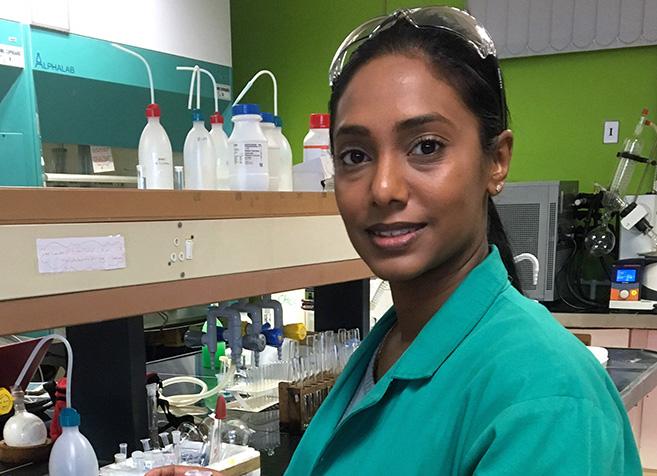
“South African pharmaceutical chemist Professor Tricia Naicker and her research team at the University of KwaZulu-Natal are developing patented chemical compounds designed to prevent resistant bacteria from destroying existing antibiotics, potentially restoring the medicines’ effectiveness against dangerous infections. The research has progressed through extensive laboratory testing, with regulated preclinical safety studies underway before the team can consider clinical trials in humans.”
South African biotechnology research offers new hope in the fight against antibiotic resistance
Introduction: A major scientific development in South Africa
South Africa is strengthening its position in biotechnology and pharmaceutical research through innovative scientific work aimed at addressing one of the most serious challenges facing modern healthcare: antimicrobial resistance.
A significant development emerging from the University of KwaZulu-Natal involves the research led by Professor Tricia Naicker, an accomplished South African chemist working on compounds designed to restore the effectiveness of existing antibiotics against drug-resistant bacteria.
Published by Nature Africa on 6 November 2026, the report highlights how South African researchers are exploring an alternative approach to antibiotic development. Instead of relying exclusively on the discovery of entirely new antibiotics, the research investigates whether existing medicines can be protected from bacterial resistance mechanisms using specially designed chemical compounds.
This approach could have important implications for healthcare systems across South Africa and the wider African continent, where access to affordable and effective medicines remains a significant public health priority.
The research also demonstrates the growing importance of biotechnology, medicinal chemistry and multidisciplinary scientific collaboration in developing solutions to complicated medical challenges.
Understanding the growing threat of antimicrobial resistance
Antimicrobial resistance occurs when microorganisms, including bacteria, develop mechanisms that enable them to survive medicines that previously killed them or stopped their growth.
Although antibiotic resistance is a naturally occurring biological process, the inappropriate and excessive use of antibiotics can accelerate its development and spread.
The consequences are serious. Infections that were once relatively straightforward to treat can become more complicated, requiring stronger medicines, longer hospital stays and more expensive medical interventions.
Drug-resistant infections can affect patients with pneumonia, bloodstream infections, urinary tract infections, gastrointestinal infections and other serious illnesses.
Tuberculosis also remains an important concern in South Africa, particularly because resistant forms of the disease can require complex and lengthy treatment.
The challenge is not simply that bacteria become resistant to one medicine. Different bacterial species can develop several resistance mechanisms, making the development of effective treatments increasingly difficult.
One particularly important mechanism involves enzymes known as beta-lactamases.
These enzymes can destroy the chemical structure of certain antibiotics, including beta-lactam medicines, preventing them from performing their intended function.
As a result, patients infected with bacteria producing these enzymes may not respond adequately to treatments that would otherwise have been effective.
This is the scientific problem that Naicker and her collaborators are attempting to address.
Professor Tricia Naicker’s contribution to biotechnology
Professor Naicker is the director of the Catalysis and Peptide Research Unit within the pharmaceutical sciences discipline at the University of KwaZulu-Natal.
Her scientific career demonstrates the contribution that South African universities can make to international pharmaceutical innovation.
She studied pure and applied chemistry at UKZN before completing doctoral research focused on developing specialised organic molecules capable of accelerating chemical reactions.
Her subsequent research experience included work at Aarhus University in Denmark, where she expanded her knowledge of advanced chemistry and scientific research.
She returned to UKZN in 2013, joining researchers involved in pharmaceutical drug discovery.
Over the years, her work has increasingly focused on developing chemical compounds with potential medical applications, including solutions to antimicrobial resistance.
The Catalysis and Peptide Research Unit brings together scientific expertise in chemical synthesis, microbiology and biochemistry.
This multidisciplinary approach is important because developing a potential medicine requires more than producing a promising chemical structure.
Researchers must also determine how the compound interacts with biological systems, whether it produces the intended effect and whether it can be used safely.
Naicker’s research illustrates how chemistry and biotechnology can work together to address practical healthcare problems.
How the new compounds could help existing antibiotics
One of the most important aspects of the research is its focus on metallo-beta-lactamases, commonly abbreviated as MBLs.
These enzymes belong to a group of bacterial resistance mechanisms that can neutralise important beta-lactam antibiotics.
Unlike some other beta-lactamases, metallo-beta-lactamases depend on metal ions, particularly zinc, to perform their biological function.
The South African research team has developed compounds designed to interfere with the zinc-binding process required by these enzymes.
By disrupting this process, the researchers aim to inhibit the enzymes and prevent them from destroying susceptible antibiotics.
The ultimate objective is to allow an existing antibiotic to continue working against bacteria that would otherwise resist it.
This is an important distinction.
The researchers are not necessarily attempting to replace established antibiotics with entirely new medicines. Instead, they are exploring whether an additional chemical compound can overcome a particular bacterial defence mechanism.
If successful, the approach could provide an additional way of extending the useful life of existing antibiotic treatments.
The team has already patented a specific collection of compounds associated with this research.
The discovery developed from earlier investigations into metal-binding chemical compounds known as chelators.
Chelators are molecules capable of binding metal ions such as zinc, iron and copper.
The researchers recognised that because certain resistance enzymes depend on zinc, compounds capable of interacting with this metal might interfere with the enzymes’ activity.
Subsequent biological testing provided the foundation for a research programme focused on combating antimicrobial resistance.
This illustrates how scientific discoveries can emerge when researchers explore unexpected applications for existing technologies and chemical materials.
Why restoring existing antibiotics matters
Developing new antibiotics is an expensive, complicated and lengthy process.
Researchers must identify promising compounds, understand their biological mechanisms, investigate potential toxicity, conduct clinical trials and demonstrate that the resulting medicine is safe and effective.
Even after extensive scientific work, many potential drug candidates never reach the market.
Consequently, finding ways to improve existing medicines has become an important area of pharmaceutical research.
For South Africa, this approach has particular significance.
Healthcare systems must consider not only whether a medicine works but also whether it can be manufactured, distributed and made available at a sustainable cost.
A technology that helps restore the activity of an established antibiotic could potentially reduce the need to depend entirely on expensive new drug discoveries.
However, this possibility must be evaluated through further research.
The cost of the new compound, its manufacturing requirements, its compatibility with existing medicines and the expense of regulatory approval will all influence its eventual affordability.
The research team has reported progress in microbiological and pharmacological testing and has developed an understanding of how to scale up production of its patented compound.
Nevertheless, laboratory success does not automatically translate into a treatment suitable for patients.
The compounds must first satisfy the necessary safety and development requirements.
The importance of preclinical safety testing
A major milestone in pharmaceutical development is establishing whether a promising compound can be administered safely.
Naicker’s team is undertaking regulated preclinical toxicology studies to investigate the safety characteristics of its candidate compounds.
Preclinical testing is essential because substances that demonstrate promising antibacterial activity may also produce unwanted effects in human cells or biological systems.
Researchers must investigate issues such as toxicity, dosage, exposure, metabolism and potential interactions with other medicines.
These investigations help determine whether a candidate is sufficiently promising to justify consideration for human clinical trials.
The current research should therefore be understood as an important drug-discovery development rather than an approved treatment.
The compounds have not been established as commercially available medicines, and their effectiveness and safety in patients still require further investigation.
If the necessary preclinical requirements are satisfied, the research team may consider the next stages of pharmaceutical development.
Clinical studies would then be necessary to investigate safety and effectiveness in humans.
This distinction is particularly important when reporting biotechnology breakthroughs because responsible scientific communication must separate experimental findings from proven medical treatments.
Biotechnology and South Africa’s healthcare priorities
The development is particularly relevant to South Africa’s healthcare environment.
Antimicrobial resistance places pressure on hospitals, medical professionals, laboratories and public health programmes.
When infections become resistant to commonly available medicines, healthcare providers may need to use more expensive alternatives or administer treatment for longer periods.
This can increase the financial burden on patients and healthcare institutions.
Furthermore, the problem affects communities differently depending on access to diagnostic services, specialist healthcare and appropriate medicines.
Research undertaken at South African universities can contribute to solutions that respond to local disease patterns and healthcare needs.
It also creates opportunities for developing pharmaceutical technologies within the country rather than relying exclusively on imported scientific innovations.
Naicker’s work highlights the importance of investing in local researchers who understand the challenges facing South African communities.
It also demonstrates why biotechnology should not be viewed only as a scientific discipline. It is increasingly connected to healthcare delivery, industrial development, employment, intellectual property and national economic competitiveness.
The role of collaboration in pharmaceutical innovation
The development of potential medicines requires expertise from several scientific disciplines.
Chemists are responsible for designing and synthesising chemical compounds.
Microbiologists investigate how bacteria respond to those compounds and whether the substances interfere with important biological processes.
Biochemists help explain the molecular interactions involved.
Pharmacological researchers investigate how compounds behave in biological systems, while toxicology specialists assess potential safety concerns.
Regulatory experts are also essential because pharmaceutical products must satisfy established quality, safety and efficacy requirements.
Naicker has highlighted the importance of teamwork in her research.
Her work at UKZN reflects the value of collaboration between established scientists, postgraduate students and specialists from different research fields.
This approach can strengthen the quality of scientific investigations while creating opportunities for younger researchers to develop practical expertise.
It also helps universities build research environments capable of producing future pharmaceutical innovators.
South Africa’s biotechnology industry and manufacturing opportunities
Beyond its potential healthcare benefits, the research highlights opportunities for strengthening South Africa’s biotechnology industry.
The country has universities, research institutions and pharmaceutical organisations with capabilities in scientific research, medicine development and biomanufacturing.
However, converting laboratory discoveries into commercially available medicines remains challenging.
Researchers often require specialised equipment, investment, regulatory assistance, manufacturing facilities and experienced technical personnel.
South Africa’s CSIR FuturePHARMA initiative is one example of national efforts to strengthen the connection between scientific discoveries and pharmaceutical manufacturing.
The facility is designed to provide infrastructure and expertise that can help researchers and companies move promising pharmaceutical technologies towards development, clinical testing and eventual manufacturing.
Its capabilities include work involving biopharmaceutical products, including protein-based medicines and vaccines.
Although FuturePHARMA and Naicker’s antibiotic research are separate initiatives, both illustrate the importance of strengthening the country’s pharmaceutical innovation ecosystem.
Developing this ecosystem could help South Africa retain more scientific expertise, support biotechnology businesses and create opportunities for local manufacturing.
It could also contribute to the country’s broader ambition of reducing dependence on imported pharmaceutical products.
The significance for Africa
The importance of this research extends beyond South Africa.
African healthcare systems face significant challenges associated with infectious diseases, limited resources and the availability of effective treatments.
The development of antimicrobial resistance threatens progress in treating bacterial infections and complicates the management of several major diseases.
Locally developed pharmaceutical technologies could help African countries build greater scientific independence.
However, translating research into widespread healthcare benefits will require cooperation between universities, governments, pharmaceutical manufacturers, healthcare providers and regulatory organisations.
Regional collaboration could also strengthen scientific training, technology transfer and manufacturing capacity.
South African researchers have an opportunity to contribute to this process by developing technologies that respond to African healthcare priorities.
The work at UKZN demonstrates the potential of locally driven scientific research to contribute to international efforts against antimicrobial resistance.
Challenges that remain before commercialisation
Despite the encouraging progress, several challenges must be addressed before the compounds can become treatments.
First, the researchers must establish an acceptable safety profile through regulated preclinical studies.
Second, they must demonstrate that the compounds can be manufactured consistently and at a commercially sustainable scale.
Third, the effectiveness of the compounds must be investigated against a sufficiently broad range of relevant resistant bacteria.
Fourth, researchers will need to determine whether the compounds work reliably alongside existing antibiotics under clinically relevant conditions.
Finally, clinical trials and regulatory assessments will be necessary before any potential medicine can be approved for patient use.
There is also the continuing challenge of bacterial evolution.
Bacteria can develop new resistance mechanisms, meaning that even promising new treatment approaches must be monitored and evaluated over time.
These challenges do not diminish the significance of the research. Instead, they demonstrate why sustained investment and careful scientific development are necessary.
Conclusion: A promising contribution to South African biotechnology
Professor Tricia Naicker’s research at the University of KwaZulu-Natal represents an important contribution to South Africa’s biotechnology and pharmaceutical research landscape.
By developing compounds designed to interfere with bacterial resistance enzymes, her team is investigating an alternative strategy for protecting the effectiveness of existing antibiotics.
The approach could eventually contribute to more effective treatments for difficult bacterial infections, although additional safety studies and clinical development are essential before its medical benefits can be established.
The research also demonstrates the importance of investing in South African scientific talent, multidisciplinary collaboration, pharmaceutical innovation and biotechnology infrastructure.
For South Africa, the opportunity extends beyond discovering new chemical compounds. It involves building a scientific environment in which local research can develop into practical technologies, stronger healthcare capabilities and sustainable industrial opportunities.
As antimicrobial resistance continues to threaten modern medicine, research initiatives such as this demonstrate why biotechnology remains an important part of the country’s future healthcare and scientific development.
The next major milestone will be the successful completion of the necessary preclinical investigations and, if supported by the results, progression towards human clinical testing.



