




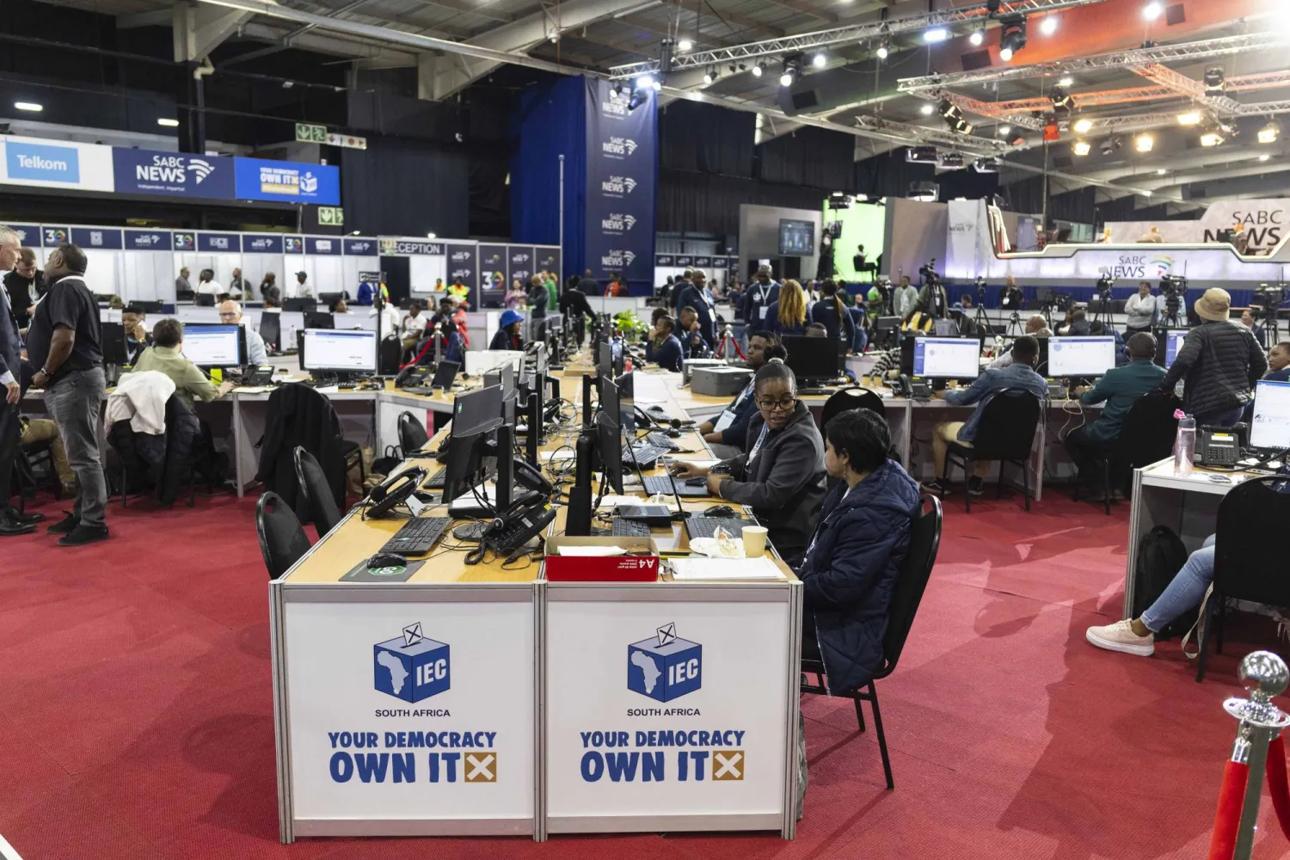
“The Electoral Commission of South Africa has completed an independent external audit of the Election Results System that will be used to capture, collate and allocate results during the November 4 local government elections. The move is designed to strengthen transparency, security and public confidence in the electoral process, particularly after concerns surrounding election technology and several ongoing legal disputes involving political parties.”
IEC Audits Election Results System Ahead of South Africa’s 2026 Local Government Elections
South Africa’s preparations for the 2026 Local Government Elections have entered a critical phase after the Electoral Commission of South Africa (IEC) completed an independent external audit of the Election Results System that will be used during the November 4 municipal polls. The audit is one of the most important election-integrity measures ahead of voting day because the system is responsible for capturing and collating election results and assisting with the allocation of seats to political contestants.
The development comes less than a month before millions of South Africans are expected to vote for representatives who will govern municipalities across the country. It also comes at a politically sensitive time, with the IEC facing legal challenges from political parties and with questions about election technology, candidate lists and the credibility of electoral processes remaining prominent in public debate.
According to the IEC, the external audit forms part of its broader efforts to provide assurance about the integrity, functionality, security and reliability of the Results System. Political parties have traditionally been given opportunities to scrutinise the system and involve independent technical experts in the process. The commission has again committed itself to allowing contestants to test the system before election day.
The importance of this exercise is particularly clear when considering the role technology plays in modern elections. Although South Africans will still cast physical ballots, election administration increasingly depends on digital systems to capture, manage, verify, collate and publish information. Any weakness in these systems can create uncertainty even when the physical voting process itself is conducted properly.
The IEC has therefore placed significant emphasis on testing and auditing its systems before voters go to the polls. The commission’s latest exercise is intended to identify vulnerabilities before they can become problems during the election. It is also an attempt to reassure political parties, election observers and the public that election results will be handled through systems that have undergone independent scrutiny.
Political parties have been invited to participate directly in testing the Results System with their preferred independent experts. The testing period provides contestants with an opportunity to identify potential systemic problems and raise concerns with the commission before election day. This approach is important because political parties are among the principal stakeholders in the electoral process and have a direct interest in ensuring that results are captured and processed accurately.
The current preparations also reflect lessons from previous elections. During the 2024 national and provincial elections, the IEC faced intense scrutiny after its public results display experienced a technical problem. Although the commission maintained that the underlying results system continued operating, the incident contributed to concerns and questions from some political actors about the reliability of election technology. The Electoral Court subsequently rejected the MK Party’s challenge to the 2024 election results, while the IEC continued preparations for an independent audit of the system that will be used for the 2026 municipal elections.
That background makes the latest audit particularly significant. Election credibility depends not only on whether votes are counted correctly but also on whether citizens believe the process is transparent, secure and independently verifiable. An effective audit can therefore help address concerns before they become political disputes after voting day.
The commission’s preparations are taking place alongside a number of legal challenges. The IEC recently said that preparations for the November election remain on track, with officials working through hundreds of projects required to deliver the poll. Voting districts have been reviewed, voting stations have been confirmed and election officials are being recruited and trained for service at approximately 23,700 voting stations.
However, the legal environment remains complicated. The IEC is involved in several court matters concerning political parties and candidate nominations. Government has reported that unresolved election-related matters before the courts could have implications for finalising ballot papers in affected areas. Despite these challenges, the IEC has continued with the printing process for the millions of ballot papers required for the election.
One of the most closely watched disputes involves the African National Congress and approximately 181 candidates who were excluded from final candidate lists after the party failed to complete the required final submission process within the deadline. The ANC has challenged the Electoral Court’s ruling and taken the matter to the Constitutional Court, arguing that uploading candidate information onto the IEC’s electronic system should have been sufficient. The IEC maintains that the final submission requirement is legally significant and that uploading information without completing the final step does not constitute a valid nomination.
The dispute illustrates the broader pressure facing the electoral administration as election day approaches. The IEC must balance strict adherence to election rules with the need to ensure that legitimate political participation is protected. At the same time, it must maintain a timetable that allows ballots to be finalised, printed and distributed across the country.
The Results System audit is therefore taking place within a much wider election-readiness programme. The commission has to prepare technology, staff, voting stations, logistics, ballots and security arrangements simultaneously. Every part of the process has consequences for the credibility of the final result.
For voters, the central issue is straightforward: they need confidence that the vote they cast will be accurately reflected in the final result. That confidence is especially important in local government elections, where political competition can be intense and where disputes over municipal leadership can directly affect communities.
Municipal elections also have a practical significance that extends beyond party politics. Councillors and municipal administrations are responsible for important aspects of local service delivery, including infrastructure, roads, water, sanitation, electricity-related municipal responsibilities and community development. As a result, the credibility of the election process affects the legitimacy of the local authorities that will govern after November.
Recent reporting from Pimville in Soweto illustrates why these elections matter to ordinary residents. Communities have raised concerns about electricity, crime, housing, infrastructure and street lighting, with residents expressing frustration over years of unresolved problems. Some residents interviewed ahead of the elections said their experiences with local service delivery were influencing their political choices.
This means the election is not only about competing parties or political personalities. It is also about whether voters believe the democratic system can produce governments capable of responding to their everyday needs. For that reason, confidence in the electoral process is fundamental.
The IEC’s audit can contribute to that confidence, but transparency will remain essential. Political parties and independent experts need meaningful opportunities to examine the system and understand how results are processed. Voters, meanwhile, need clear communication about the safeguards being implemented and how concerns will be handled.
The commission has indicated that it intends to involve political contestants in the testing process. Such involvement can help reduce suspicion because political parties are able to conduct their own technical assessments rather than simply relying on assurances from the electoral authority.
The timing is also important. With November 4 approaching, there is limited room for major changes to election infrastructure. Problems discovered now can potentially be corrected before voting day, whereas problems identified after results have been announced could trigger political disputes, court applications and public uncertainty.
South Africa’s electoral system has historically placed considerable emphasis on transparency and independent oversight. The latest audit continues that tradition by bringing external technical scrutiny into one of the most sensitive components of the election process.
At the same time, the IEC faces concerns beyond technology. Judges Matter has raised questions about vacancies at the Electoral Court ahead of the elections, highlighting the importance of having suitably qualified judicial personnel available to deal with electoral disputes. The organisation has stressed that filling vacancies should not come at the expense of appointing appropriately qualified candidates.
Together, these developments show how many layers of preparation are required for a national municipal election. The voting process itself may take place on a single day, but the infrastructure supporting it involves months of planning, testing, legal decisions, training and logistical coordination.
The independent audit of the Results System is consequently more than a technical exercise. It is part of the broader effort to protect the credibility of South Africa’s democratic institutions at a time when political competition is intensifying.
For the IEC, the immediate priority will be to ensure that the system performs reliably when millions of votes begin entering the results process. For political parties, the challenge is to use the available testing mechanisms responsibly and raise legitimate concerns before election day. For voters, the expectation is that their ballots will be counted accurately and that the final results will reflect the choices made at voting stations.
With the local government elections scheduled for November 4, 2026, the country is moving rapidly towards one of the most consequential political moments of the year. The audit of the Results System provides an important layer of reassurance, but maintaining public confidence will require continued transparency throughout the remaining weeks.
Ultimately, a credible election depends on more than technology. It depends on clear rules, competent officials, secure voting stations, accurate counting, independent oversight, timely dispute resolution and public trust. The IEC’s decision to subject its Results System to independent external scrutiny is therefore an important step toward ensuring that South Africa’s municipal elections are conducted in a manner that voters and political contestants can trust.
As election day approaches, the success of these preparations will be judged not only by whether voting takes place smoothly, but also by whether the country can accept the final results with confidence. The independent audit, political-party testing and continued oversight will all play a role in achieving that objective.



