




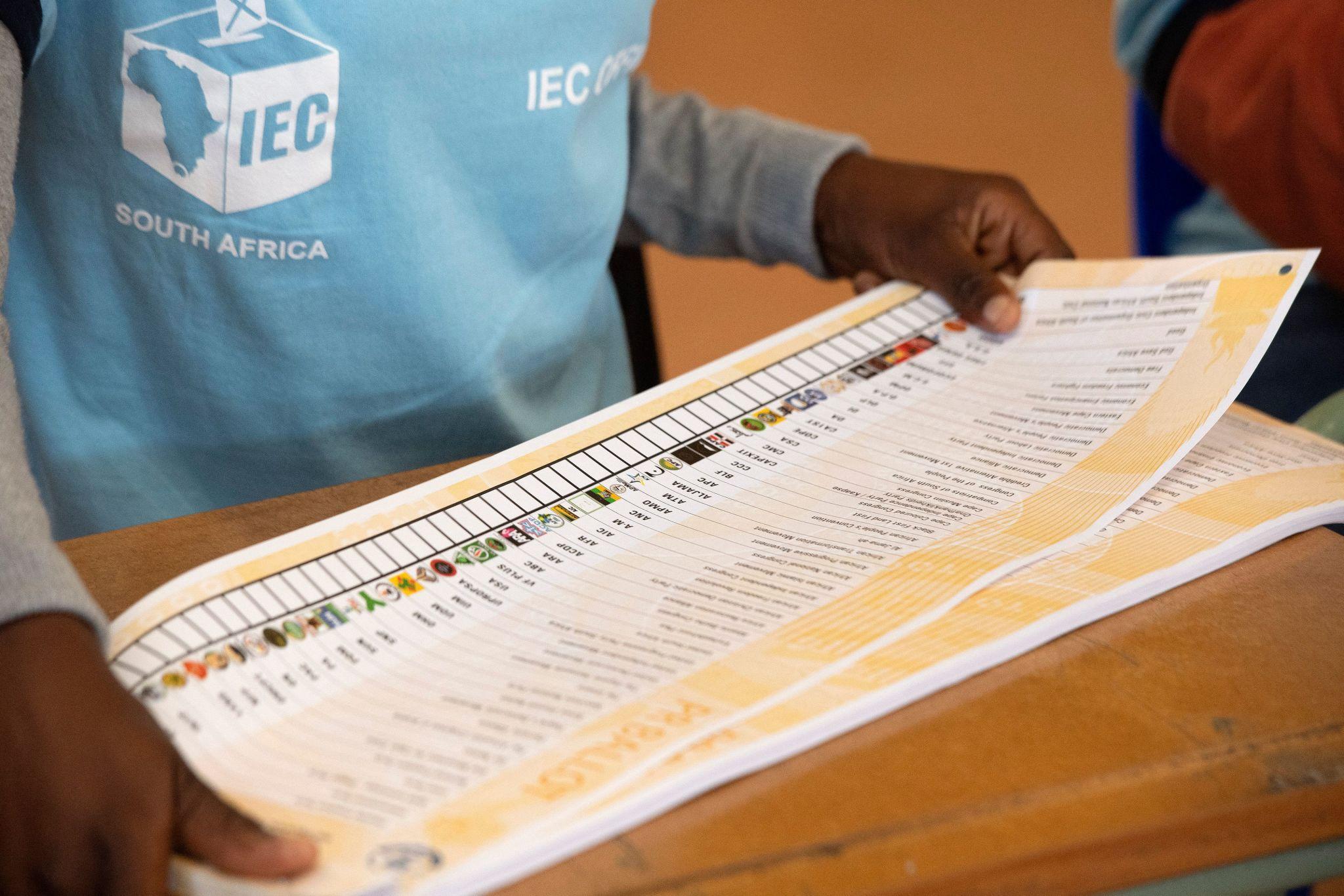
“South Africa’s Electoral Commission (IEC) is racing to print approximately 27 million ballot papers by 30 October after a Constitutional Court ruling required the inclusion of previously excluded political party candidate lists ahead of the 4 November 2026 local government elections. The decision protects political participation and equal treatment of parties, but it has significantly complicated election preparations, increased expected printing costs and intensified pressure on the commission to deliver a free, fair and credible vote.”
South Africa’s election preparations face a critical test as IEC rushes to print millions of ballot papers
Election commission confronts a major logistical challenge
South Africa’s preparations for the 4 November 2026 local government elections have entered a critical phase, with the Independent Electoral Commission of South Africa working under intense time pressure to print millions of ballot papers following a Constitutional Court ruling on political party candidate lists.
The development has placed election administration at the centre of national political attention just days before voters are scheduled to elect municipal representatives. According to a report published by TimesLIVE on 25 October, IEC chief electoral officer Sy Mamabolo said the commission was working around the clock to complete the printing of approximately 27 million ballot papers by Friday, 30 October.
The revised printing schedule follows a legal dispute concerning candidate nominations submitted through the commission’s electronic system. The court’s intervention required the inclusion of affected African National Congress candidates, while the IEC subsequently extended the benefit of the decision to 32 other political parties in comparable circumstances.
The situation highlights the difficult balance between maintaining strict electoral procedures and protecting political parties’ constitutional rights. Although the commission had already developed its operational schedule, the legal developments forced it to revise its arrangements shortly before election day.
For South Africa, where municipalities are responsible for essential services such as water, sanitation, refuse removal and local infrastructure, the elections represent an important opportunity for voters to evaluate political leadership and influence the direction of local government.
Constitutional Court ruling changes the election timetable
The dispute began when the ANC challenged the IEC’s decision to reject candidate lists for several municipalities. The party argued that a technical problem with the electronic nomination system had prevented it from completing the submission of 181 candidates before the deadline.
The original submission deadline was 5pm on 28 August 2026. According to Parliament’s account of the case, the Electoral Court had previously upheld the IEC’s decision to exclude the affected candidates because the party had not completed the final submission process.
On 15 October, however, the Constitutional Court ruled in favour of the ANC and directed the commission to take the necessary steps to include the affected candidate lists and nominations in the election process.
The judgment changed the circumstances facing the IEC. Ballot printing was already well advanced, and incorporating the additional candidates required changes to the production and distribution arrangements.
The commission then extended the benefit of the ruling to 32 other parties that had encountered comparable circumstances, even though those parties were not participants in the ANC’s court case.
This decision was intended to promote equal treatment among political parties. Nevertheless, it increased the administrative burden because the commission had to accommodate additional nominations across the affected electoral areas.
The case also demonstrates the importance of legal certainty in election administration. Political parties must understand and comply with nomination requirements, while electoral authorities must apply the law consistently and ensure that administrative procedures do not unfairly prevent eligible candidates from participating.
IEC faces a demanding ballot-printing deadline
The immediate challenge is to complete the revised ballot-printing process before special voting begins.
Mamabolo told TimesLIVE that the commission was targeting 30 October for completion of approximately 27 million ballot papers. The original plan had been to finish printing by 18 October, meaning the court proceedings substantially altered the production schedule.
The IEC must coordinate printing contractors, ballot specifications, quality checks, packaging and distribution to municipalities. Ballots also have to reach the appropriate voting stations in time for election officials to prepare for voting.
This is not simply a matter of printing additional sheets of paper. Electoral materials must reflect the correct candidates and party options for the relevant municipal contests. Errors could create confusion for voters, delay voting or undermine confidence in the process.
The commission has therefore been required to recover lost time while preserving the accuracy and integrity of election materials.
Special voting is scheduled for 2 and 3 November, followed by the main election on 4 November. The shortened timetable leaves little room for unexpected production problems, transportation delays or further changes arising from legal disputes.
Mamabolo acknowledged that the logistical challenge had increased substantially, although the IEC maintained that accommodating the court ruling was important to its constitutional responsibility to conduct free and fair elections.
Financial consequences add pressure to election preparations
The revised arrangements are also expected to carry significant financial consequences.
According to TimesLIVE, the IEC had estimated in its court papers that printing 6.6 million ballot papers for the six municipalities involved in the ANC dispute would cost approximately R720,000. That estimate related to the specified printing requirement and should not be interpreted as the final cost of the wider revised process.
The total cost remained uncertain as the commission assessed printing contractors, production quantities and different pricing structures.
Mamabolo indicated that the IEC intended to accommodate the additional expenses within its existing budget by identifying savings elsewhere. At the time of the report, the commission did not anticipate needing to return to National Treasury for additional funding.
However, reallocating money to cover unexpected election expenses can place pressure on other operational priorities. Election administration requires funding for personnel, equipment, voter information, transport, security arrangements and the distribution of materials across the country.
The commission must therefore manage two responsibilities simultaneously: ensuring that all eligible political participants are represented correctly on the ballots and maintaining financial discipline during the final stage of preparations.
The financial implications also raise questions about how electoral institutions can strengthen their contingency planning. Electronic nomination systems, legal challenges and late changes can produce costs that are difficult to anticipate when budgets and production schedules are first established.
Equal treatment of political parties remains central
Beyond the logistical difficulties, the case has important implications for democratic participation.
Political parties compete under electoral rules established by law. Those rules provide deadlines and procedures designed to make elections manageable, predictable and fair. At the same time, electoral administration must respect constitutional rights and provide impartial remedies when disputes arise.
Parliament’s Portfolio Committee on Justice and Constitutional Development welcomed the Constitutional Court judgment, describing the ruling as an example of the role played by the judiciary in resolving disputes about electoral procedures and constitutional rights. The committee called on public institutions, political parties and citizens to respect judicial outcomes and work towards free and fair elections.
The IEC’s decision to extend the benefit of the ruling to similarly affected parties is significant because it seeks to avoid treating comparable cases differently merely because only one party pursued litigation.
Nevertheless, the situation underscores the importance of clear nomination procedures and reliable electronic systems. Political organisations need to understand when candidate details have been saved, when a submission is complete and whether the electoral authority has formally received the required documentation.
Similarly, election administrators need systems that provide clear confirmation of successful submissions and retain reliable records should disputes arise.
Improved communication, user testing and technical support could reduce the likelihood of similar disputes in future elections. These measures would not eliminate every legal challenge, but they could help prevent administrative misunderstandings from escalating into major operational disruptions.
Local government elections carry national political significance
The ballot-printing dispute comes as political parties campaign to secure control of municipalities across South Africa.
Local government elections determine who represents communities in municipal councils and influence the composition of administrations responsible for delivering essential services. Voters frequently assess municipal leadership through practical concerns, including water supply, electricity infrastructure, waste collection, road maintenance, housing administration and local economic development.
For parties, the elections offer an opportunity to demonstrate organisational strength, attract support and influence future coalition arrangements.
The outcome may also provide an indication of public attitudes towards established political organisations and newer competitors. However, the results must be assessed municipality by municipality because local political priorities and coalition dynamics can differ substantially across the country.
The IEC’s logistical performance is consequently important beyond the mechanics of printing ballots. Voters must be able to participate in an orderly process in which the available candidates are accurately represented and the results can be trusted.
Any substantial disruption could complicate the public’s experience of voting. Conversely, a successful response to the printing challenge would demonstrate the capacity of election administrators to respond to unexpected legal developments while maintaining operational standards.
Voter confidence and election integrity remain essential
Public confidence depends on more than the final ballot count. It also rests on whether voters believe that electoral rules have been applied fairly, voting materials are accurate and election officials are acting independently.
The commission must therefore communicate clearly about its preparations, particularly where late changes could cause uncertainty. Political parties also have a responsibility to provide accurate information to supporters and avoid presenting administrative challenges as evidence of misconduct without supporting evidence.
The broader electoral environment requires cooperation among the IEC, political organisations, security agencies, municipalities, observers and voters.
South Africa has experienced different operational challenges during previous elections. As Mamabolo noted in the TimesLIVE report, every election brings its own difficulties, including technology-related concerns and disputes about voting procedures.
The current challenge is distinct because it involves the interaction between a court judgment, candidate eligibility and a large-scale printing schedule. Its resolution will depend on effective coordination and the ability to complete the necessary work without compromising accuracy.
What happens next?
The immediate priority is to complete printing by 30 October and ensure that the required materials are distributed ahead of special voting on 2 and 3 November and election day on 4 November.
The commission will also need to manage the financial implications of the revised process and ensure that voting stations have the correct materials. The result announcement is expected on 8 November, provided the process proceeds according to plan, TimesLIVE reported.
For political parties, the remaining campaign period presents an opportunity to encourage voter participation and explain their plans for municipal governance. For voters, it is a time to review candidates, understand voting arrangements and assess the local issues that matter most to their communities.
The coming days will test the IEC’s ability to balance operational urgency with procedural fairness. A successful outcome will require accurate ballots, effective distribution, clear communication and continued cooperation among electoral stakeholders.
Ultimately, the Constitutional Court dispute illustrates a fundamental principle of democratic elections: deadlines and administrative systems are essential, but they must operate within a constitutional framework that protects participation and equal treatment.
South Africa’s immediate challenge is to translate that principle into a practical, orderly election on 4 November. The final assessment will depend not only on whether the ballots are printed on time, but also on whether voters can cast their votes confidently and the electoral process remains credible.



