




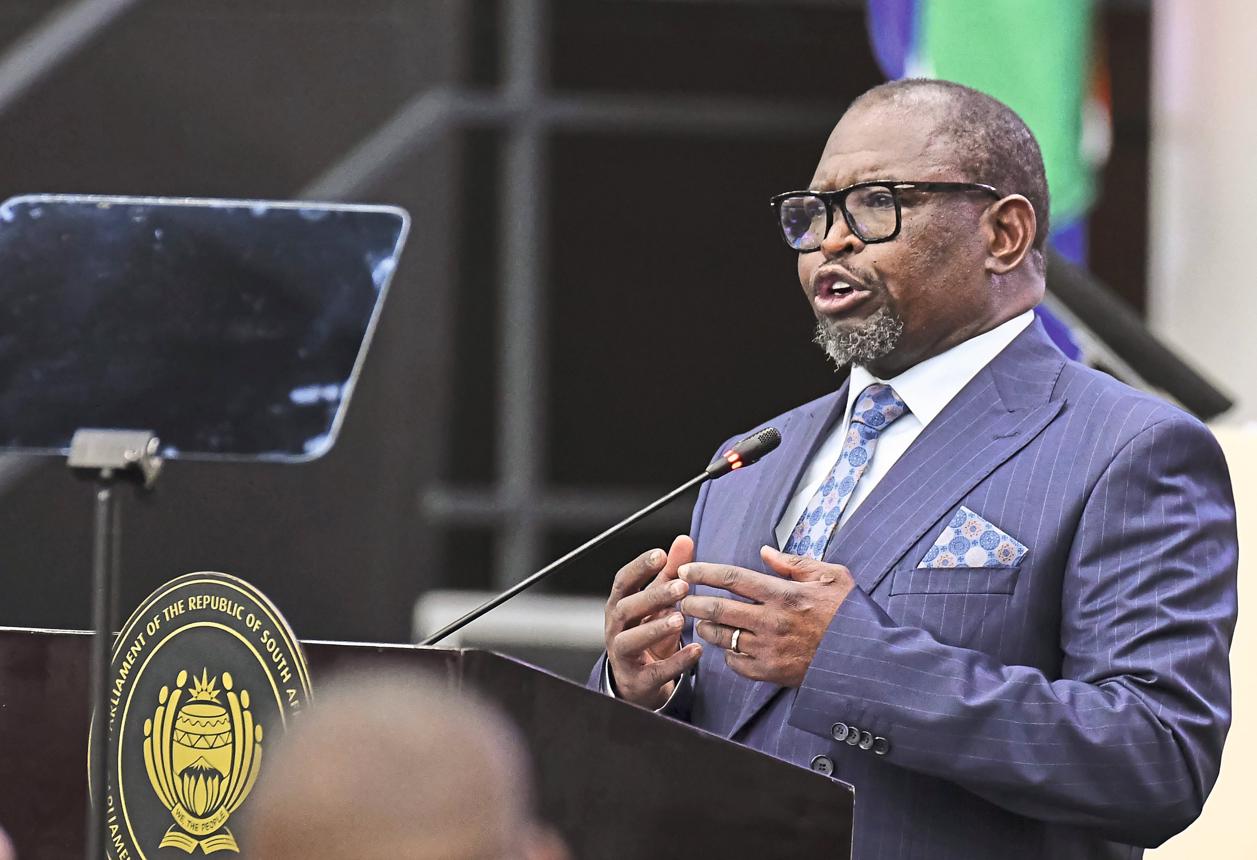
“South Africa’s National Treasury is proposing legislative changes that would give it stronger powers to address unaffordable municipal salary increases, scrutinise the appointment of chief financial officers and enforce compliance with public finance laws. The proposals aim to tackle persistent financial management weaknesses, irregular expenditure and political interference while improving accountability for decisions that affect municipal services, businesses and residents.”
South Africa’s Treasury Tightens Municipal Financial Oversight as Governance Reforms Target Unaffordable Spending and Mismanagement
South Africa’s National Treasury is pursuing a major strengthening of municipal financial oversight, proposing changes to public finance legislation intended to improve accountability, prevent unaffordable spending and ensure that local government resources are managed responsibly. The proposals represent an important development in the country’s governance debate as authorities seek to address persistent financial mismanagement, irregular expenditure and weak administrative controls that threaten municipal service delivery.
The proposals, reported on 25 October 2026, include stronger scrutiny of municipal salary increases, closer oversight of appointments to senior financial positions and mechanisms for investigating financial misconduct. They form part of broader efforts to modernise the Public Finance Management Act (PFMA) and the Municipal Finance Management Act (MFMA), two central pieces of legislation governing the management of public resources.
The reforms arrive at a critical time for South Africa’s municipalities, many of which face mounting financial pressure, outstanding creditor payments and difficulties maintaining essential services. The proposed changes could significantly influence how municipalities prepare budgets, appoint financial managers and respond when officials fail to comply with public finance requirements.
Stronger Treasury oversight of municipal finances
At the centre of the proposed reforms is the National Treasury’s intention to intervene earlier when municipal financial decisions threaten fiscal sustainability. Under the proposed amendments, municipalities would face stricter requirements when approving salary increases and appointing senior financial officials.
The Treasury argues that financial decisions must reflect a municipality’s actual financial capacity. Salary increases negotiated through established bargaining processes can place considerable pressure on municipal budgets when they are approved without a sufficiently rigorous assessment of affordability.
Consequently, the proposed legislation would require the finance minister’s concurrence before municipal salary increases could be implemented. Treasury officials have indicated that this approach is intended to preserve the bargaining process while ensuring that municipalities can meet their financial obligations.
The distinction matters because salary commitments are recurring expenses. When personnel costs exceed sustainable levels, municipalities may struggle to maintain infrastructure, pay suppliers and fund the delivery of essential services.
The proposals would therefore place greater emphasis on ensuring that financial commitments are supported by realistic revenue projections and responsible expenditure planning.
Scrutiny of senior financial appointments
Another important element concerns the appointment of municipal chief financial officers and other senior officials responsible for managing public money.
Municipal financial managers play a central role in preparing budgets, monitoring expenditure, managing revenue and ensuring compliance with legislation. Their professional competence can determine whether a municipality identifies financial risks early or allows problems to worsen.
The proposed reforms would give the Treasury a more substantial role in assessing candidates for chief financial officer positions. Municipal councils would retain their appointment responsibilities, but the proposed process would require closer consideration of Treasury assessments and recommendations.
The objective is to reduce the appointment of individuals who lack the necessary qualifications or experience to manage complex municipal finances.
However, implementation will be important. Stronger screening procedures will need to operate transparently, with clear professional criteria and safeguards against political influence. The purpose should be to strengthen administrative competence rather than replace one form of political interference with another.
Effective recruitment must also be accompanied by professional development, stable leadership and clearly defined responsibilities. Even qualified officials can struggle to improve financial performance if they face persistent interference or lack the institutional support required to implement corrective measures.
Accountability for financial misconduct
The proposed amendments also seek to strengthen the consequences for financial misconduct and unlawful expenditure.
According to the reporting, the Treasury intends to establish a financial misconduct investigative committee as a permanent mechanism for addressing breaches of public finance requirements. This would provide an additional avenue for investigating misconduct and responding to non-compliance before problems become more serious.
The proposals also draw on recommendations associated with the Zondo Commission of Inquiry into State Capture, which examined how corruption, procurement irregularities and failures of oversight weakened public institutions.
A recurring governance problem arises when officials receive unlawful instructions from political office-bearers. Such instructions can result in unauthorised spending, irregular procurement or financial commitments that do not comply with legislation.
Under the proposed framework, senior officials would face stronger obligations to report unlawful instructions to the relevant investigative structures and law enforcement authorities.
This is significant because accountability requires more than identifying mistakes after public money has been spent. Institutions need mechanisms that enable employees to raise concerns, document questionable decisions and trigger investigations without being pressured into silence.
Nevertheless, financial misconduct must be distinguished from legitimate administrative decisions that produce disappointing outcomes. Investigations should follow evidence and due process, while penalties should be proportionate to the conduct established.
The objective is to ensure that misconduct has consequences without discouraging officials from making lawful decisions in the public interest.
Municipal debt and the challenge of paying suppliers
Municipal financial governance also has direct consequences for businesses that supply goods and services to government.
When municipalities fail to pay invoices on time, the consequences can extend beyond municipal accounts. Small businesses may experience cash-flow difficulties, struggle to pay employees or become unable to fulfil other contracts.
The Treasury’s proposed changes seek to strengthen compliance with payment obligations, including the requirement to settle qualifying invoices within the prescribed 30-day period. Persistent failure to comply could result in referral to the proposed financial misconduct investigative committee.
The government has also been confronting municipal arrears through existing financial oversight measures.
According to reporting published this week, the Treasury previously withheld equitable-share allocations from 69 municipalities over compliance concerns. Subsequently, 38 municipalities had entered into repayment arrangements with creditors and settled more than R4 billion in outstanding bills. National and provincial government debts owed to municipalities have also been identified as a significant concern.
These developments demonstrate that municipal financial difficulties cannot always be understood as isolated failures by local councils. Local government finances are connected to national transfers, provincial obligations, revenue collection, household affordability and the management of public infrastructure.
For reforms to succeed, municipalities must improve their own financial administration while other government institutions fulfil their obligations to local authorities.
Protecting essential services
The broader purpose of municipal financial reform is to improve the reliability of services on which residents depend.
Municipal budgets support water infrastructure, electricity distribution, sanitation, refuse collection, roads and other local services. When money is mismanaged or expenditure commitments become unsustainable, these responsibilities can suffer.
Financial discipline is therefore not simply an accounting exercise. It influences whether municipalities can maintain infrastructure, respond to breakdowns and invest in improvements that support households and local businesses.
However, tighter financial controls must be balanced with the need to protect vulnerable residents. A municipality facing financial difficulties cannot restore stability simply by reducing expenditure without considering the consequences for essential services.
The Treasury’s wider reform approach includes stronger revenue management, funded budgets, improved financial recovery mechanisms and support for municipalities experiencing financial distress. These measures are intended to combine enforcement with efforts to improve the underlying capacity of local government.
Revenue collection will be particularly important. Municipalities need accurate billing systems, effective debt management and credible financial records to understand what they can afford.
At the same time, residents must have confidence that money collected for water, electricity and other services is used responsibly. Transparent reporting can help demonstrate whether revenue is being reinvested in infrastructure and service improvements.
Balancing national oversight with municipal autonomy
The proposed reforms also raise important questions about the relationship between national oversight and local government autonomy.
South Africa’s municipalities have constitutionally defined responsibilities, and elected councils are expected to make decisions in the interests of their communities. Stronger Treasury intervention must therefore operate within the constitutional framework governing local government.
The government’s challenge is to prevent financial mismanagement without unnecessarily weakening the ability of municipalities to respond to local priorities.
National oversight can help establish minimum standards, identify serious risks and enforce compliance. However, central authorities must also recognise that municipalities differ in their economic circumstances, revenue bases, infrastructure needs and administrative capacity.
A uniform financial requirement may affect a financially distressed rural municipality differently from a large metropolitan authority with a broader revenue base.
Effective implementation will require transparent criteria, clear procedures for challenging decisions and practical assistance for municipalities that lack the expertise to meet new requirements.
The proposed changes should also clarify responsibilities among municipal councils, administrators, provincial authorities and national government. Clear accountability is difficult to achieve when several institutions share responsibility but none can be held effectively answerable for the outcome.
Implementation will determine the reforms’ success
The proposed legislation is not the same as legislation already enacted and fully implemented. Its practical effects will depend on the legislative process, the final wording of the amendments and the arrangements established to enforce the new requirements.
Public scrutiny will therefore be important as the proposals progress. Municipalities, professional bodies, organised labour, businesses and civil society should examine whether the measures are workable, proportionate and consistent with constitutional responsibilities.
The Treasury will also need reliable information to identify financial risks before they become crises. Timely financial reporting, effective internal audits, independent oversight and accessible procurement information can help identify irregularities earlier.
Where investigations uncover wrongdoing, authorities must pursue appropriate disciplinary, civil or criminal processes. Recovering public money where legally possible should also remain a priority.
Equally important is measuring whether the reforms improve outcomes. Indicators could include fewer unfunded budgets, more timely supplier payments, improved financial reporting, reduced irregular expenditure and more reliable municipal services.
Without measurable outcomes, stronger powers risk becoming another layer of administration rather than a practical solution to persistent governance weaknesses.
Conclusion: A test of accountability in local government
South Africa’s proposed municipal finance reforms represent an important attempt to address weaknesses in public administration through stronger financial controls, closer scrutiny of senior appointments and more effective responses to misconduct.
The proposals could help municipalities make more sustainable spending decisions, improve their relationships with suppliers and protect resources intended for public services. Their effectiveness, however, will depend on transparent implementation, professional administration and consistent enforcement.
The government must also ensure that tighter oversight respects constitutional responsibilities and supports municipalities that need help improving their financial capacity.
Ultimately, good governance is measured not only by the existence of legislation but by whether public institutions manage money responsibly and deliver tangible benefits to residents.
If the proposed reforms produce more reliable budgets, stronger accountability and better services, they could contribute meaningfully to rebuilding public confidence in local government. If implementation is inconsistent or enforcement remains selective, the intended improvements may prove limited.
The central challenge is therefore to turn stronger financial rules into demonstrable improvements in how municipalities operate. For South African residents, businesses and taxpayers, the most important result will be a government that protects public resources, accounts openly for its decisions and delivers essential services more reliably.



