




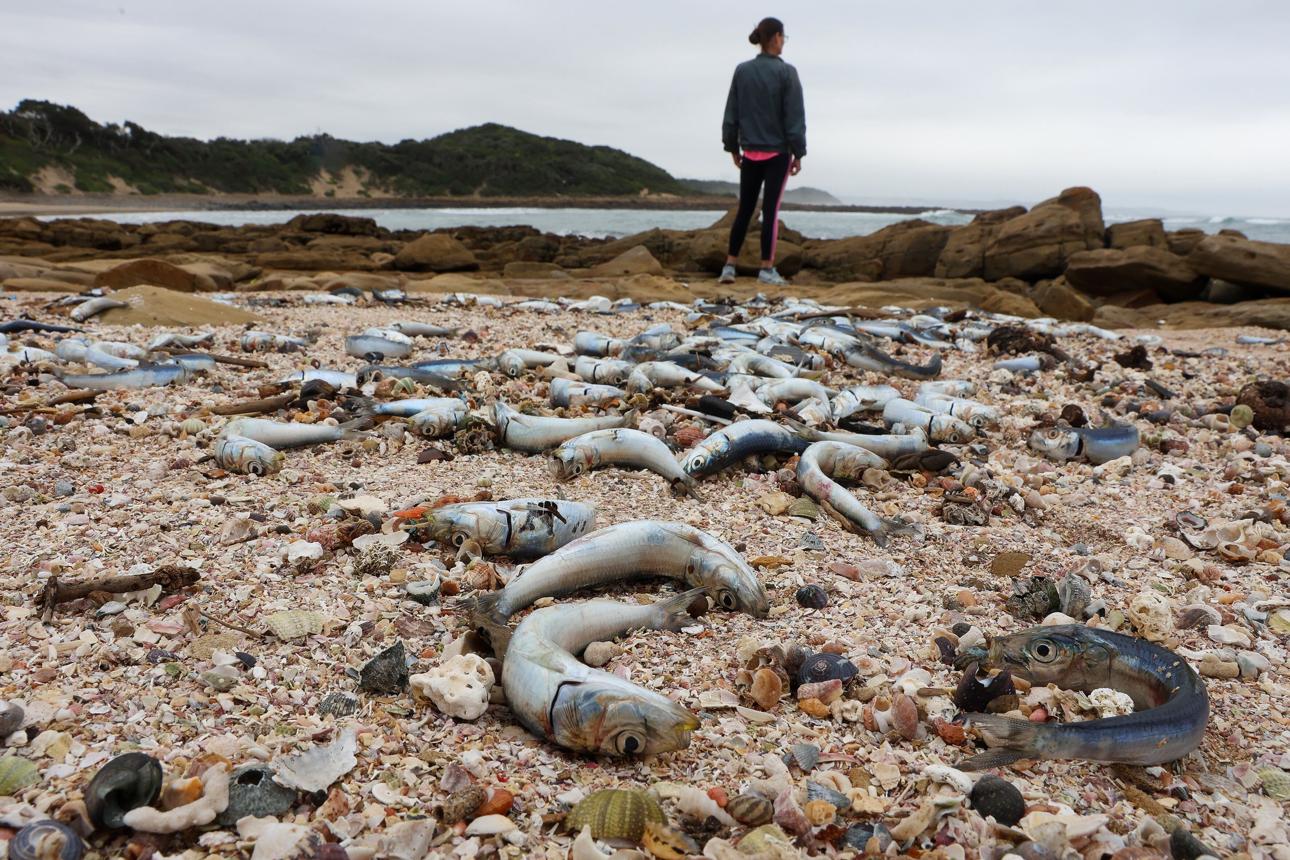
“Laboratory results reported on 26 October indicate that pilchard herpesvirus (PHV) was detected substantially more frequently in sick and dead sardines than in apparently healthy fish, strengthening the evidence that the virus contributed to South Africa’s extensive 2026 sardine mortality event. The Department of Forestry, Fisheries and the Environment (DFFE) says further testing and a planned fisheries survey will help scientists clarify the outbreak’s extent, assess sardine populations and guide decisions affecting the fishing industry and endangered African penguins.”
South Africa’s marine environment is facing an important scientific investigation after laboratory findings strengthened the connection between pilchard herpesvirus and the mass deaths of sardines recorded along the country’s coastline during 2026. The latest results, reported on 26 October, offer researchers a clearer direction for understanding the incident, while highlighting the wider environmental consequences of disease outbreaks in marine ecosystems.
The Department of Forestry, Fisheries and the Environment has reported that the virus occurs substantially more frequently in affected and dead sardines than in apparently healthy fish. Although this pattern strengthens the evidence implicating the virus, further diagnostic work remains necessary to establish its precise role in the outbreak.
A major marine mortality event
The sardine mortality event occurred between late July and early September 2026, affecting approximately 2,600 kilometres of coastline, extending from Hentiesbaai towards South Africa’s northern Wild Coast region.
The incident raised concerns among scientists, coastal communities, fisheries operators and conservation organisations because sardines play an important role in the marine food chain. These small pelagic fish form large schools and provide food for larger fish, seabirds and marine mammals.
When unusually large numbers of sardines die within a relatively short period, the consequences can extend beyond the immediate shoreline. The loss of fish can affect predator feeding patterns, commercial catches and the ecological relationships that sustain coastal biodiversity.
Scientists therefore need to establish whether the deaths resulted primarily from an infectious disease, environmental conditions or several interacting factors. Identifying the underlying causes is essential for improving future monitoring and determining which interventions could reduce the impact of similar events.
Scientists strengthen the evidence linking the virus to sardine deaths
The latest laboratory findings represent an important development in South Africa’s investigation. According to the DFFE, pilchard herpesvirus was found substantially more frequently in sick and dead sardines than in apparently healthy fish.
This difference provides evidence supporting an association between the virus and the mortality event. However, detecting a pathogen more frequently in affected animals does not automatically establish that it was the sole cause of every death. Researchers must consider other possible contributing factors and evaluate the findings against additional biological and environmental evidence.
The department has indicated that testing, quality-control procedures and genetic sequence confirmation are continuing. These steps can help researchers establish the virus’s distribution, improve confidence in diagnostic results and investigate how the outbreak developed.
The virus was detected in dead South African sardines for the first time during the investigation in September. Scientists used polymerase chain reaction testing and sequencing to identify the pathogen in samples from several locations, including Gqeberha. By 28 August, approximately 160 samples had been submitted, with around 128 processed at that stage.
The South African Institute for Aquatic Biodiversity also confirmed the virus in a sardine sample collected at Port St Johns on 1 September, extending the documented occurrence to the northern Wild Coast.
These findings demonstrate why coordinated laboratory work is important in marine environmental science. Researchers must combine evidence from different coastal locations to understand whether a pathogen is geographically widespread and whether its occurrence corresponds with reported mortality.
Understanding the environmental consequences
Sardines are an important component of southern African marine ecosystems. Their abundance helps support predators, including seabirds that depend on small pelagic fish for survival and successful breeding.
A sudden reduction in available sardines can create additional pressure on species already experiencing difficulties finding sufficient food. African penguins are a particularly important conservation concern because their populations have declined significantly over recent decades.
The situation around Algoa Bay illustrates this vulnerability. The report notes that Nelson Mandela Bay had more than 7,000 African penguin breeding pairs approximately a decade ago, compared with about 700 in the figures cited in the report.
These figures illustrate the seriousness of the conservation challenge, although the sardine mortality event should not be regarded as the sole explanation for the penguins’ long-term decline. Food availability, fishing pressures, breeding conditions and other environmental factors can all influence penguin populations.
The outbreak nevertheless adds urgency to efforts to understand the relationship between sardine abundance and seabird survival. When prey populations are disrupted, predators may need to travel farther to find food, potentially increasing the energy required to feed themselves and their chicks.
For conservation scientists, monitoring fish populations and seabird breeding success together can provide a more complete picture of ecosystem health. Such information can also help authorities identify vulnerable locations and determine whether additional conservation measures are needed.
Consequences for South Africa’s fishing industry
The mortality event has also raised concerns about the economic sustainability of South Africa’s small pelagic fishing sector.
Sardines support commercial fishing activities and contribute to food supply chains, employment and coastal livelihoods. A major disruption in their availability can affect catches, fishing operations and businesses connected to processing, distribution and seafood sales.
The published report cites the South African Pelagic Fishing Industry Association’s assessment that 2026 had been an exceptionally difficult year for the industry, with catches falling to less than half their usual levels.
However, the precise contribution of the virus to reduced catches must be assessed alongside other influences, including fish distribution, abundance, fishing conditions and management restrictions.
Authorities have maintained a temporary precautionary limitation on directed sardine catches until 30 October 2026, according to the latest report. Such measures can help limit pressure on a population while scientists gather evidence about its condition.
For fishing businesses, temporary restrictions can create financial uncertainty. Nevertheless, allowing catches to continue without reliable information about stock conditions could increase the risk of further ecological and economic damage.
Effective fisheries management therefore requires a balance between protecting marine resources and supporting the people who depend on them. Clear communication about scientific findings, restrictions and future decisions is essential to maintaining confidence among industry participants and coastal communities.
New testing and marine surveys will guide the next steps
The next phase of the investigation will focus on combining laboratory results with fisheries data and broader ecological observations.
The DFFE has scheduled a meeting of its Small Pelagic Scientific Working Group for 27 October. The meeting is expected to consider recent mortality reports, diagnostic results, fishing and catch information, predator monitoring and preparations for an end-of-year survey.
The planned hydroacoustic survey is particularly important. Hydroacoustic instruments use sound waves to detect and estimate the distribution of fish beneath the water. When combined with appropriate sampling and scientific analysis, this technology can help researchers estimate fish biomass and understand how populations are distributed across surveyed areas.
The planned survey is intended to provide the first fisheries-independent estimate of sardine biomass, distribution and size structure following the mortality event. A fisheries-independent estimate is valuable because it does not rely solely on commercial catch records, which can be influenced by fishing effort and operational conditions.
The resulting information could help authorities assess the condition of the sardine population and make better-informed decisions about future fishing activity. It may also help scientists identify changes in fish distribution that could influence the availability of food for predators.
Nevertheless, a single survey will not answer every question. Repeated measurements over time are needed to distinguish temporary changes from longer-term population trends and to determine whether sardine stocks are recovering.
A small new wash-up requires careful interpretation
The DFFE reported no evidence of a recurrence of the widespread mortality event as of 25 October. However, a small number of juvenile sardines, measuring less than five centimetres, washed ashore near Mossel Bay on 23 October.
The fish were scattered along approximately 200 metres of beach, and samples were collected for testing. Inspections of nearby beaches reportedly found no additional wash-ups. Researchers had not established whether this incident was connected to the earlier outbreak.
This distinction is important. Isolated fish wash-ups can occur for different reasons, and their presence alone does not demonstrate that a large-scale disease event has returned.
Laboratory analysis will be necessary to determine whether the juvenile fish carried the virus and whether other environmental or biological conditions contributed to their deaths. The findings should be interpreted alongside subsequent observations rather than treated as proof of a renewed outbreak.
For members of the public, the department’s advice is straightforward: do not collect or consume dead or dying sardines found on beaches or near the shore. Such fish should not be fed to animals or used as bait. Unusual fish deaths should be reported to the relevant coastal authority or the DFFE.
The published report states that the virus is not known to infect humans and that commercial sardine products released through regulated channels remain safe to eat.
What the findings mean for environmental science
Beyond the immediate outbreak, the investigation demonstrates the importance of combining laboratory diagnostics, fisheries surveys and ecological monitoring when responding to environmental emergencies.
Modern molecular techniques allow scientists to detect pathogens in biological samples, while genetic sequencing can help confirm their identity. Field observations and fish population surveys then provide the wider context needed to understand what those laboratory results mean for ecosystems.
These methods are most useful when information is collected systematically, shared among relevant institutions and interpreted cautiously. Environmental decisions based on incomplete evidence can overlook important causes, whereas a coordinated scientific response can help distinguish established findings from unresolved questions.
South Africa’s experience also highlights the importance of preparedness. Routine monitoring of marine wildlife, established sampling procedures and access to suitable research vessels can help authorities respond more rapidly when unusual mortality occurs.
Further research may clarify how pilchard herpesvirus affects sardines under different conditions, whether certain life stages are more vulnerable and how environmental factors influence the severity of outbreaks. Such questions remain subjects for investigation rather than conclusions established by the latest results.
Conclusion
The latest evidence linking pilchard herpesvirus with South Africa’s 2026 mass sardine deaths marks an important development in the country’s marine environmental investigation. The higher frequency of detection in affected fish strengthens the case for the virus’s involvement, but continued testing and ecological research are needed to clarify its precise contribution.
The consequences extend beyond sardines. Fisheries, coastal livelihoods and endangered African penguins all depend, directly or indirectly, on healthy and productive marine ecosystems. The planned hydroacoustic survey and scientific review will therefore be important steps towards understanding the remaining sardine population and guiding responsible management.
For now, the priority is to follow the evidence, maintain appropriate precautionary measures and strengthen long-term monitoring. The investigation offers a reminder that protecting South Africa’s marine environment requires cooperation between scientists, government authorities, conservationists, fishing communities and the public.
The coming weeks should provide further information about the virus, the scale of the remaining sardine population and the measures needed to support marine ecosystem recovery.



