




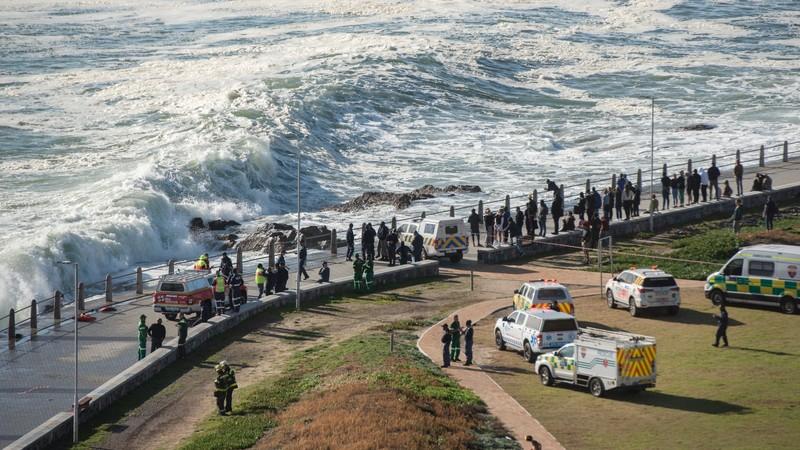
“South Africa’s National Sea Rescue Institute (NSRI) is urging beachgoers, anglers and coastal hikers to exercise extra caution as a strong full-moon spring tide coincides with the Heritage Day long weekend and school holidays. The strongest tidal conditions are expected from Saturday through Tuesday, bringing increased risks from rip currents, powerful tidal flows, waves reaching further onto rocks and beaches, and changing conditions around estuaries and narrow inlets.”
Travellers heading to South Africa’s coastline this weekend are being urged to put water safety at the top of their travel plans as powerful spring tides coincide with the Heritage Day long weekend and school holidays. The warning from the National Sea Rescue Institute comes at a particularly busy time for domestic travel, with families and holidaymakers expected to spend more time at beaches, coastal resorts, fishing areas and other seaside attractions.
The NSRI’s warning is particularly relevant for visitors who may be unfamiliar with local coastal conditions. A full moon is expected on Saturday, 26 September, at 6:48pm, while the strongest tidal ranges are expected from Saturday through Tuesday. Spring tides produce higher-than-normal high tides and lower-than-normal low tides, increasing the movement and energy of seawater.
For travellers, the message is straightforward: enjoying South Africa’s beaches requires paying attention to the sea, weather, tides and local safety instructions.
Why travellers should pay attention to the spring tide
Spring tides occur when the sun, Earth and moon are aligned in a way that increases the gravitational influence on Earth’s oceans. Despite the name, a spring tide is not specifically associated with the spring season. Instead, it describes a period when the difference between high and low tide becomes greater.
During this weekend’s conditions, the NSRI has highlighted several potential hazards. These include stronger rip currents, faster tidal movement and waves reaching areas that may normally appear relatively safe.
The timing makes the warning especially important. Heritage Day falls during a period when many South Africans are travelling, while schools are also on holiday. That combination can mean significantly more people at beaches and other coastal locations.
The NSRI has therefore encouraged people to take extra care when swimming, fishing, walking along the coast or participating in other activities near the water.
Travellers should choose beaches with lifeguards
One of the most important travel tips for visitors is to choose a beach where lifeguards are present and to swim in designated areas.
A beautiful or quiet beach may look appealing, but a lack of lifeguard supervision can make an emergency considerably more difficult to manage. Visitors unfamiliar with a particular coastline may also struggle to identify rip currents, submerged rocks, sudden drop-offs or areas where waves become particularly powerful.
Travellers should therefore look for beaches with clearly marked swimming areas and follow instructions provided by lifeguards and local authorities.
Parents travelling with children should be especially attentive. Children can quickly find themselves in difficulty in moving water, particularly when waves and currents are stronger than usual.
The safest approach is to keep children within close reach and avoid allowing them to enter the water without appropriate supervision.
Understand the danger of rip currents
Rip currents are among the major hazards highlighted by the NSRI.
A rip current is a powerful flow of water moving away from the shoreline. It can pull swimmers away from shallow water surprisingly quickly. One of the dangers is that swimmers who panic may attempt to fight directly against the current, becoming exhausted in the process.
Travellers who find themselves caught in a rip current should try to remain calm and avoid attempting to swim directly against the current. Instead, recognised water-safety guidance recommends seeking help and moving parallel to the shoreline where possible.
People on the beach should also avoid entering the water to rescue someone caught in a rip current. The NSRI advises people to call for professional help rather than putting themselves in danger.
Anglers should take additional precautions
The warning is not limited to swimmers.
Rock anglers and people fishing from exposed coastal areas should also be extremely cautious. Strong spring tides can push waves further inland and over rocks, potentially reaching areas that anglers normally regard as relatively safe.
The SABC reported that NSRI spokesperson Andrew Ingram warned that waves could reach beyond locations that rock anglers might normally consider safe during high tide.
This makes checking tide times particularly important before setting out.
Anglers should avoid standing close to the water’s edge, especially on wet or slippery rocks. They should also pay attention to wave patterns rather than assuming that several calm waves mean conditions are safe.
A sudden larger wave can arrive without much warning.
Coastal hikers should check conditions before leaving
South Africa offers spectacular coastal hiking routes, from the Western Cape to KwaZulu-Natal and the Eastern Cape. However, coastal trails can become hazardous when tides are particularly high or waves are powerful.
Travellers planning coastal walks should check the tide timetable before leaving their accommodation. Routes that are accessible at low tide can become difficult or impossible to pass when the water rises.
Narrow sections, rocky platforms, caves and areas near cliffs deserve particular attention.
The NSRI has specifically included coastal hikers among those who should exercise extra care during the spring tide period.
A useful travel rule is to avoid relying solely on photographs or online descriptions of a hiking route. Conditions on the ground can change with tides, weather and wave activity.
Be careful around estuaries and narrow inlets
The NSRI has also highlighted estuary mouths, harbour entrances and narrow inlets as potentially hazardous during strong tides.
These areas can experience rapidly moving water because water is forced through relatively restricted spaces. Travellers may be tempted to swim, paddle or walk near such locations because the water can appear calmer than open ocean conditions.
However, calm-looking water does not necessarily mean safe water.
The Knysna Heads, for example, were specifically identified as an area where visitors should be particularly cautious during strong tidal conditions.
Holidaymakers should therefore follow local signs, barriers and official instructions instead of entering restricted areas for photographs or sightseeing.
Weather should also influence travel plans
Tides are not the only factor travellers should monitor.
South Africa is also experiencing variable weather conditions this weekend. The South African Weather Service has warned of scattered to widespread showers and thunderstorms over parts of the central and western country, with a Yellow Level 2 warning for severe thunderstorms in several areas on Saturday. The warning includes risks such as heavy downpours, strong winds, hail, excessive lightning and localised flooding.
This means travellers should consider both marine and weather forecasts when planning outdoor activities.
Someone travelling to the coast should not simply check whether rain is expected at their destination. They should also look at wind conditions, thunderstorm warnings, tide times and local authority notices.
Keep emergency information accessible
Another important travel tip is to know how to request assistance before an emergency happens.
Travellers should save relevant emergency numbers on their phones and make sure their devices are charged before heading to beaches or remote coastal areas.
When travelling as a family or group, everyone should know where they are staying and what to do if someone becomes separated.
It is also sensible to tell another person about plans for longer coastal hikes, fishing trips or other activities away from populated areas.
Small preparations can become extremely important if weather or water conditions deteriorate unexpectedly.
Heritage Day travellers should plan ahead
The spring tide warning comes during a particularly active travel period in South Africa. Heritage Day and the school holidays encourage families to explore beaches, nature reserves, cultural attractions and other destinations across the country.
South Africa’s Department of Tourism says September is Tourism Month, with the period designed to encourage domestic travel and showcase tourism offerings across all nine provinces. The department is also preparing for World Tourism Day on 27 September 2026.
That makes the current safety message especially relevant. Tourism is not simply about selecting a destination and booking accommodation. Responsible travel also means understanding local conditions before participating in activities.
For coastal visitors, that means respecting the ocean.
A practical checklist for coastal travellers
Before heading to a South African beach this weekend, travellers should:
- Check the latest weather forecast.
- Check local tide times.
- Choose beaches with lifeguard supervision.
- Swim only in designated areas.
- Keep children under close supervision.
- Never underestimate rip currents.
- Avoid climbing onto wet rocks near the water.
- Give anglers and boat operators plenty of space.
- Take extra care around estuaries and narrow inlets.
- Follow warning signs and instructions from authorities.
- Avoid entering the water during dangerous conditions.
- Never attempt an unaided rescue of someone caught in a current.
- Keep a charged mobile phone available for emergencies.
- Reconsider outdoor plans if weather or sea conditions deteriorate.
A timely reminder for South Africa’s holiday season
The NSRI’s warning provides a useful reminder that responsible travel is an important part of enjoying South Africa’s natural attractions. The country’s coastline offers everything from family beaches and surfing destinations to fishing spots, hiking routes and scenic viewpoints, but the ocean can change rapidly.
This weekend’s combination of a full-moon spring tide, school holidays and the Heritage Day long weekend means more people are likely to be near the coast at the same time that tidal conditions are becoming stronger.
The strongest spring tides are expected from Saturday through Tuesday.
For travellers, the safest approach is therefore to plan activities around conditions rather than assuming that a familiar beach will always behave in the same way.
South Africa’s coastal attractions remain an important part of the country’s tourism offering, but enjoying them responsibly starts with preparation. Checking tides, monitoring weather forecasts, staying near lifeguards and respecting local warnings can help families and visitors make the most of the long weekend while reducing unnecessary risks.



