




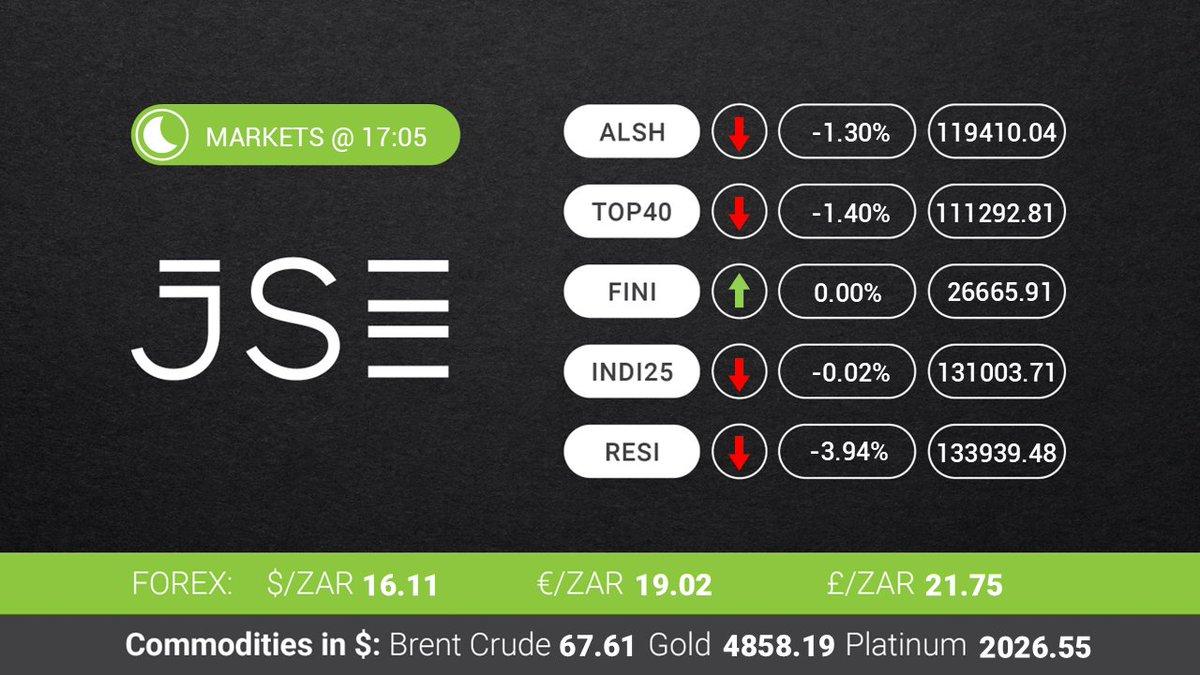
“Oil prices fell on Friday, 25 September, after reports that US and Iranian negotiators were exploring a phased agreement that could lead to the reopening of the Strait of Hormuz, with Brent settling at $104.32 a barrel, according to Reuters. For South Africa, the development is significant because international oil prices, the rand and inflation expectations all feed into market conditions, while the South African Reserve Bank has just raised its policy rate to 7.25% partly in response to inflation risks arising from the Middle East conflict.”
South African Markets Watch Oil as Hormuz Diplomacy Offers New Direction
International oil prices became one of the most important drivers of market sentiment heading into the end of the week, as investors assessed signs of possible diplomatic progress between the United States and Iran and the potential consequences for energy supplies through the Strait of Hormuz.
The development came after months of volatility in global energy markets, with geopolitical tensions repeatedly pushing crude prices higher and creating renewed inflation concerns for economies that depend heavily on imported energy. South Africa is particularly exposed because it is a net fuel importer, meaning movements in global oil prices can influence domestic fuel costs, inflation expectations, the rand and ultimately monetary-policy conditions.
According to Moneyweb, Brent crude for November settlement was down 0.8% at $105.78 a barrel during Friday afternoon trading in Singapore, while West Texas Intermediate was trading around $93.18. The decline followed a sharp increase of more than 7% over the preceding two sessions.
Reuters later reported that Brent futures settled at $104.32 a barrel after falling $2.28, or 2.1%, while WTI fell $2.20, or 2.3%, to settle at $92.41.
The immediate market reaction illustrates how sensitive energy prices have become to diplomatic developments surrounding the conflict.
Hormuz remains central to the oil market
At the centre of the market story is the Strait of Hormuz, a narrow maritime passage linking the Persian Gulf with international markets.
The waterway is critically important to global energy trade. Disruptions to shipping through the strait have raised concerns about the availability and cost of crude oil and petroleum products, contributing to significant volatility in international markets.
Moneyweb reported that Iranian officials had presented a proposal involving the reopening of Hormuz under certain conditions. The discussions were taking place alongside the United Nations General Assembly in New York.
For investors, however, the possibility of an agreement does not eliminate the risks immediately.
The market has already experienced repeated changes in expectations. Oil prices have moved sharply higher when traders have feared supply disruptions and then retreated when indications of additional flows or diplomatic progress have emerged.
That makes the latest decline in crude prices important, but not necessarily conclusive.
Moneyweb quoted Karobaar Capital chief investment officer Haris Khurshid as saying Brent could remain around $100 to $110 unless there is a material change, while a credible phased agreement could push prices below $100 relatively quickly.
The significance for financial markets is therefore not simply the direction of oil prices on one trading day. Investors are attempting to determine whether the underlying supply situation is changing in a sustained way.
South African markets face multiple pressures
South African investors are watching the oil market particularly closely because the country is simultaneously dealing with inflation pressures, currency movements and higher interest rates.
The South African Reserve Bank raised its benchmark interest rate by 25 basis points to 7.25% during the week. Reuters reported that the central bank viewed the inflationary consequences of the Iran conflict as significant enough to require tighter monetary policy.
That decision adds another layer to the market environment.
Higher interest rates can affect the valuation of shares, borrowing costs for companies and households, bond yields and expectations for economic growth. At the same time, elevated oil prices can increase costs throughout the economy.
For South Africa, the connection begins with fuel.
When international crude prices rise, local petroleum prices face upward pressure. The impact is also influenced by the rand-dollar exchange rate because oil is traded internationally in US dollars.
BusinessTech reported on 25 September that petrol price under-recoveries had reached R3.01 per litre for 95 petrol and R2.82 per litre for 93 petrol, while diesel under-recoveries had also moved deeper into negative territory.
This means the oil market is directly relevant to South African consumers and businesses, not merely investors.
The rand is another important transmission channel
Currency markets provide another link between international energy developments and South Africa’s financial markets.
The rand weakened during Friday morning trading as investors absorbed the Reserve Bank’s rate increase and continued to monitor global interest-rate expectations. Reuters reported that the rand was trading around R16.40 against the dollar at 0610 GMT, approximately 0.3% weaker than the previous close.
A weaker rand can increase the local-currency cost of imported commodities, including petroleum.
Consequently, a combination of higher oil prices and a weaker rand can create a particularly difficult environment for South Africa. Conversely, lower oil prices combined with a relatively stable or stronger currency can reduce some of the pressure.
This explains why investors are closely watching both crude prices and foreign-exchange markets rather than considering either market in isolation.
The relationship is also important for the Reserve Bank because imported energy costs can influence headline inflation.
Inflation remains a major concern
South Africa’s inflation outlook has become more complicated because energy prices are interacting with monetary-policy decisions.
The Reserve Bank has a stated objective of bringing inflation back towards its 3% target. Reuters reported that Governor Lesetja Kganyago emphasised the importance of returning inflation to that level as fuel-price pressures eventually fade.
However, sustained disruption in global energy markets could make that adjustment more difficult.
Higher fuel prices affect consumers directly at petrol stations, but the economic effects extend much further.
Transport companies face higher operating costs. Airlines can face higher fuel expenses. Logistics companies may pay more to move goods. Farmers can face increased costs for machinery, transport and agricultural inputs. Manufacturers may also encounter higher distribution expenses.
Businesses may then have to decide whether to absorb those increases, reduce margins or pass some of the additional costs to customers.
For investors, these developments matter because they can influence company earnings and consumer spending.
Equity markets remain sensitive to the oil outlook
The effect on the Johannesburg Stock Exchange is likely to differ significantly between sectors.
Energy-related companies can respond differently to changes in crude prices than fuel-intensive businesses. Mining companies, industrial firms, retailers, airlines, logistics companies and chemical producers can all have different levels of exposure.
Companies that benefit from higher commodity prices may experience a different earnings environment from businesses whose operating costs rise when energy prices increase.
This creates a market in which investors have to distinguish between individual companies rather than treating the JSE as a single uniform asset.
South Africa’s market also has substantial exposure to global developments. International equity-market movements, commodity prices, global interest rates and the dollar can all influence local valuations.
The recent oil decline therefore needs to be viewed as part of a much broader global financial picture.
Why the diplomatic developments matter
The possibility of reopening the Strait of Hormuz has particular importance because it could affect expectations about future oil supply.
Reuters reported that the proposed US-Iran arrangement could involve Tehran reopening the strait while Washington removes its economic blockade of Iran.
If such an arrangement were implemented and shipping conditions normalised, traders could begin pricing in improved supply availability.
That could place downward pressure on oil prices.
However, the market remains cautious because the conflict has repeatedly produced conflicting signals.
Reuters reported that attacks involving Houthi forces and concerns around Saudi Arabian energy infrastructure were still contributing to supply risks.
This means traders are balancing two competing forces.
On one side is the possibility of diplomatic progress and improved energy flows.
On the other is the continuing possibility of disruptions that could reduce supply or increase transportation and insurance costs.
South African fuel prices remain an important indicator
The immediate effect of international oil-market movements on South African households will be visible through the fuel-price system.
BusinessTech reported that the latest Central Energy Fund data showed substantial under-recoveries for both petrol and diesel at the end of the week.
The figures demonstrate how quickly international commodity and currency movements can feed into domestic pricing expectations.
For motorists, the question is whether oil prices remain elevated long enough to influence the next official adjustment.
For financial markets, the question is broader: whether fuel-price pressures translate into persistent inflation and therefore affect expectations for future interest rates.
That distinction is important.
A temporary increase in oil prices does not necessarily produce the same economic consequences as a prolonged period of elevated prices.
Investors now have several indicators to monitor
South African investors enter the next trading period with several variables requiring attention.
First is the direction of Brent crude.
A sustained decline would potentially reduce some of the inflation pressure generated by energy prices, while another sharp increase would keep pressure on fuel costs.
Second is the rand.
The currency’s performance against the dollar will remain important because it affects the local cost of imported commodities.
Third is interest-rate expectations.
The Reserve Bank’s decision to increase the policy rate to 7.25% has changed the domestic monetary-policy environment.
Fourth is the geopolitical situation.
Any concrete development concerning the Strait of Hormuz could have an immediate effect on oil markets.
Finally, investors will continue watching global bond yields and the US Federal Reserve.
Reuters reported that expectations of elevated US interest rates were supporting the dollar and contributing to pressure on emerging-market currencies, including the rand.
What the latest market development means
The decline in oil prices on Friday represents a meaningful shift in the immediate market narrative, but it should be understood within the continuing uncertainty surrounding energy supplies.
The key development is not simply that Brent moved lower. It is that traders are responding to the possibility of a diplomatic process capable of improving the supply outlook.
For South Africa, that matters because the country’s financial markets are connected to global energy, currency and interest-rate conditions.
Lower crude prices could reduce pressure on the fuel-price outlook and, if sustained, potentially help ease some imported inflation pressures. However, the opposite could occur if diplomatic efforts fail or energy infrastructure and shipping routes face further disruption.
The rand will remain an important part of that equation.
The South African Reserve Bank’s recent rate increase also means that investors are assessing markets against a backdrop of tighter domestic monetary conditions.
The next phase of trading will therefore depend heavily on whether the oil-market decline becomes a sustained trend or proves to be another temporary reaction to geopolitical headlines.
For now, the market is watching the Strait of Hormuz, the US-Iran diplomatic process, Brent crude, the rand and South African inflation expectations as interconnected indicators.
The latest evidence shows that global geopolitical developments continue to have a direct financial-market impact in South Africa—from the price of crude oil and the exchange rate to fuel costs, interest rates and the outlook for listed companies.



