




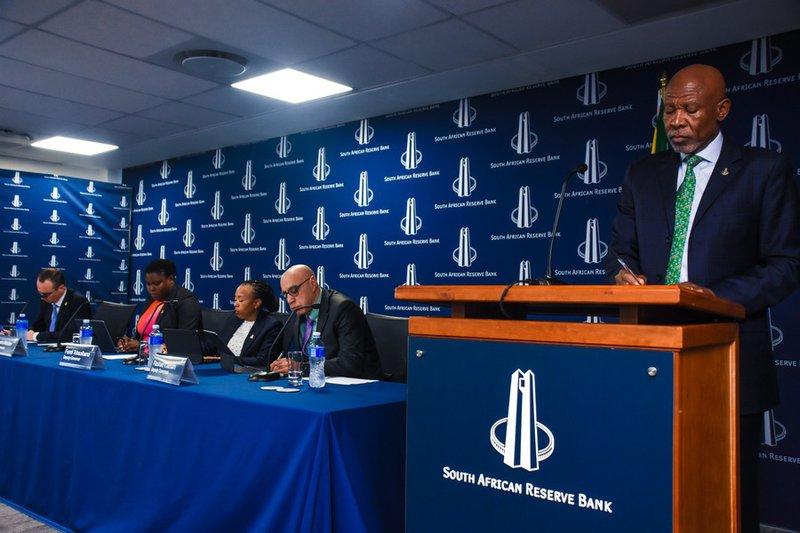
“The South African Reserve Bank has raised the repo rate by 25 basis points to 7.25%, with the increase taking effect on 25 September, as policymakers respond to renewed inflation pressures and a worsening global supply environment. The decision takes the prime lending rate to 10.75% and comes as South Africa faces higher fuel costs, elevated services inflation and weaker economic growth.”
South Africa Raises Repo Rate to 7.25% as Inflation Risks and Global Supply Shocks Intensify
South Africa’s monetary policy has entered a more restrictive phase after the South African Reserve Bank’s Monetary Policy Committee unanimously approved a 25-basis-point increase in the country’s benchmark policy rate. The repo rate was raised from 7.00% to 7.25%, effective 25 September 2026, while the prime lending rate rose to 10.75%. The decision places monetary policy at the centre of the business environment because interest rates influence household borrowing, company financing, investment decisions, consumer spending and the cost of doing business.
The decision is particularly significant because it comes while economic growth remains subdued. South Africa’s economy contracted by 0.2% in the second quarter, according to reporting on the Reserve Bank’s decision, yet policymakers still faced rising inflation risks. The Reserve Bank said the global environment has become increasingly challenging, with geopolitical conflicts disrupting energy supplies and international trade routes.
The September decision therefore illustrates one of the central challenges facing economic policymakers: balancing price stability against economic growth. Higher interest rates can help limit inflationary pressure by restraining demand, but they can also increase borrowing costs for households and businesses. For companies that rely on loans, overdrafts, property finance or other forms of credit, the change has direct financial implications.
Why the Reserve Bank raised interest rates
The Reserve Bank identified a series of international developments that have changed the inflation outlook. According to its September Monetary Policy Committee statement, the escalation of conflict in the Middle East has disrupted the movement of oil through the Strait of Hormuz. Saudi Arabian oil exports have also been affected by fighting in Yemen. At the same time, the Russia-Ukraine war continues to affect refinery capacity and food exports through the Black Sea.
These developments matter for South Africa because the country imports significant quantities of fuel. Higher international energy costs can feed into domestic petrol and diesel prices, transport expenses, production costs and ultimately the prices paid for goods and services.
The Reserve Bank said the global developments amount to a large and persistent supply shock. Unlike a conventional demand-driven inflation problem, a supply shock can raise prices while simultaneously weakening economic activity. This creates a difficult environment for monetary policymakers because efforts to reduce inflation can place additional pressure on economic growth.
Inflation was measured at 4.4%, according to the Reserve Bank’s September statement. That remains above the institution’s 3% target. The central bank said fuel prices had started rising again after moderating between June and August, while services inflation remained elevated.
Food inflation, however, was described as being at its lowest level since 2010, helped by strong harvests and more stable meat prices following the foot-and-mouth disease outbreak. The rand’s resilience has also helped limit imported inflation.
What the decision means for businesses
The increase in the repo rate affects businesses through the wider lending system. When the central bank raises its policy rate, commercial banks generally face higher funding costs, which can feed through to lending rates.
For companies with variable-rate borrowing, the impact can appear relatively quickly. Businesses servicing loans, overdrafts or other floating-rate facilities may face higher interest expenses. This can affect cash flow, particularly for smaller businesses operating with limited financial buffers.
Companies planning new investments may also reassess the cost of financing. A higher interest rate can increase the amount a business must pay to fund a factory, vehicle fleet, property purchase, technology project or expansion programme.
However, the effects will differ considerably between businesses. Companies with substantial cash reserves may be less exposed to higher borrowing costs, while heavily indebted companies may experience a larger increase in finance expenses.
Businesses also need to consider the demand side. Higher borrowing costs can reduce disposable income for households with mortgages, vehicle finance and other loans. Consumers facing larger monthly repayments may reduce spending on discretionary products and services. That can affect businesses dependent on consumer demand.
Impact on consumers and household spending
The policy decision also has direct implications for South African households.
With the prime lending rate moving to 10.75%, borrowers with variable interest rates can expect increased financing costs. Homeowners with variable-rate mortgages, consumers financing vehicles and individuals carrying other forms of interest-bearing debt may therefore face higher monthly expenses.
This can reduce the amount of money households have available for other spending.
The consequences are not uniform, however. Savers may receive higher returns on certain interest-bearing deposits, while borrowers experience increased costs. The overall effect therefore depends on an individual’s financial position, debt levels, savings and exposure to variable interest rates.
For businesses, the household response is important because consumer spending represents a major part of economic activity. If higher interest costs reduce household expenditure, retailers, restaurants, travel companies, entertainment businesses and other consumer-facing sectors can experience weaker demand.
Growth concerns remain important
The rate increase comes against a backdrop of weak economic growth.
The Reserve Bank reduced its 2026 annual growth forecast to 1.2%, from its previous projection of 1.4%. It nevertheless expects a rebound during the second half of the year after the second-quarter contraction.
This creates an important policy tension. South Africa needs stronger economic growth to support employment, investment and business expansion, but inflation pressures limit the scope for monetary easing.
The Reserve Bank’s position is that allowing inflation expectations to become entrenched could create longer-term economic problems. It therefore wants inflation to return to its 3% target over time.
The central bank currently expects inflation to remain elevated into 2027, largely because of fuel and services inflation. Its projection is for inflation to return to the 3% target towards the end of 2027.
Business policy extends beyond interest rates
The Reserve Bank’s decision also highlights the importance of broader economic policy.
In its statement, the central bank pointed to domestic reforms as an important source of growth in a difficult global environment. It specifically referred to improving productivity in the transport and energy sectors, maintaining sustainable public debt and achieving permanently lower inflation.
These structural issues are particularly relevant to business policy because companies do not operate according to interest rates alone.
Electricity reliability, transport infrastructure, ports, rail services, regulatory certainty, taxation and access to finance all influence the cost of operating a business.
Recent government policy has also focused on improving infrastructure and creating stronger cooperation between government and business. The government’s economic reform programme identifies energy, logistics, mining, tourism, agriculture and infrastructure as areas where investment and productivity improvements are being pursued.
The government has said the next phase of its Government Business Partnership is intended to move beyond stabilisation and focus on investment, economic activity and employment.
The relationship between inflation and business confidence
Inflation creates challenges for companies because it makes future costs harder to predict.
When fuel prices rise, transport companies can face higher operating expenses. Manufacturers may pay more for logistics and energy. Retailers may face higher distribution costs. Agricultural businesses can encounter increased expenses for fuel, fertiliser and transportation.
Companies must then decide whether to absorb those costs, reduce margins or pass some of the increases on to customers.
Persistent inflation can therefore affect pricing decisions throughout the economy.
At the same time, higher interest rates create another layer of uncertainty. Companies must assess both operating costs and financing costs when preparing budgets.
For businesses considering expansion, the combination of higher input prices and higher borrowing costs can affect investment calculations.
Global conditions are shaping South African policy
The latest rate decision demonstrates how international developments can influence domestic business policy.
South Africa cannot directly control international oil prices or geopolitical conflicts. However, the consequences of those events can enter the domestic economy through fuel prices, exchange rates, trade routes and imported goods.
The Reserve Bank said longer-term global interest rates have also been moving higher. It cited factors including large fiscal deficits in major economies, inflation risks and borrowing associated with infrastructure investment in artificial intelligence.
For South African businesses, international financial conditions matter because global interest rates can influence capital flows, borrowing conditions and the value of the rand.
A resilient rand can help contain imported inflation, while a weaker currency can increase the local-currency cost of imported fuel, machinery and other goods.
What businesses may watch next
The September decision means businesses will closely monitor several economic indicators in the months ahead.
Inflation will remain particularly important. If fuel and services inflation continues to rise, policymakers could face continued pressure to maintain restrictive monetary conditions.
Economic growth will also matter. A prolonged period of weak growth could increase pressure for measures that support investment and productive activity.
Businesses will additionally watch the rand, fuel prices, global interest rates and developments in international energy markets.
The Reserve Bank’s current projection has the policy rate broadly stable through the remainder of 2026. That is a projection rather than a guarantee, and future decisions will depend on economic developments and the inflation outlook.
Implications for South Africa’s business environment
The latest monetary policy decision adds another consideration for companies operating in South Africa.
Businesses now face an environment characterised by elevated interest rates, persistent inflation risks, uncertain global conditions and relatively weak economic growth. At the same time, reforms in energy, logistics and infrastructure are intended to address some of the structural constraints that have historically raised business costs.
The interaction between these factors will be important for investment.
Higher rates can increase financing costs, while successful structural reforms could reduce operating costs and improve productivity over time.
For policymakers, the challenge is therefore broader than the immediate interest-rate decision. Monetary policy addresses inflation and financial conditions, while structural and fiscal policies influence the economy’s productive capacity.
Conclusion
South Africa’s decision to raise the repo rate to 7.25% represents a significant development in the country’s current business-policy environment. The unanimous decision reflects the Reserve Bank’s assessment that inflation risks have increased because of higher fuel prices, global supply disruptions and geopolitical tensions.
For businesses, the immediate implications include higher financing costs and potentially weaker consumer demand. For households, higher lending rates can increase repayments on variable-rate debt. Meanwhile, the broader economy must contend with the challenge of supporting growth while preventing temporary international price shocks from becoming persistent domestic inflation.
The Reserve Bank expects inflation to remain elevated into 2027 before returning towards the 3% target towards the end of that year. It has also reduced its 2026 growth forecast to 1.2%, underscoring the difficult economic conditions surrounding the policy decision.
The development will therefore remain important for South African companies, investors and consumers as they assess financing decisions, operating costs, investment plans and demand conditions during the remainder of 2026.



