




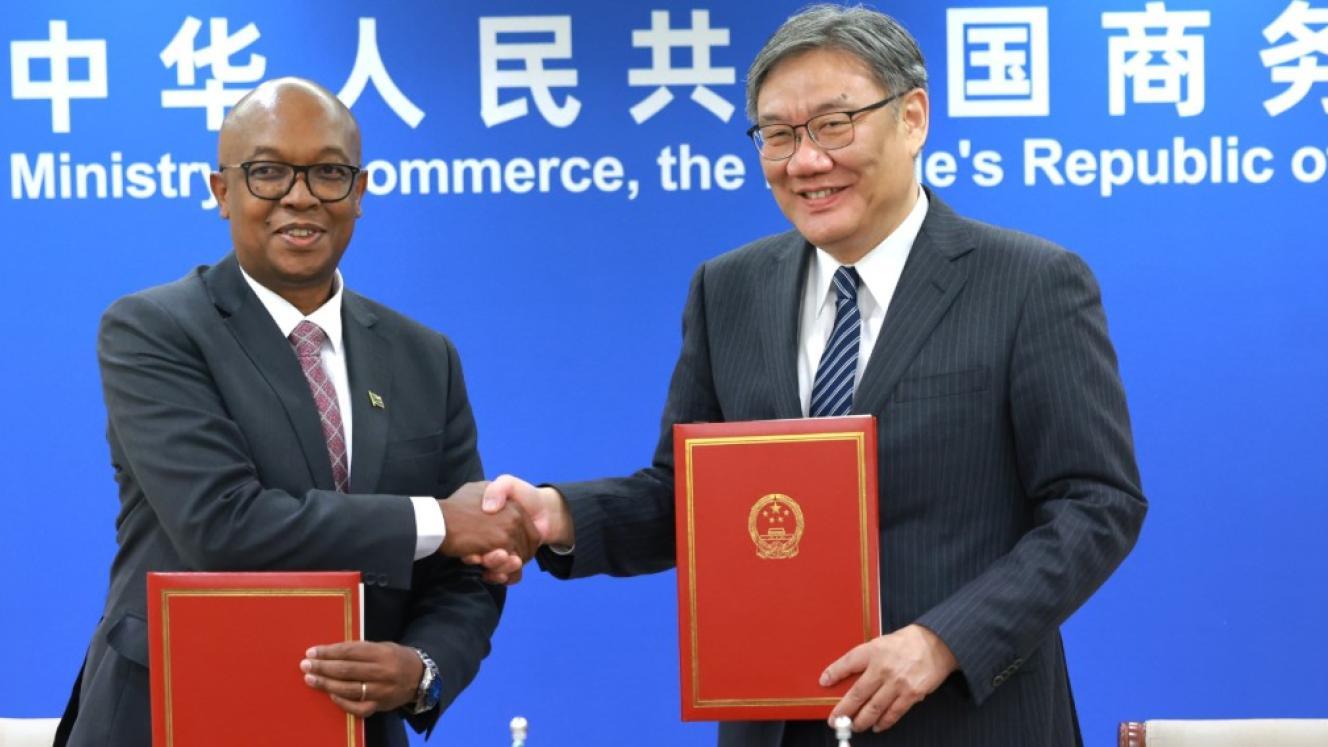
“South Africa’s Department of Trade, Industry and Competition has withdrawn a planned pre-export verification of conformity regime that would have required specified unregulated goods imported from China to undergo testing and certification before being shipped to South Africa. The decision follows earlier concerns raised through the World Trade Organization’s technical barriers to trade process and comes as South Africa balances consumer protection, domestic manufacturing interests, import regulation and its extensive trading relationship with China.”
South Africa Withdraws Planned China Import Inspection Regime
South Africa has withdrawn a planned system that would have introduced additional pre-export checks on a wide range of unregulated goods arriving from China, marking a significant development in the country’s trade relationship with its largest import partner.
The Department of Trade, Industry and Competition’s decision was reported on 26 September 2026 by Business Day, which said Trade, Industry and Competition Minister Parks Tau had withdrawn the directive approximately a week before the proposed regime was scheduled to take effect. The decision follows an earlier suspension of implementation and discussions involving South Africa, China and the World Trade Organization’s technical barriers to trade process.
The issue is important because the proposed system was designed to address two objectives that can sometimes pull trade policy in different directions: protecting South African consumers and manufacturers from non-compliant products while ensuring that import requirements do not create unnecessary obstacles to legitimate international commerce.
What South Africa Had Planned
The proposed measure was known as pre-export verification of conformity, or PVoC. Under the planned arrangement, certain products would have needed to be inspected, tested and certified by an accredited conformity assessment body before being shipped from China to South Africa.
Business Day reported that the measure was originally issued by Tau in March and was aimed at products regarded as potentially high-risk or insufficiently regulated. The categories included cosmetics such as skin-lightening creams, hair relaxers, facial creams and moisturisers, as well as toys, furniture, generators and heating appliances.
Moneyweb and tralac also reported that the directive covered a broad range of goods, including electrical products, toys, cosmetics and firefighting equipment. The tralac report said the directive had been gazetted on 20 March and was intended to begin in September before being withdrawn on 22 September.
The basic principle behind conformity assessment is not unusual in international trade. The WTO explains that conformity assessment procedures are used to determine whether products meet requirements established by technical regulations or standards. Such procedures can include testing, inspection, verification and certification.
Why the Measure Was Proposed
South African authorities had argued that stronger controls could help address the arrival of goods that do not comply with national requirements.
According to the economic and trade implications assessment accompanying the directive, the proposed system was intended to help protect local industries from cheap, substandard imports and promote competition based on compliance and product quality. The assessment also argued that conducting appropriate checks before shipment could reduce pressure on ports and reduce the possibility of non-compliant goods entering the domestic market.
The issue has particular relevance to industries producing consumer goods. Domestic manufacturers compete with imported products on price, availability and quality. Where imported goods fail to comply with safety or quality requirements, compliant manufacturers can face additional competitive pressure.
Business Day reported figures from the South African Toy and Games Association indicating that counterfeit and non-compliant products were estimated to account for about 25% of South Africa’s toy and games market, equivalent to approximately R1.9 billion of an estimated R8.7 billion industry. The report said the association estimated the share at about 5% in 2022. These are industry estimates reported by Business Day rather than independently verified figures.
The National Regulator for Compulsory Specifications, meanwhile, has continued enforcement activity against products that do not meet compulsory requirements. Business Day reported that the regulator estimates approximately R382 billion worth of non-compliant products are traded annually within its regulatory area.
China and South Africa’s Trade Relationship
China is central to South Africa’s import economy, making changes to the rules governing Chinese products particularly significant for importers, retailers, manufacturers and consumers.
The PVoC programme specifically targeted China as the initial country for implementation because China is South Africa’s largest source of imports, according to the reporting by Business Day and tralac.
This means that any new compliance requirement affecting Chinese goods could potentially influence supply chains across multiple industries.
Importers could face additional testing, certification and administrative costs. Manufacturers and exporters in China could face additional requirements before products leave the country. Retailers could also be affected if compliance requirements alter delivery schedules, sourcing decisions or landed costs.
For consumers, the consequences could depend on how the system was ultimately implemented. Additional verification could increase confidence that regulated products comply with South African requirements, but additional compliance costs could also affect import prices.
WTO Concerns and Technical Barriers to Trade
The withdrawal also has an international trade-law dimension.
Business Day reported that implementation had previously been suspended following a World Trade Organization technical barriers to trade intervention linked to China’s concerns about the country-specific scope of the South African measure.
The WTO’s Technical Barriers to Trade Agreement recognizes that governments have legitimate reasons to establish technical regulations, including objectives related to health, safety, environmental protection and consumer protection. At the same time, such measures should not create unnecessary obstacles to international trade.
The WTO says conformity assessment procedures can play an important role in allowing authorities and consumers to establish confidence that products meet required safety and quality standards. Its guidance also emphasizes the importance of procedures being appropriate and proportionate.
The WTO’s work during 2026 has continued to focus on technical regulations, conformity assessment and trade concerns. At its July 2026 Technical Barriers to Trade Committee meeting, members discussed 70 new and previously raised trade concerns involving areas including industrial policy, environmental measures, technology and product requirements.
Consequently, South Africa’s experience illustrates the practical challenge governments face when introducing new product requirements that affect international suppliers.
The Decision Comes After Consultation
The withdrawal did not occur in isolation.
According to tralac’s 25 September trade briefing, the South African Bureau of Standards and the dtic had temporarily suspended implementation in July after receiving feedback from industry and the WTO. Stakeholders were subsequently invited to participate in further consultation.
This consultation process is relevant because trade regulations can affect a large number of participants beyond government and exporters.
Importers need to understand documentation and compliance costs. Customs agents need clear procedures. Retailers need predictable supply chains. Manufacturers need fair competition. Regulators need effective enforcement systems. Consumers ultimately depend on products being safe and compliant.
The withdrawal therefore leaves room for further discussions over how South Africa can achieve these objectives.
What Happens Next?
One important question is whether the withdrawal represents the permanent end of the proposed PVoC system or whether a revised version could eventually be introduced.
Business Day reported that the department did not respond to requests for clarification on whether the directive could be reissued or whether its withdrawal marked the end of the programme.
That uncertainty means importers and other businesses will need to monitor official announcements carefully.
A revised framework could potentially take a different approach to product categories, implementation timelines, certification requirements or the countries covered. Alternatively, authorities could pursue stronger enforcement through existing South African regulatory mechanisms.
The distinction matters because South Africa still has an interest in addressing non-compliant and counterfeit goods while maintaining predictable trade relationships.
Implications for South African Businesses
For South African importers sourcing products from China, the immediate development removes the planned additional pre-export certification requirement described in the withdrawn directive.
However, businesses cannot interpret the withdrawal as meaning that imported products are exempt from South African standards and regulations generally. Existing laws and compulsory specifications remain relevant, and businesses remain responsible for complying with applicable requirements.
For domestic manufacturers, the development raises a different issue. Manufacturers have argued that imported products that do not comply with local standards can create unfair competitive pressure. The policy challenge is therefore not simply whether imports should be allowed, but how legitimate imports can be facilitated while preventing unsafe or non-compliant products from entering the market.
For Chinese exporters, the withdrawal provides greater certainty in the immediate term regarding the specific PVoC requirement. Nevertheless, future regulatory developments could alter compliance requirements.
Broader Trade Policy Questions
The development also forms part of a wider discussion about South Africa’s trade policy.
The country is attempting to increase manufacturing, expand exports, strengthen industrial value chains and attract investment while remaining integrated into international markets.
At the same time, South Africa faces questions around import penetration, logistics costs, industrial competitiveness and the trade balance with major partners.
Business Day reported that South Africa’s trade deficit with China has remained above R100 billion annually, while research cited by the publication has highlighted trade imbalances involving South Africa and other BRICS partners.
These figures provide context for why import policy remains an important issue, but they do not by themselves determine whether a particular regulatory measure will succeed. The effectiveness of any trade measure depends on its design, implementation, enforcement, economic costs and compatibility with international obligations.
Looking Ahead
South Africa’s withdrawal of the proposed China-focused pre-export verification regime leaves several issues unresolved.
The country still needs mechanisms capable of protecting consumers from unsafe products, supporting compliant local manufacturers and preventing illicit trade. At the same time, importers and international suppliers require transparent and predictable rules that can be implemented without unnecessary disruption.
The WTO framework recognizes both sides of this equation: governments can regulate for legitimate public-policy purposes, while technical requirements should avoid becoming unnecessary barriers to international trade.
For South Africa, the next stage is likely to involve continued engagement among government departments, regulators, industry associations, importers, exporters and international trading partners.
The immediate outcome is clear: the planned PVoC requirement for the affected Chinese imports will not take effect as originally scheduled. What remains open is whether South Africa will develop a revised system that addresses product safety and compliance concerns while accommodating the practical and international trade considerations raised during the consultation process.



