




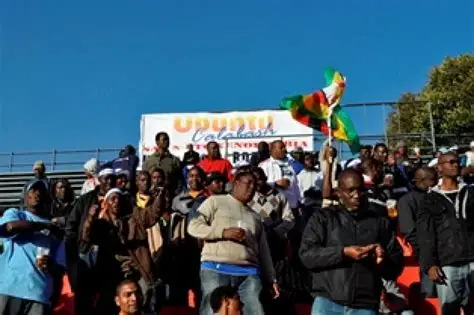
“Thousands of South Africans took to the streets under the banner of Operation Ubuntu, a coalition of more than 60 civic organizations, demanding urgent government action against xenophobia, gender-based violence, and land dispossession. The marches, spanning Cape Town, Johannesburg, and Durban, signal a turning point in South African activism, uniting diverse groups under a common agenda of justice and accountability.”
On August 20, 2026, South Africa witnessed one of its most significant grassroots mobilizations in recent history. The Operation Ubuntu marches swept across major cities, drawing thousands of activists, community leaders, and ordinary citizens into the streets. Their demands were clear: an end to xenophobia, gender-based violence, land dispossession, and systemic governance failures. The coalition’s name, “Ubuntu,” embodies the African philosophy of interconnectedness — “I am because we are.”
Background
The marches were born out of escalating xenophobic violence earlier in 2026, where vigilante groups targeted migrant communities. These groups spread misinformation, blaming foreign nationals for unemployment and crime. Activists argue that such narratives mask deeper governance failures, including corruption, poor service delivery, and economic stagnation. The Ubuntu coalition emerged as a response, uniting over 60 organizations ranging from women’s rights groups to housing activists.
Key Demands
- End Xenophobia: Protesters demanded immediate government action against hate speech and violence targeting migrants. Placards read “Migrants Are Human Too.”
- Land and Housing Justice: Activists rejected the controversial PIE Amendment Bill, which they argue enables corporate land grabs and mass evictions.
- Community Safety: Calls for stronger policing against vigilante groups and drug lords, alongside measures to curb mass shootings.
- Gender-Based Violence: Women’s organizations declared that “women’s safety is not negotiable.”
- Economic Justice: Protesters demanded an end to exploitation of Africa’s mineral wealth by multinational corporations.
Voices from the Streets
In Cape Town, organizer Tauriq Jenkins declared: “None of us are free until all of us are safe.” In Johannesburg, activist Thuli Nkadimeng demanded prosecution of vigilante groups, while in Durban, women’s organizations highlighted the intersection of xenophobia and gender-based violence. These voices underscored the coalition’s diverse yet unified agenda.
Government Response
The South African government acknowledged the protests but stopped short of committing to concrete reforms. Officials promised to review the PIE Amendment Bill and strengthen policing, but activists remain skeptical, citing past failures to deliver on similar promises. President Cyril Ramaphosa, speaking at the SADC Summit in Durban, called for regional unity amid anti-migrant backlash, but activists insist rhetoric must translate into tangible protections.
Regional and International Context
The marches coincided with the SADC Summit, amplifying their significance. Regional leaders discussed migration and security, but activists argue that South Africa must lead by example in protecting vulnerable populations. International observers noted that the Ubuntu coalition represents a rare moment of solidarity across fragmented activist groups, potentially reshaping the landscape of civil society in Southern Africa.
Analysis
The Operation Ubuntu marches represent a turning point in South African activism. Unlike fragmented protests of the past, this coalition unites diverse groups under a common agenda, amplifying demands for justice and accountability. Analysts suggest that if sustained, Ubuntu could evolve into a formidable civic force capable of influencing policy and reshaping public discourse.
Conclusion
The events of August 20, 2026, will likely be remembered as a milestone in South Africa’s activist history. The Ubuntu coalition has demonstrated the power of unity in confronting systemic injustices. Whether the government responds with meaningful reforms remains to be seen, but the message from the streets is unmistakable: South Africans are demanding justice, safety, and solidarity — and they will not be silenced.



