




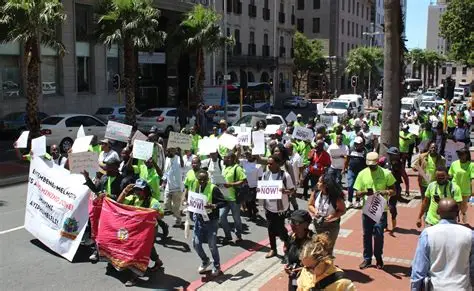
“Operation Ubuntu, a coalition of more than 60 organisations, staged nationwide protests across South Africa today, demanding justice, safety, and an end to xenophobia. The movement’s memorandum calls for housing rights, migrant protection, and urgent government action against gender-based violence and community insecurity.”
On August 8, 2026, South Africa witnessed one of its largest coordinated activist mobilisations in recent years. Under the banner of Operation Ubuntu, civil society organisations, grassroots movements, and community leaders converged in Cape Town, Johannesburg, and Durban to demand justice, safety, and solidarity. The protests, timed deliberately on the eve of Women’s Day, underscored the urgency of addressing gender-based violence, xenophobia, and systemic inequality.
Background
Operation Ubuntu emerged as a coalition of over 60 organisations representing diverse communities across South Africa. The movement’s name, derived from the African philosophy of interconnectedness and humanity, reflects its mission: “None of us are free until all of us are safe.”
The protests were sparked by mounting frustration over government inaction on issues such as mass evictions, vigilante violence, and the exploitation of migrant communities. Organisers argue that xenophobia and Afrophobia are being weaponised to distract from failures in housing, healthcare, and education delivery.
Key Demands
Operation Ubuntu’s memorandum outlined several urgent demands:
- End xenophobia and Afrophobia: Protect migrant communities from violence and exploitation.
- Land and housing justice: Reject the Prevention of Illegal Eviction Amendment Bill, which activists say enables corporate land theft.
- Community safety: Take decisive action against vigilante groups, drug lords, and mass shootings.
- Gender-based violence prevention: Ensure women and children live free from fear.
- Economic justice: Stop multinational corporations from looting Africa’s mineral wealth.
- Social rights: Guarantee access to healthcare, education, and documentation for all residents.
Protest Actions
In Cape Town, demonstrators marched through Hanover Street before handing over demands to SAPS officials. In Johannesburg, activists gathered at Beyers Naude Square, while in Durban, placards filled the space outside City Hall. The protests were peaceful but resolute, with chants calling for solidarity across racial and national lines.
Organisers emphasised that the protests were not isolated events but part of a continental day of action, linking South Africa’s struggles to broader African movements for justice and dignity.
Women’s Day Connection
The timing of the protests was deliberate. With Women’s Day approaching, Operation Ubuntu highlighted the disproportionate impact of violence and insecurity on women, particularly migrant women. “Women’s safety is not negotiable,” declared Western Cape organiser Tauriq Jenkins, stressing that communities cannot thrive while women and children live in fear.
Government Response
The memorandum was delivered to multiple government departments, including Human Settlements, Cooperative Governance, Home Affairs, Education, and SAPS. Activists demanded accountability, urging authorities to prosecute individuals inciting violence against migrants, including those behind recent viral threats in eThekwini.
Broader Context
The protests come amid heightened political tensions following South Africa’s 2026 Local Government Elections. Many activists argue that xenophobia is being exploited for political gain, while systemic issues like housing shortages and unemployment remain unresolved. Operation Ubuntu insists that migrant communities are not to blame for these failures, pointing instead to government mismanagement.
International Solidarity
Operation Ubuntu also framed its struggle within a pan-African and global solidarity movement, rejecting imperialist exploitation and calling for climate justice. The coalition urged African nations to unite against corporate looting and environmental destruction, linking local struggles to global campaigns for justice.
Conclusion
The Operation Ubuntu protests mark a significant moment in South Africa’s activist landscape. By uniting diverse organisations under a common banner, the movement has amplified calls for justice, safety, and solidarity. Whether the government responds meaningfully remains to be seen, but the message from activists is clear: justice cannot wait, and safety is a collective right.



