




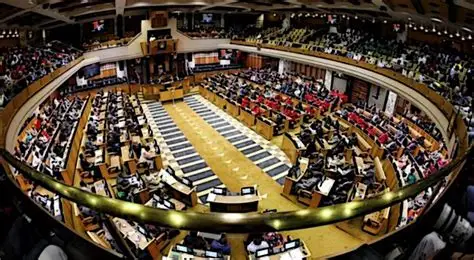
“South Africa’s National Treasury has suspended R13.5 billion in municipal funding to 69 councils, citing corruption and financial mismanagement. Parliament is urgently mediating the dispute, which threatens service delivery and intensifies political pressure on the ANC ahead of the 2026 elections.”
South Africa’s municipalities have long been plagued by financial mismanagement, corruption, and service delivery failures. Communities across the country have endured repeated water shortages, electricity disruptions, and collapsing infrastructure, eroding public trust in local government. Oversight bodies such as Municipal Public Accounts Committees (MPACs) have often failed to act decisively, allowing implicated officials to remain in office.
Treasury’s Intervention
On 7 July 2026, the National Treasury announced the suspension of equitable share transfers to 69 municipalities, including Johannesburg. The withheld R13.5 billion is critical for paying Eskom, water boards, and maintaining public services. Treasury argued that withholding funds was the only way to force municipalities to implement consequence management and hold corrupt officials accountable.
Dr. Zweli Mkhize, chair of Parliament’s Cooperative Governance Committee, defended Treasury’s legal right to act under Section 216 of the Constitution, which allows intervention in cases of non-compliance. He emphasized that the freeze was not a criminal sanction but a constitutional mechanism to compel accountability.
Parliament’s Emergency Session
On 16 July 2026, Parliament convened an emergency joint session involving the finance, appropriations, and public accounts committees. Ministers of finance and cooperative governance, SALGA representatives, and provincial leaders were summoned to resolve the dispute. The Financial and Fiscal Commission warned that the freeze could be unconstitutional, raising the stakes for Parliament’s intervention.
Political Context
The timing is politically explosive. With local government elections scheduled for November 2026, the ruling ANC faces mounting pressure. Following its historic loss of a national majority in 2024, ANC support has continued to decline, averaging 35% in recent by-elections compared to 55% in 2021. Voters are increasingly judging the party on municipal performance, making governance failures a direct threat to its survival.
Governance Implications
The freeze forces municipalities to confront their failures. It compels compliance with constitutional and legislative responsibilities, while testing whether South Africa has entered a new era where failure has real consequences. Analysts argue that this intervention could mark a turning point in South Africa’s governance, where accountability is enforced through financial leverage rather than political rhetoric.
Public Reaction
Civil society organizations have welcomed Treasury’s bold move, seeing it as a necessary step to curb corruption. However, communities fear immediate service delivery disruptions, particularly in water supply and electricity access. Protests have already erupted in several municipalities, with residents demanding urgent solutions.
Economic Impact
The freeze has significant economic implications. Municipalities rely on equitable share transfers to sustain operations, and without them, payment defaults to Eskom and water boards could escalate. This risks worsening South Africa’s already fragile energy and water crises, with ripple effects across industries dependent on reliable infrastructure.
Conclusion
South Africa’s governance crisis underscores the fragile balance between accountability and service delivery. Treasury’s intervention may set a precedent for stricter enforcement of constitutional responsibilities, but it also exposes the vulnerability of communities reliant on municipal services. As the ANC prepares for the November elections, the outcome of this dispute will shape both the country’s governance trajectory and its political future.



