




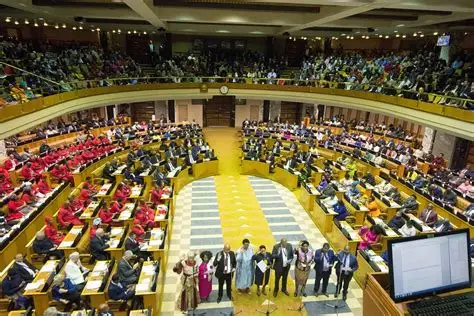
“President Cyril Ramaphosa’s legal challenge to the Section 89 panel report on the Phala Phala scandal has forced Parliament’s impeachment committee to restart its search for an evidence leader, underscoring the contested nature of accountability in South Africa. The dispute reflects broader tensions within the Government of National Unity and opposition parties, raising critical questions about governance, transparency, and the rule of law.”
South Africa’s political climate has once again been thrust into turmoil as the impeachment proceedings against President Cyril Ramaphosa over the Phala Phala farm scandal continue to dominate headlines. The scandal, which erupted after allegations of undeclared foreign currency theft at Ramaphosa’s private farm, has become a litmus test for the country’s democratic institutions, accountability mechanisms, and the resilience of its political system.
Background of the Phala Phala Scandal
The controversy began in 2020 when reports surfaced that large sums of foreign currency were stolen from Ramaphosa’s Phala Phala farm. Critics accused the president of failing to disclose the funds and questioned whether the money was linked to illicit activities. The Section 89 panel later concluded that Ramaphosa had a case to answer, sparking impeachment proceedings in Parliament.
Current Developments
On September 4, 2026, the parliamentary impeachment committee was forced to restart its search for an evidence leader after rescinding its earlier recommendation of advocate Thandazani Madonsela. Ramaphosa objected to Madonsela’s appointment, citing potential bias due to past professional disputes. While a parliamentary legal opinion found no actual conflict of interest, the committee voted 18 to 9 to drop Madonsela, illustrating the deep divisions within Parliament.
Political Dynamics
- Government of National Unity (GNU) partners have defended Ramaphosa, arguing that the impeachment process is politically motivated.
- Opposition parties, particularly the Economic Freedom Fighters (EFF) and Democratic Alliance (DA), insist that the president must face accountability, framing the issue as a test of South Africa’s constitutional democracy.
- The African National Congress (ANC) remains split, with some members rallying behind Ramaphosa while others quietly express concern about the damage to the party’s credibility.
Legal Challenges
Ramaphosa has successfully obtained a court order preventing the impeachment committee from holding public hearings until his review of the Section 89 panel report is finalized. This legal maneuver has delayed proceedings but also raised accusations that the president is using the courts to evade accountability.
Governance Implications
The impeachment saga has broader implications for governance in South Africa:
- Rule of Law: The case underscores the tension between political power and judicial independence.
- Transparency: Public trust in government institutions is at stake, with citizens demanding clarity on the president’s financial dealings.
- Coalition Politics: The GNU’s fragile unity is being tested, as coalition partners weigh loyalty to Ramaphosa against public pressure for accountability.
Public Reaction
Civil society organizations, including Corruption Watch and the South African Council of Churches, have called for transparency and urged Parliament to prioritize accountability over political expediency. Public opinion remains divided, with some viewing the impeachment as a necessary step toward clean governance, while others see it as a distraction from pressing socio-economic issues such as unemployment and energy shortages.
International Perspective
South Africa’s international partners are closely monitoring the situation. Investors worry about political instability, while regional observers see the impeachment as a test case for democratic resilience in Africa.
Conclusion
The Phala Phala impeachment saga is more than just a political scandal—it is a defining moment for South Africa’s democracy. Whether Ramaphosa survives the proceedings or is forced to step down, the case will shape the country’s governance trajectory for years to come.



