




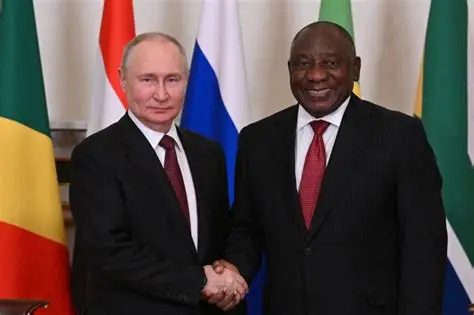
“Russia has publicly condemned South Africa’s exclusion from the 2026 G20 summit in Miami, calling it a violation of international norms and pledging to support Pretoria’s reinstatement. The move deepens tensions between South Africa and the United States, while highlighting Moscow’s strategy to strengthen alliances in the Global South.”
South Africa’s diplomatic standing has become the center of global attention following its exclusion from the 2026 G20 summit in Miami by U.S. President Donald Trump. The decision, widely criticized as unilateral and politically motivated, has sparked a wave of international reactions. Among the most significant is Russia’s vocal defense of Pretoria, positioning itself as a champion of fairness in global governance and a counterweight to Western dominance. This development underscores the shifting dynamics of international relations, particularly in the Global South, where alliances are increasingly fluid and contested.
Background of the Dispute
The controversy began nine months ago when Washington announced that South Africa would not be invited to the G20 summit. The U.S. justified the move by citing Pretoria’s land reform policies, its pro-Palestinian stance, and trade disagreements. However, critics argue that the exclusion was less about policy and more about geopolitical maneuvering. South Africa, a key voice in the African Union and BRICS, has often challenged Western positions on global issues, making it a target of U.S. displeasure.
Russia’s Intervention
Russia’s response has been swift and unequivocal. Ambassador-at-Large Marat Berdyev declared that the G20 is a “collegial format” that cannot be controlled by a single member. Moscow’s embassy in Pretoria emphasized that Russia is working with partners to ensure South Africa’s rightful place at the negotiating table. This intervention is not merely symbolic—it reflects Russia’s broader strategy of building solidarity among nations marginalized by Western powers.
Implications for South Africa
For South Africa, Russia’s support provides both diplomatic cover and strategic leverage. Pretoria has long sought to balance its relationships with Western nations and emerging powers. Its membership in BRICS—alongside Brazil, Russia, India, and China—has given it a platform to advocate for multipolarity in global governance. The G20 exclusion, however, threatened to undermine its credibility. Russia’s backing helps restore confidence and signals to other Global South nations that Pretoria is not isolated.
U.S.-South Africa Relations
The rift with Washington is deepening. Beyond the G20 issue, tensions have flared over South Africa’s criticism of U.S. foreign policy in the Middle East and its trade disputes with American companies. The exclusion from the summit is seen by many analysts as punitive, aimed at pressuring Pretoria to align more closely with U.S. positions. Instead, the move may have backfired, pushing South Africa further into the orbit of Russia and China.
Global South Solidarity
Russia’s defense of South Africa resonates across the Global South. Many countries in Africa, Asia, and Latin America view the G20 exclusion as a dangerous precedent. If one member can be sidelined for political reasons, the legitimacy of the institution itself is called into question. Moscow’s stance reinforces the idea that international institutions must remain inclusive and representative, rather than tools of geopolitical rivalry.
Strategic Calculations
Russia’s support is not altruistic. By defending South Africa, Moscow strengthens its own claim to leadership in the Global South. It also undermines U.S. influence in Africa, a region where competition between great powers is intensifying. South Africa, with its advanced economy and diplomatic clout, is a valuable ally in this contest. For Pretoria, aligning with Russia offers both protection and opportunity, though it risks further alienating Western partners.
Domestic Reactions in South Africa
Within South Africa, the exclusion has sparked debate. Some political leaders argue that the country should reassess its reliance on Western institutions and deepen ties with BRICS. Others caution that alienating the U.S. could harm trade and investment. The government, however, has welcomed Russia’s support, framing it as validation of South Africa’s role in global affairs.
Broader International Context
The dispute reflects broader trends in international relations. The rise of multipolarity means that no single power can dictate terms unilaterally. Institutions like the G20 are increasingly contested spaces, where legitimacy depends on inclusivity. Russia’s intervention highlights the fragility of these institutions and the growing demand for reform.
Conclusion
South Africa’s exclusion from the G20 summit has become a flashpoint in global politics. Russia’s defense of Pretoria underscores the shifting balance of power and the growing assertiveness of the Global South. For South Africa, the episode is both a challenge and an opportunity: a challenge to its relations with the U.S., but an opportunity to strengthen alliances with emerging powers. As the diplomatic drama unfolds, the future of global governance hangs in the balance.



