




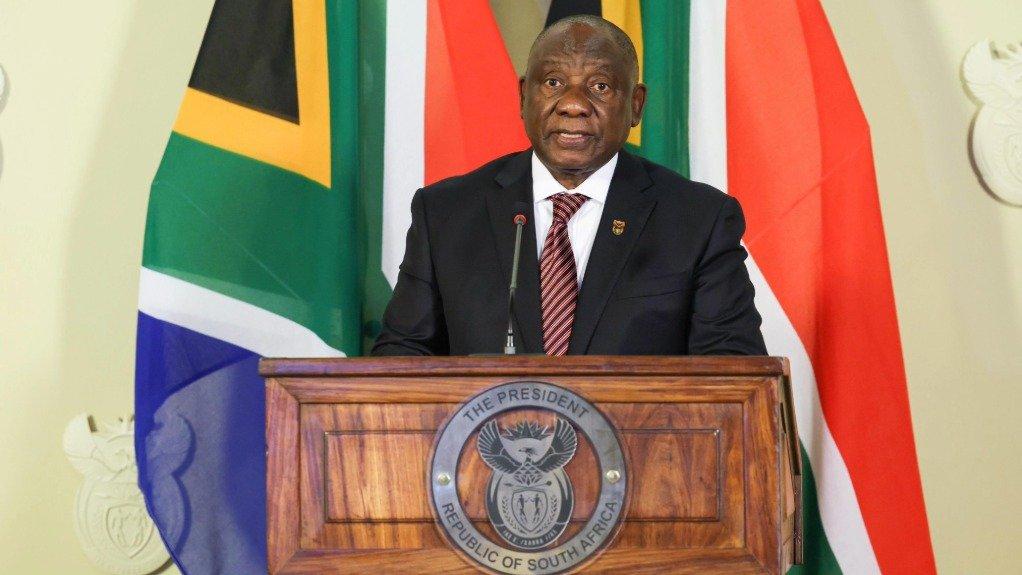
“President Cyril Ramaphosa is scheduled to launch South Africa’s Cabinet-approved Revised White Paper on Local Government, 2026, on 22 October, introducing a policy framework intended to address municipal governance, financial management, institutional capacity and service delivery challenges. The reform includes a differentiated approach to municipalities and an implementation plan intended to move the government from policy development towards practical action across the country’s 257 municipalities.”
South Africa advances plans to reform local government
South Africa is preparing for a significant policy development in the administration of local government as President Cyril Ramaphosa is scheduled to launch the Revised White Paper on Local Government, 2026, on Thursday, 22 October. The event, planned for the Birchwood Hotel and OR Tambo Conference Centre in Ekurhuleni, Gauteng, represents an important step in the government’s efforts to improve municipal performance and strengthen the delivery of essential public services.
According to an announcement issued by the Presidency on 21 October, the launch will take place under the theme “Every Municipality Must Work: From Policy to Collective Action”. The initiative is designed to respond to persistent weaknesses in municipal governance, financial management, institutional capacity and service delivery. These issues have remained central to debates about the effectiveness of South Africa’s democratic institutions and the ability of public authorities to meet communities’ needs.
The revised policy builds on earlier discussions about the future of local government, including resolutions from the 2022 Presidential Local Government Summit, consultations with stakeholders and subsequent government reform efforts. Its significance lies in the attempt to establish a more practical framework for addressing the different problems faced by municipalities throughout the country.
A differentiated approach to municipalities
One of the central elements of the revised White Paper is its recognition that South African municipalities do not all operate under the same circumstances. Metropolitan municipalities, secondary cities, rural municipalities and small towns have different financial resources, administrative capacities, infrastructure requirements and development pressures.
A uniform policy approach may therefore fail to address the specific challenges affecting individual communities. A large metropolitan authority, for example, has different planning and infrastructure responsibilities from a small rural municipality with a limited revenue base and a shortage of specialised personnel.
The Presidency says the revised policy introduces a differentiated framework that recognises these variations.
In practice, the effectiveness of this approach will depend on how the policy translates differences in municipal circumstances into appropriate responsibilities, support arrangements and performance expectations. Authorities will need to identify where municipalities require technical assistance, improved financial controls, stronger management or more effective infrastructure planning.
Differentiation should not mean that residents in smaller or poorer municipalities receive lower-quality services. Rather, the policy challenge is to provide support that reflects local circumstances while maintaining a consistent commitment to accountability, constitutional obligations and reliable public services.
The forthcoming implementation process will consequently be important in determining whether the revised framework delivers meaningful changes at municipal level.
Financial management and accountability remain priorities
Municipal finances are another major component of the wider reform agenda. Local government authorities must manage revenue, maintain infrastructure, pay service providers, prepare credible budgets and ensure that public funds are used for their intended purposes.
Weak financial administration can affect the availability and reliability of water, sanitation, electricity distribution, refuse removal and road maintenance. When municipalities cannot collect revenue effectively or control expenditure, their capacity to maintain existing infrastructure and invest in new projects may deteriorate.
The revised White Paper is intended to address the broader institutional and financial weaknesses affecting municipal performance. However, the policy’s announcement does not itself demonstrate that these problems have been resolved. Its practical value will depend on implementation, enforcement and measurable improvements in the management of public resources.
The national government’s recent budget announcements provide additional context. Finance Minister Enoch Godongwana’s Medium-Term Budget Policy Statement, delivered on 21 October, proposed an additional R21.8 billion for local government over the medium term to help cover the costs of free basic water, sanitation, electricity and refuse removal. The statement also outlined proposed changes to municipal financial management legislation, including stronger requirements for funded budgets, revenue management and accountability.
These financial measures and the White Paper are separate policy initiatives, but their objectives intersect. A revised administrative framework can establish expectations for municipal performance, while funding and financial controls can help authorities meet those expectations.
Nevertheless, additional allocations alone cannot guarantee improved services. Municipalities also need capable personnel, reliable procurement systems, effective oversight and the ability to complete infrastructure projects on time.
Moving from policy commitments to implementation
A major feature of the planned launch is the introduction of an Implementation Plan and a Transition Management Body. According to the Presidency, these mechanisms are intended to support the movement from policy development towards implementation. A Research Compendium will also accompany the revised White Paper, consolidating research that informed the review.
The implementation arrangements will be particularly important because policy reforms can fail when responsibilities are unclear or when national decisions are not translated into local administrative action.
A credible implementation process should establish clear responsibilities, realistic deadlines, appropriate funding arrangements and measurable indicators of progress. It should also identify how national and provincial departments will support municipalities and how problems will be escalated when local authorities cannot meet their obligations.
Monitoring will need to go beyond the production of policy documents and the holding of consultation meetings. Residents ultimately need evidence that municipal administration is improving, infrastructure is being maintained and essential services are becoming more reliable.
Public reporting on progress would allow communities, oversight institutions and elected representatives to assess whether commitments are being fulfilled. Transparent reporting could also help identify successful practices that other municipalities may be able to adapt to their own circumstances.
The Transition Management Body’s precise responsibilities and operating arrangements will therefore be important matters to examine as the policy moves into implementation.
Cooperation across all spheres of government
The launch is expected to bring together political and administrative leaders from all 257 municipalities, national and provincial government, Parliament, constitutional and oversight institutions, organised local government, traditional and Khoi-San leadership, organised labour, organised business, civil society, academia, professional bodies and development partners.
This broad participation reflects the fact that municipal reform cannot be delivered by one department or level of government alone.
National government establishes legislation and policy frameworks, while provincial authorities have oversight and support responsibilities. Municipal administrations are responsible for numerous local services and development functions, within the constitutional and legislative framework.
Cooperation between these institutions is necessary to address problems that cross administrative boundaries, including infrastructure planning, water supply, transport, environmental management and regional economic development.
At the same time, cooperation must not weaken accountability. Where responsibilities are shared, residents should still be able to establish which authority is responsible for a particular service, expenditure decision or unresolved problem.
The reform process will therefore need to balance coordinated action with clearly defined institutional responsibilities.
Political significance of municipal reform
Local government is an important part of South Africa’s democratic system because municipalities are among the public institutions most directly connected to people’s daily experiences.
Residents often assess government performance through the availability of water, the condition of roads, the reliability of refuse collection, the management of local infrastructure and the responsiveness of municipal officials.
Consequently, persistent service delivery problems can affect public confidence in political parties and government institutions. Municipal reform is therefore both an administrative challenge and a matter of political accountability.
The revised White Paper follows commitments made by Ramaphosa in the 2026 State of the Nation Address to finalise a revised policy and reconsider structural and operational challenges in the local government system.
Its introduction offers the government an opportunity to explain how it intends to strengthen municipalities and respond to longstanding weaknesses. However, the credibility of the initiative will ultimately depend on whether the proposed changes lead to measurable improvements rather than another cycle of policy announcements.
Political leaders will need to demonstrate that reform can continue beyond the launch event, including through sustained oversight, appropriate resource allocation and cooperation between spheres of government.
The economic implications of stronger municipalities
Effective municipalities can contribute to economic development by maintaining infrastructure, providing predictable administrative services and creating conditions in which businesses can operate.
Unreliable services, poor infrastructure maintenance and inefficient administrative processes can raise operating costs for companies and discourage investment. In contrast, effective municipal planning can support housing development, commercial activity, industrial investment and employment creation.
The government’s wider fiscal agenda reinforces this connection. The Medium-Term Budget Policy Statement identified infrastructure investment and stronger public financial management as important components of economic policy. It also proposed additional funding for municipalities and reforms aimed at improving the management of public resources.
However, municipal reform should not be judged solely by its contribution to economic growth. Reliable basic services, fair administration and responsiveness to residents are important outcomes in their own right.
A successful reform programme must therefore address both economic development and the everyday needs of communities, especially those in areas where municipal capacity is limited.
Challenges that could affect the reform
Several issues will determine whether the revised White Paper achieves its objectives.
First, municipalities need sufficient administrative capacity to implement new requirements. Policies may establish appropriate standards, but municipalities with shortages of skilled personnel may struggle to meet them without sustained technical assistance.
Second, financial accountability must be supported by effective oversight. Clear rules are important, but they need to be accompanied by credible monitoring, timely intervention and appropriate consequences for serious misconduct.
Third, implementation must be adequately resourced. Reforms that introduce additional responsibilities without providing the necessary skills, systems or funding risk increasing pressure on already constrained administrations.
Fourth, national and provincial authorities must coordinate their support. Conflicting instructions, duplicated processes and unclear responsibilities can delay projects and make it difficult to determine where corrective action is required.
Finally, communities must be able to participate meaningfully in local governance. Consultation is most effective when residents can understand municipal plans, examine performance information and raise concerns through accessible processes.
These challenges do not diminish the importance of the policy initiative. Instead, they underline why implementation arrangements and ongoing evaluation will be essential.
What South Africans should watch next
The planned launch on 22 October marks an important point in the government’s local government reform programme. The next questions concern the detailed contents of the White Paper, the responsibilities assigned through its implementation arrangements, and the timetable for translating its proposals into action.
Residents and civil society organisations will have reason to examine how the differentiated approach will work, how municipal performance will be assessed and how national and provincial authorities will intervene when serious weaknesses persist.
Municipal councils and administrators will need clarity on the practical requirements they are expected to meet. Parliament and other oversight institutions will have an important role in examining whether reforms are supported by effective legislation, funding and accountability mechanisms.
The policy’s long-term success should be measured against outcomes that communities can observe: stronger municipal administration, more transparent finances, better-maintained infrastructure and reliable essential services.
Conclusion
President Ramaphosa’s planned launch of the Revised White Paper on Local Government, 2026, is a significant policy development in South Africa’s efforts to strengthen municipal governance. Its differentiated approach recognises that municipalities have different capacities and needs, while the proposed implementation arrangements are intended to move the reform agenda beyond policy development.
The initiative’s success, however, will depend on more than the publication of a new framework. It will require effective coordination between government institutions, capable municipal administrations, transparent financial management, credible oversight and sustained public participation.
For South Africans, the most important test will be whether these commitments translate into tangible improvements in local services and accountability. The launch provides an opportunity to set that process in motion; implementation will determine whether the policy fulfils its promise.



