




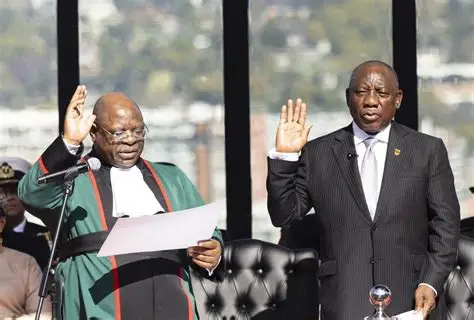
“South African President Cyril Ramaphosa has obtained a court order halting Parliament’s impeachment inquiry into the Phala Phala scandal, temporarily shielding him from accountability over alleged constitutional violations. The ruling intensifies political debate, with opposition parties demanding transparency while the ANC rallies behind Ramaphosa.”
South Africa’s political landscape was jolted on 24 July 2026 when President Cyril Ramaphosa secured a court order halting Parliament’s impeachment inquiry into the controversial Phala Phala scandal, also known as “Farmgate.” The ruling, delivered by the Gauteng High Court, temporarily shields Ramaphosa from parliamentary scrutiny, raising questions about accountability, the rule of law, and the future of South Africa’s democracy.
Background: The Phala Phala Scandal
The scandal erupted in 2020 when $580,000 in foreign currency was stolen from Ramaphosa’s Phala Phala farm, allegedly hidden in a sofa. Ramaphosa claimed the money came from the sale of buffaloes, but critics questioned why such large sums were stored in furniture. The incident tarnished his image as a corruption fighter and triggered calls for impeachment.
The Court Ruling
The High Court’s decision grants Ramaphosa a reprieve until September 2026, when his review application challenging the impeachment process will be heard. For now, Parliament cannot proceed with hearings, effectively pausing one of the most significant accountability processes in recent South African history. Opposition parties, particularly the Democratic Alliance (DA) and the Economic Freedom Fighters (EFF), condemned the ruling as undermining transparency.
ANC’s Position
Ramaphosa’s African National Congress (ANC) remains his strongest shield. Despite internal divisions, the ANC commands enough parliamentary seats to block impeachment. Analysts argue that the ANC’s support reflects both loyalty to Ramaphosa and fear of destabilizing the party ahead of the 2029 general elections. Coalition partners, however, remain divided, with some expressing unease about shielding Ramaphosa from scrutiny.
Opposition Reaction
The DA demanded urgent resolution of Ramaphosa’s review application, insisting South Africans deserve answers. The EFF accused the judiciary of protecting elites, warning that the ruling undermines democratic accountability. Smaller parties echoed concerns, arguing that the ruling sets a dangerous precedent where powerful leaders evade scrutiny.
Public Sentiment
Public opinion remains polarized. Supporters view the ruling as a necessary pause to ensure due process, while critics see it as another example of political elites escaping accountability. Civil society organizations, including Corruption Watch, warned that shielding Ramaphosa damages public trust in institutions.
Implications for Governance
The ruling has far-reaching implications:
- Accountability: Parliament’s oversight role is weakened.
- Judicial Power: Courts now play a decisive role in shaping political accountability.
- Coalition Politics: Divisions among ANC partners could destabilize governance.
- 2029 Elections: Ramaphosa’s image as a corruption fighter is further eroded, potentially weakening ANC’s electoral prospects.
Historical Context
South Africa has faced similar crises before. Former President Jacob Zuma survived multiple scandals before eventually resigning under pressure in 2018. Ramaphosa’s case echoes Zuma’s trajectory, raising fears of prolonged instability.
Conclusion
The court order halting Ramaphosa’s impeachment inquiry marks a pivotal moment in South Africa’s democratic journey. While it provides temporary relief for the president, it deepens political divisions and raises urgent questions about accountability. As September approaches, all eyes will be on the judiciary, Parliament, and the ANC to determine whether South Africa’s institutions can withstand the pressures of scandal and preserve democratic integrity.



