




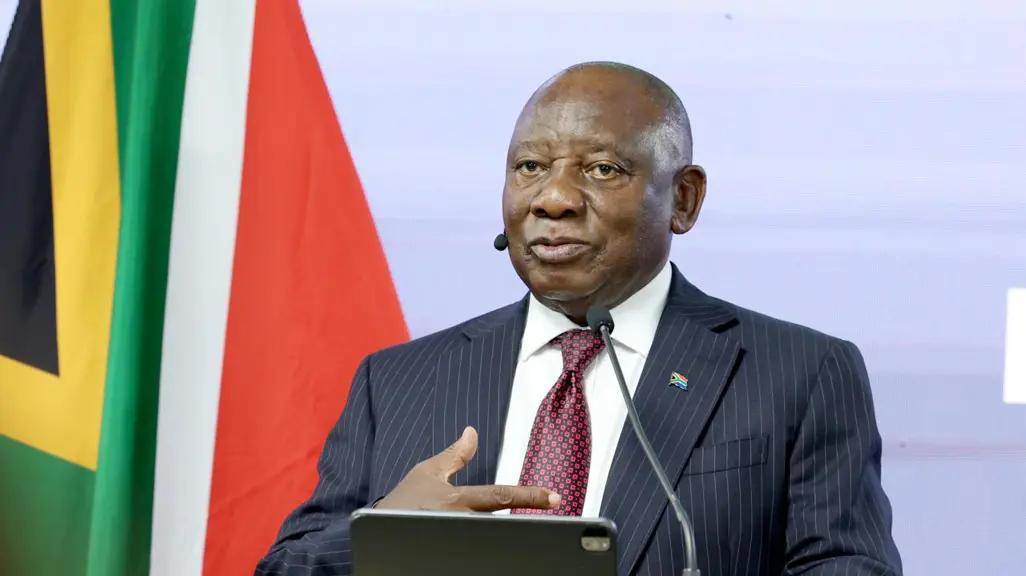
“President Cyril Ramaphosa has pledged that the South African government will protect lives, property and lawful businesses amid renewed tensions surrounding protests against illegal immigration, looting and intimidation in Durban. His statement places public safety, constitutional rights, immigration management and economic recovery at the centre of the government’s policy response as the country approaches the local government elections scheduled for 4 November 2026.”
Government places public safety and lawful commerce at the centre of policy
South Africa’s response to rising tensions surrounding immigration, community protests and attacks on businesses in Durban has become a significant public policy issue, bringing questions of law enforcement, constitutional rights, economic stability and government accountability into sharper focus.
On 29 October 2026, SABC News reported that President Cyril Ramaphosa had reaffirmed the government’s responsibility to protect people, property and the right to conduct lawful business. He made the remarks following incidents involving protests against illegal immigration, as well as reports of looting, vandalism and intimidation affecting businesses in eThekwini, the metropolitan municipality that includes Durban.
The statement is important because it addresses two responsibilities that government must pursue simultaneously: maintaining public order and ensuring that constitutional rights are respected. It also arrives shortly before the local government elections scheduled for 4 November, a period when public concerns about service delivery, safety, migration and municipal leadership are receiving increased attention.
The central policy question is how authorities can respond effectively to criminal conduct and community grievances without allowing violence, discrimination or unlawful intimidation to undermine the rights of residents and businesses.
Government’s commitment to protecting businesses
Speaking at the Durban Chamber of Commerce and Industry’s 170th anniversary gala dinner on 28 October, Ramaphosa condemned violence directed at businesses and warned against exploiting public concerns about illegal immigration to encourage criminality or divide communities.
His message established a clear distinction between public debate about immigration policy and unlawful actions against people or property. Concerns about migration can be raised through political participation, public consultation and lawful protest. However, such concerns do not justify assault, looting, vandalism or intimidation.
This distinction is central to the government’s constitutional obligations. Public authorities must protect the rights of people who live and work in South Africa, while applying the country’s immigration laws through lawful administrative and judicial processes.
Businesses are particularly vulnerable when violence disrupts trading. Small shops may have limited financial reserves, and damage to premises or the loss of stock can threaten their continued operation. Even where an incident affects only a limited number of establishments, fear of further attacks can discourage customers, interrupt employment and make owners reluctant to invest.
The government’s commitment will therefore need to be measured not only through public statements but also through practical outcomes, including the prevention of attacks, the investigation of crimes, the protection of witnesses and the prosecution of suspects where evidence supports criminal charges.
Immigration policy and the rule of law
Immigration management remains a complicated policy challenge for South Africa. It involves border administration, asylum procedures, documentation, labour-market regulation, public services and the enforcement of immigration legislation.
Public dissatisfaction can arise when residents believe that immigration rules are not being enforced consistently or that pressure on housing, healthcare, employment and municipal services is not being adequately addressed. Those concerns deserve to be examined through reliable evidence and accountable government processes.
Nevertheless, the legal status of an individual does not remove the state’s obligation to protect that person’s basic rights. Equally, foreign nationals who operate lawful businesses are entitled to protection against criminal attacks.
The government must distinguish between immigration enforcement and private attempts to impose immigration rules through intimidation. Immigration officials and other authorised institutions have defined responsibilities under the law; protest groups cannot replace those institutions or independently determine who should be attacked, expelled or prevented from trading.
The issue also intersects with asylum law. South Africa’s Constitutional Court has addressed procedures affecting asylum seekers, and the government has been considering how to implement relevant judicial decisions while managing administrative pressures. These legal questions require careful treatment because asylum applications, immigration offences and refugee protection are not interchangeable matters.
A durable policy response will require clear public communication, accessible administrative procedures and consistent enforcement. Authorities must explain which rules apply, how complaints can be submitted, what services are available and how allegations of misconduct will be investigated.
Misinformation can intensify tensions when complex legal decisions are presented inaccurately. Government communication should therefore explain policy changes in plain language and make authoritative information accessible to communities, journalists, businesses and civil society organisations.
Security measures and the deployment of the military
Ramaphosa’s remarks came amid increased security concerns in KwaZulu-Natal. The president had authorised the deployment of 510 members of the South African National Defence Force to support police operations in the province. The deployment was announced as part of a wider response to security challenges and was scheduled to continue until the end of November 2026.
The deployment raises important questions about the respective roles of the military and the South African Police Service.
Police remain responsible for ordinary policing, crime prevention, investigating offences and making arrests in accordance with the law. Military support can provide additional operational capacity where authorised, but it should not be treated as a substitute for effective civilian policing or a long-term solution to underlying community tensions.
Successful security operations should be assessed against clear objectives. These include reducing violence, protecting vulnerable communities, preventing further attacks, ensuring that businesses can trade safely and allowing peaceful public gatherings to take place within the law.
Accountability is equally important. Allegations of unlawful conduct by any person involved in security operations must be investigated through appropriate mechanisms. The public should be able to understand the legal basis, scope and duration of deployments, as well as the procedures for reporting misconduct.
The authorities must also ensure that enforcement is evidence-based. People should not be targeted merely because of nationality, language, appearance or participation in peaceful political activity.
A security response that protects everyone equally is more consistent with constitutional government and more likely to support public confidence than one perceived as arbitrary or discriminatory.
Economic recovery and the business environment in Durban
The policy debate extends beyond immediate security concerns because Durban is an important centre for manufacturing, tourism, retail, logistics and international trade. Disruptions to its commercial activity can have consequences for workers, suppliers, consumers and the wider KwaZulu-Natal economy.
In his address, Ramaphosa linked social stability with economic prosperity and highlighted cooperation between government and the business community. He also acknowledged that persistent problems, particularly water supply interruptions and infrastructure backlogs, continue to constrain the city’s recovery.
These challenges illustrate why public safety and service delivery must be addressed together. Businesses need secure premises, reliable utilities, functional transport networks and predictable administrative processes. Residents, meanwhile, need access to water, sanitation, employment opportunities and responsive municipal services.
The Presidential eThekwini Working Group, established to strengthen cooperation between government and business, has focused on challenges affecting the metropolitan area. The president cited improvements in municipal utility collections, water-loss indicators and expenditure on repairs and maintenance as signs of progress, while acknowledging that substantial problems remain.
Such progress should be evaluated using published performance data and clear targets. Improved collections, for example, are meaningful when they help municipalities maintain infrastructure and provide reliable services. Increased maintenance spending matters when it results in functioning water systems, repaired roads and better public facilities.
The same principle applies to security policy. The number of deployments or arrests is not sufficient on its own to demonstrate success. Authorities should also communicate whether attacks have declined, investigations have advanced and affected businesses have been able to resume normal operations.
Elections, accountability and the way forward
The timing of the president’s remarks adds another dimension to the policy debate. South Africa’s local government elections are scheduled for 4 November 2026, placing municipal performance, public safety and service delivery prominently in the political discussion.
Local elections provide residents with an opportunity to assess the performance of municipal leadership and express their preferences through democratic participation. However, public debate about municipal failures and immigration should remain grounded in evidence rather than intimidation or violence.
The response to Durban’s difficulties will require cooperation among national government, provincial authorities, eThekwini municipality, police, businesses and community organisations. Each has a different role, but their work must contribute to a shared objective: protecting residents while improving the conditions necessary for economic activity and social cohesion.
Government should publish understandable updates on security measures, investigations and service-delivery commitments. Municipal authorities should explain how infrastructure priorities are funded and monitored. Business organisations can contribute information about the effects of disruption, while community groups can help identify grievances and promote peaceful engagement.
It is also important that public authorities distinguish allegations from established facts. Reports of violence should be investigated, and responsibility should be determined through lawful processes. Neither political statements nor public anger should replace evidence.
Conclusion: Policy implementation will determine public confidence
The government’s pledge to protect lawful businesses is a significant statement of public responsibility, but its impact will depend on implementation.
South Africa must enforce immigration legislation while respecting asylum procedures, protect people against violence, safeguard peaceful protest and ensure that criminal allegations receive appropriate investigation. At the same time, Durban’s longer-term recovery depends on reliable municipal services, effective infrastructure management and conditions that allow businesses to operate with confidence.
The coming weeks will provide an opportunity to assess whether security measures reduce disruption and whether government institutions communicate clearly with affected communities. Progress should be measured through verifiable outcomes rather than promises alone.
Ultimately, the issue is not simply whether government can restore order during a period of heightened tension. It is whether public institutions can uphold the rule of law consistently, address legitimate policy concerns and protect the rights of everyone within their jurisdiction.
Ramaphosa’s message places these responsibilities at the centre of the national discussion. Delivering on them will require sustained coordination, transparent reporting and equal application of the law—essential foundations for democratic accountability, social stability and economic recovery.



