




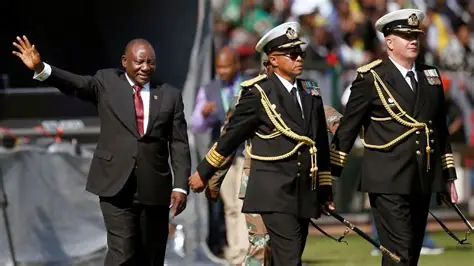
“President Cyril Ramaphosa has asked the Western Cape High Court to suspend Parliament’s impeachment proceedings against him, pending a review of the Section 89 Independent Panel report that found he had a prima facie case to answer in the Phala Phala matter. The court’s ruling, expected next week, could determine whether impeachment moves forward or is paused, shaping the trajectory of South Africa’s political landscape.”
South Africa’s political climate has entered a decisive phase as President Cyril Ramaphosa faces mounting pressure over the Phala Phala farm scandal. The Western Cape High Court is set to rule next week on his urgent application to halt Parliament’s impeachment process. This development is not only a test of Ramaphosa’s leadership but also a critical moment for South Africa’s constitutional democracy, where the balance between executive accountability and political maneuvering is being tested.
Background: The Phala Phala Scandal
The controversy stems from the 2020 theft of foreign currency from Ramaphosa’s Phala Phala game farm. Allegations that the President failed to properly disclose the incident and may have violated financial regulations led to the establishment of a Section 89 Independent Panel. The panel concluded that Ramaphosa had a prima facie case to answer, sparking calls for impeachment.
Parliamentary Action
Following the Constitutional Court’s ruling in May 2026, Parliament was compelled to institute impeachment proceedings. The Impeachment Committee was formed to investigate the allegations further. However, Ramaphosa’s legal team argues that the process should be suspended until the panel’s findings are reviewed in September, claiming procedural unfairness and constitutional concerns.
The Court Case
The matter was heard by a full bench of the Western Cape High Court. Ramaphosa’s lawyers emphasized that allowing impeachment to proceed before the review would undermine the President’s rights and destabilize governance. Opponents countered that delaying the process risks eroding public trust in accountability mechanisms. Judgment is expected by the end of next week, making this one of the most closely watched legal decisions in recent South African history.
Political Implications
- For Ramaphosa: A favorable ruling would buy him time and potentially weaken opposition momentum.
- For Parliament: A ruling against Ramaphosa would reinforce its constitutional authority and signal a strong stance on accountability.
- For the ANC: The party faces internal divisions, with some members rallying behind Ramaphosa while others see impeachment as necessary to restore credibility.
Governance and Policy Impact
The impeachment saga has broader implications for South Africa’s governance. It highlights systemic weaknesses in oversight and the tension between political survival and institutional integrity. Policy debates around transparency, financial regulation, and executive accountability are now front and center, with potential reforms looming depending on the court’s decision.
Public Reaction
Public opinion remains polarized. Some South Africans view the impeachment process as overdue accountability, while others see it as politically motivated destabilization. Civil society organizations have called for transparency and urged the judiciary to prioritize constitutional principles over partisan interests.
International Dimension
South Africa’s global partners are watching closely. The outcome could affect perceptions of the country’s political stability and governance standards, influencing investor confidence and diplomatic relations.
Conclusion
The Western Cape High Court’s ruling next week will mark a turning point in South Africa’s political trajectory. Whether impeachment proceeds or is halted, the decision will reverberate across governance structures, party politics, and public trust. For Ramaphosa, it is a battle for survival; for South Africa, it is a test of constitutional resilience.



