




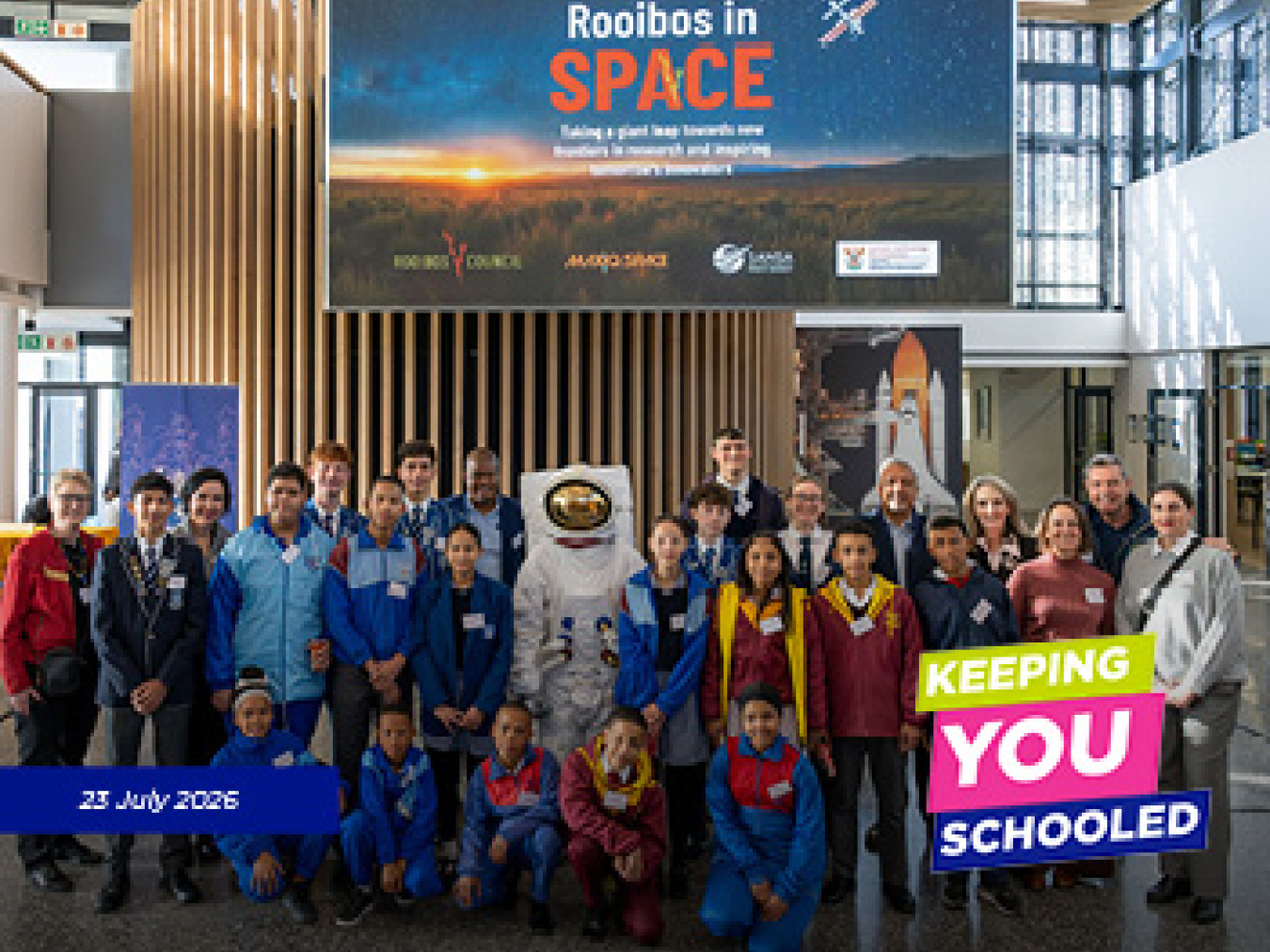
“South Africa has launched the Rooibos in Space programme, which will send Rooibos seeds to the ISS to study how microgravity and radiation affect plant growth. The initiative, led by the South African Rooibos Council and SANSA, engages learners in hands-on scientific research while exploring the future of sustainable agriculture in space.”
South Africa unveiled a pioneering project that bridges agriculture and space science: the Rooibos in Space programme. This initiative will send Rooibos seeds—an indigenous plant central to South African culture and economy—to the International Space Station (ISS) in October. The seeds will be exposed to microgravity and cosmic radiation before being returned to Earth for comparative analysis against control seeds.
Background and Significance
Rooibos, grown exclusively in the Cederberg region, is globally renowned for its health benefits and cultural importance. By sending Rooibos into space, South Africa is not only contributing to international plant biology research but also showcasing its scientific innovation and agricultural heritage. The project aligns with global priorities in space exploration, where self-sustaining life-support systems are essential for long-duration missions such as NASA’s Artemis programme.
Educational Impact
The programme is deeply rooted in STEM education. Learners from seven schools in the Cederberg region will conduct experiments on the returned seeds, measuring germination rates, resilience, and yield. This hands-on involvement ensures that students are not passive observers but active contributors to space science, fostering a new generation of scientists and engineers.
Scientific Goals
The Rooibos experiment will provide insights into:
- Plant resilience in microgravity
- Effects of radiation on seed viability
- Potential for Rooibos cultivation in extraterrestrial environments
These findings could inform both space-based food systems and climate-resilient agriculture on Earth, making the project doubly impactful.
Collaboration and Support
The initiative is spearheaded by the South African Rooibos Council (SARC) in collaboration with MaxIQ Space and supported by the South African National Space Agency (SANSA). This multi-sector partnership—spanning government, academia, and industry—demonstrates South Africa’s ability to mobilize resources for cutting-edge scientific innovation.
Broader Context
Globally, space agencies have experimented with crops like lettuce, peas, and soybeans aboard the ISS. Rooibos adds a uniquely South African dimension to this growing body of research. Its inclusion highlights the intersection of cultural identity and scientific progress, positioning South Africa as a serious player in space agriculture research.
Conclusion
The Rooibos in Space programme is more than a scientific experiment—it is a symbol of national pride, educational empowerment, and global collaboration. By sending Rooibos seeds into orbit, South Africa is planting the seeds of future innovation, both in space and on Earth.



