




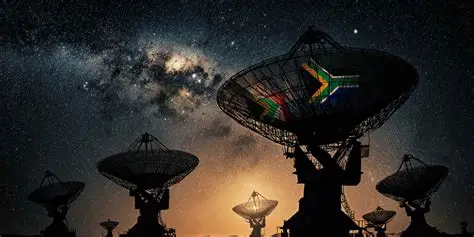
“South Africa has launched the Rooibos in Space programme, sending indigenous Rooibos seeds to the ISS to study plant biology under microgravity and radiation conditions. The initiative combines space science, agriculture, and STEM education, engaging learners from seven schools in the Cederberg region.”
South Africa has taken a bold step in combining its agricultural heritage with cutting-edge space science through the Rooibos in Space programme. This initiative, spearheaded by the South African Rooibos Council (SARC) in collaboration with MaxIQ Space and supported by the South African National Space Agency (SANSA), will send Rooibos seeds to the International Space Station (ISS) in October 2026. The seeds will be exposed to microgravity and space radiation before being returned to Earth for comparative studies. This project represents a unique intersection of agriculture, education, and space exploration.
Background: Rooibos and South African Heritage
Rooibos is a plant indigenous to South Africa, particularly the Cederberg region, and has long been a cornerstone of the country’s agricultural and cultural identity. Known globally for its health benefits and distinctive flavor, Rooibos tea has become a symbol of South African innovation in agriculture. By sending Rooibos seeds into space, South Africa is not only showcasing its agricultural heritage but also positioning itself at the forefront of global scientific research.
Scientific Objectives
The primary scientific goal of the programme is to study how Rooibos seeds respond to the unique conditions of space. Microgravity and cosmic radiation present challenges to plant growth, germination, and resilience. By comparing space-exposed seeds with control seeds grown on Earth, researchers aim to understand:
- Germination rates under altered gravity conditions.
- Growth patterns influenced by radiation exposure.
- Resilience and yield compared to Earth-grown Rooibos.
These findings could contribute to broader research on sustainable agriculture in space, supporting future long-duration missions where self-sustaining life-support systems are critical.
Educational Component
A defining feature of the initiative is its strong educational focus. Learners from seven schools in the Cederberg region will actively participate in the experiment, working alongside local Rooibos farms to collect and analyze data. This hands-on involvement introduces students to space science, plant biology, and sustainable agriculture, fostering scientific literacy and inspiring the next generation of researchers. A parallel experiment at Parklands College in Cape Town will provide additional comparative data, ensuring robust scientific outcomes.
Global Context
Plant biology in space has become a growing area of research, driven by the need for sustainable food production during deep space missions. International space agencies, including NASA and ESA, are prioritizing the development of crops that can support oxygen generation, food supply, and crew wellbeing. Rooibos joins a growing list of plants studied in space, contributing uniquely to this global effort. South Africa’s participation highlights its commitment to international collaboration and scientific innovation.
Economic and Social Impact
Beyond scientific discovery, the programme has significant economic and social implications. By integrating Rooibos into space research, South Africa strengthens its agricultural industry’s global profile. The initiative also promotes STEM education, equipping learners with skills relevant to the knowledge economy. This dual focus on agriculture and education ensures that the benefits of the programme extend beyond laboratories, impacting communities and industries directly.
Voices from the Industry
Dawie de Villiers, director of the South African Rooibos Council, emphasized the importance of innovation and education: “Rooibos has long been part of South Africa’s agricultural heritage. This project places it within a broader scientific context, where plant biology, space research, and education intersect.”
His statement reflects the project’s vision of combining tradition with modern science, ensuring that Rooibos remains relevant in both cultural and scientific spheres.
Future Prospects
The Rooibos in Space programme is not an isolated initiative but part of a broader strategy to integrate South Africa into global space research. SANSA continues to expand its Earth observation programmes, satellite development, and space weather monitoring. These initiatives, combined with agricultural experiments like Rooibos in Space, position South Africa as a leader in innovation across multiple domains.
Conclusion
The Rooibos in Space programme represents a milestone in South Africa’s scientific journey. By sending indigenous Rooibos seeds to the ISS, the country is bridging agriculture, education, and space exploration in a way that is both innovative and culturally significant. The initiative not only contributes to global scientific knowledge but also empowers local communities, inspires learners, and strengthens South Africa’s role in the international space economy.



