




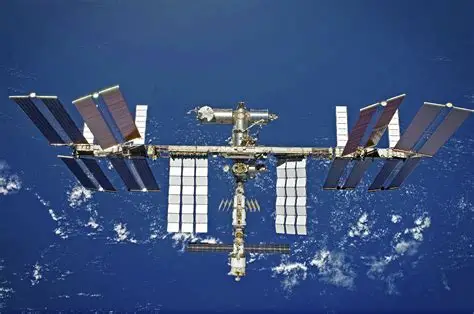
“South Africa has launched the Rooibos in Space programme, sending Rooibos seeds to the ISS to study plant growth in microgravity and radiation environments. The initiative, led by the South African Rooibos Council and MaxIQ Space with SANSA’s support, also involves learners from the Cederberg region in hands-on scientific research.”
South Africa has taken a bold step in merging its agricultural heritage with cutting-edge space science through the Rooibos in Space programme. This pioneering initiative will send Rooibos seeds to the International Space Station (ISS) in October 2026, marking the first time an indigenous South African plant is part of a space biology experiment. The project is a collaboration between the South African Rooibos Council (SARC), MaxIQ Space, and the South African National Space Agency (SANSA), with strong support from government, academia, and local communities.
Background and Significance
Rooibos, native to the Cederberg region, is not only a cultural and economic staple but also a symbol of South Africa’s agricultural innovation. By sending Rooibos seeds into space, scientists aim to explore how plants respond to microgravity and cosmic radiation, conditions that differ drastically from Earth. This research aligns with global priorities in space exploration, particularly the need for self-sustaining agricultural systems for long-duration missions such as NASA’s Artemis programme.
Scientific Goals
The experiment will expose Rooibos seeds to space conditions for several weeks before returning them to Earth. Upon their return, they will be planted alongside control seeds to compare germination rates, resilience, growth patterns, and yield. Learners from seven schools in the Cederberg region will conduct these experiments, supported by local Rooibos farms and Parklands College in Cape Town. This dual setup ensures robust comparative data and fosters STEM education at grassroots levels.
Educational Impact
One of the most innovative aspects of the programme is its integration with education. Learners will actively participate in scientific investigations, collecting and analyzing data, thereby gaining exposure to real-world research. This hands-on involvement is expected to inspire a new generation of scientists, engineers, and innovators, particularly encouraging young women and girls to pursue careers in STEM fields.
Broader Context in Space Research
Globally, space agencies are prioritizing plant biology research to support human survival in space. Plants can provide food, oxygen, and psychological well-being for astronauts on extended missions. Rooibos, with its unique properties and resilience, could contribute to these systems. The South African experiment thus positions the country within the international space research community, showcasing its ability to contribute meaningfully to global scientific challenges.
Economic and Social Benefits
Beyond science, the Rooibos in Space programme highlights the economic and social potential of space research. By linking agriculture with space exploration, the initiative opens new avenues for innovation in farming techniques, biotechnology, and sustainable development. It also strengthens South Africa’s reputation as a space-faring nation, capable of leveraging its natural resources and scientific expertise for global impact.
Voices from the Project
Dawie de Villiers, director of SARC, emphasized the importance of innovation and applied research: “Rooibos has long been part of South Africa’s agricultural heritage. This project places it within a broader scientific context, where plant biology, space research, and education intersect.”
SANSA officials echoed this sentiment, noting that the project reflects South Africa’s commitment to scientific leadership and technological independence.
Future Prospects
If successful, the Rooibos experiment could pave the way for further agricultural research in space, potentially involving other indigenous crops. It may also contribute to developing resilient farming systems on Earth, particularly in regions facing climate change challenges.
Conclusion
The Rooibos in Space programme is more than a scientific experiment—it is a national milestone that combines heritage, innovation, and education. By sending Rooibos seeds to the ISS, South Africa is not only contributing to global space science but also inspiring its youth, strengthening its agricultural sector, and positioning itself as a leader in the emerging space economy.



