




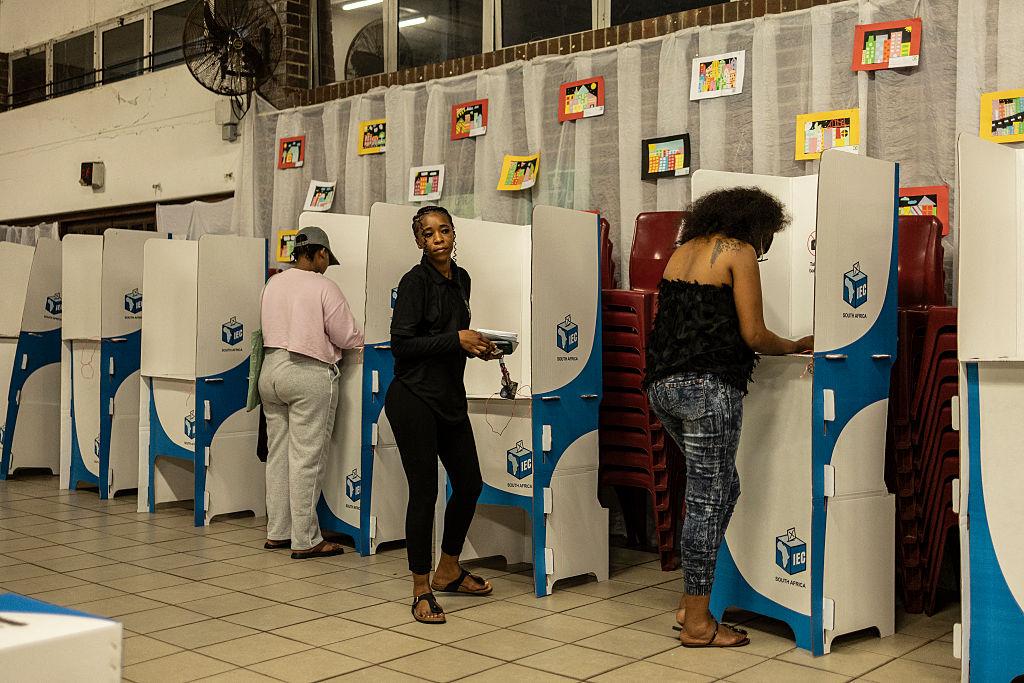
“South Africa’s 8 November 2026 election results are highlighting significant changes in public political preferences, with the African National Congress (ANC) receiving approximately 31% of the vote after 99% of ballots had been counted, while the Democratic Alliance (DA) stood at approximately 25% and the uMkhonto weSizwe (MK) Party at around 10%. The results reflect growing voter dissatisfaction with public-service delivery and increasing political fragmentation, creating pressure on political parties to negotiate coalition arrangements in municipalities where no party has secured an outright majority.”
South Africa’s 2026 Local Election Results Reveal Growing Public Dissatisfaction as ANC Support Declines and Coalition Politics Expands
Introduction: A changing political landscape
South Africa is experiencing an important shift in its political landscape following the 2026 Local Government Elections. The preliminary results, reported on Sunday, 8 November, indicate that voters are increasingly distributing their political support among different parties rather than concentrating their votes behind one dominant political organisation. The results also highlight the growing importance of public opinion, accountability, municipal performance and citizens’ expectations of political leadership.
According to Reuters, approximately 99% of the votes had been counted by Sunday, with the African National Congress (ANC) receiving approximately 31%, the Democratic Alliance (DA) receiving 25%, and the uMkhonto weSizwe (MK) Party obtaining approximately 10%. These figures demonstrate the changing distribution of electoral support and the challenges facing parties seeking to establish majority control of municipal councils.
The election results are particularly significant because municipal governments have direct responsibilities for services that affect people’s everyday lives. These include water supply, electricity distribution, sanitation, refuse collection, roads, housing-related infrastructure and local economic development.
Consequently, the results provide an important opportunity to understand how citizens are expressing their expectations through democratic participation.
ANC experiences declining public support
One of the central developments emerging from the election results is the continued decline in support for the ANC.
The party played a historic role in South Africa’s transition to democracy in 1994 and maintained a dominant position in national and local government for many years. However, its electoral performance has weakened over successive elections, reflecting changing voter preferences and dissatisfaction with various aspects of government performance.
Reuters reported that the ANC’s approximately 31% national share in the near-final municipal election results represented a significant setback. The party’s declining local election support has been associated with concerns about basic services, particularly water and electricity provision.
ANC Secretary-General Fikile Mbalula described the outcome as catastrophic for the organisation. He also indicated that the party needed to examine its internal situation rather than simply concentrate on obtaining positions during coalition negotiations.
His remarks illustrate the political significance of the election outcome.
For the ANC, the results create questions about public confidence, organisational accountability, local leadership and the effectiveness of its municipal governance structures.
However, the figures should not automatically be interpreted as a complete rejection of every ANC policy or historical achievement. Voters have different motivations, and election results represent a combination of local concerns, political preferences and individual circumstances.
Nevertheless, the declining electoral share provides measurable evidence that the party must address changing public expectations.
Public dissatisfaction with municipal service delivery
Municipal service delivery remains one of the most important issues influencing South African public opinion.
Residents depend on municipalities for essential services, and disruptions can have serious consequences for households, businesses and community development.
Water shortages, electricity interruptions, deteriorating roads, sanitation challenges and inefficient waste management have become important subjects in public discussions about local government.
Before the elections, Reuters reported that water, employment, crime and affordable housing were among the significant concerns facing voters in major South African metropolitan areas.
These concerns help explain why municipal elections are particularly important for measuring public satisfaction with government performance.
Unlike national elections, which cover broader economic and political questions, local elections provide citizens with an opportunity to assess the performance of the municipal authorities directly responsible for services in their communities.
Where residents experience persistent problems, they may reconsider their support for incumbent political parties.
This does not mean that every voter who changes political allegiance is motivated by poor service delivery. However, the available research identifies service provision as a substantial concern.
For newly elected councillors, the implication is clear: campaign commitments will need to be translated into measurable improvements.
Public opinion shows declining confidence in political parties
The election results also need to be considered alongside research into political trust and public perceptions.
An important Ipsos study published on 30 October 2026 found that 53% of eligible South African voters surveyed believed that no political party represented their views. Among registered voters, the corresponding figure was 50%.
The research also found that 68% of registered voters agreed that politicians could not be trusted, while only 15% disagreed.
These findings highlight a challenge that extends beyond the electoral performance of an individual political party.
They suggest that some South Africans feel disconnected from established political organisations and are questioning whether political leaders adequately understand their priorities.
This perception is particularly important in a democratic system where public participation depends on citizens believing that political institutions can represent their interests.
The Ipsos research also found that 65% of respondents supported different political parties working together at municipal level.
This provides important context for the coalition arrangements expected after the elections.
Rather than assuming that voters prefer single-party government in every municipality, political parties will need to consider the public’s expectations regarding cooperation, stability and accountability.
Coalition government becomes increasingly important
The 2026 results are creating a new phase of coalition negotiations across South Africa.
With no party obtaining more than 50% of the vote in several important municipalities, political organisations will need to negotiate agreements to establish governing majorities.
Reuters reported that parties would have 14 days to negotiate before municipal councils were formed. Johannesburg is among the important centres where coalition discussions will shape the next municipal administration.
In Johannesburg, the DA was leading with approximately 35% of the vote, compared with approximately 20% for the ANC, according to the near-final figures reported by Reuters.
The outcome could influence discussions about the city’s next mayor and governing arrangements. However, the final political leadership will depend on the agreements reached between parties.
Coalition government presents opportunities as well as challenges.
On one hand, cooperation can bring together different political perspectives and create opportunities for broader representation.
On the other hand, disagreements over municipal budgets, leadership positions, policy priorities and administrative responsibilities can complicate governance.
For residents, the most important consideration will be whether coalition arrangements produce effective municipal administration.
Citizens will expect parties to explain their agreements and demonstrate how cooperation will improve services.
Voters express confidence in the electoral process
Although the election results demonstrate changing political preferences, research also provides evidence of substantial satisfaction with the administration of the voting process.
The Human Sciences Research Council (HSRC), working with the Electoral Commission of South Africa (IEC), released findings from its 2026 Election Satisfaction Survey on 6 November.
The research involved 13,198 face-to-face interviews conducted across 300 voting stations nationally.
According to the findings, 90% of participating voters considered the election procedures free, while 91% considered them fair. Furthermore, 95% expressed satisfaction with the service provided by IEC officials.
The survey also found that 95% of respondents were confident that their ballots remained secret inside voting booths.
These findings are important because confidence in electoral administration is fundamental to democratic participation.
However, the HSRC research also identified a distinction between satisfaction with the practical voting experience and broader confidence in political institutions.
The Mail & Guardian reported that trust in the IEC had declined from 91% in 2016 to 89% in 2021, 85% in 2024 and 81% in the 2026 survey.
Mail & Guardian
Therefore, positive assessments of election administration should not be confused with complete confidence in every political institution.
Citizens increasingly expect accountable leadership
The changing political environment creates pressure on political parties to demonstrate greater accountability.
Election campaigns frequently involve promises concerning employment creation, infrastructure development, economic growth, public safety and improved municipal services.
However, citizens ultimately assess political leadership through the results they experience in their communities.
This makes accountability particularly important after the election.
Newly elected councillors will need to communicate clearly about municipal priorities, financial resources, project implementation and service delivery challenges.
Political parties participating in coalition governments will also need to establish transparent responsibilities.
Without clear accountability arrangements, residents may struggle to determine which political organisation is responsible for particular decisions.
The results therefore create an opportunity for municipal administrations to improve public communication and establish measurable performance targets.
Public participation and the importance of protest
Public opinion research also highlights the importance of participation beyond election day.
According to Ipsos, 58% of registered voters surveyed considered protests, strikes and marches acceptable responses when communities were dissatisfied with service delivery.
Ipsos
This finding demonstrates the significance of public participation in municipal accountability.
South Africa has a long history of civic activism, community organisations and public demonstrations addressing local concerns.
Residents may use community meetings, petitions, public consultations and lawful demonstrations to communicate their expectations to municipal authorities.
For government institutions, these activities provide opportunities to understand community priorities and respond to problems.
At the same time, public participation requires constructive engagement, respect for democratic rights and peaceful communication.
Municipal leaders will need to establish accessible channels through which residents can report problems and monitor progress.
What the results mean for South Africa’s political future
The 2026 municipal election results demonstrate that South African politics is becoming increasingly competitive and fragmented.
The ANC remains an important political organisation, but its declining electoral share highlights the changing relationship between political parties and voters.
The DA and MK Party have also become significant participants in the changing electoral landscape, while smaller political organisations may influence municipal leadership through coalition negotiations.
These developments suggest that political representation will increasingly depend on cooperation and the ability of parties to address local priorities.
However, election results alone cannot explain every aspect of public opinion.
A complete understanding requires consideration of voter motivations, survey research, demographic differences, regional concerns and the experiences of people who did not participate in the elections.
It is also important to distinguish between the views of people interviewed in surveys and the preferences demonstrated through actual ballots.
The HSRC satisfaction survey, for example, interviewed people who voted, meaning its findings should not automatically be treated as representative of all South African adults.
Similarly, the Ipsos findings reflect the views of respondents during September and October rather than a direct measurement of every citizen’s opinion on election day.
Conclusion: A changing relationship between citizens and political leadership
South Africa’s 2026 Local Government Elections represent an important moment for understanding public opinion and democratic accountability.
The declining ANC vote share, the growing importance of other political parties and the prospect of coalition government demonstrate that electoral support is increasingly distributed across the country’s political landscape.
At the same time, survey findings reveal concerns about political trust, representation and municipal service delivery.
Nevertheless, the strong satisfaction recorded with election administration demonstrates that many participating voters viewed the practical voting process positively.
The challenge now moves from campaigning to governing.
Political parties will need to demonstrate that their promises can translate into better municipal services, accountable administration and meaningful community participation.
Ultimately, the significance of the 2026 election will not be measured only by the number of votes received by individual parties. It will also be measured by whether the new municipal administrations respond effectively to the expectations expressed by South African citizens.
For the public, the next stage will involve monitoring coalition agreements, evaluating municipal performance and continuing to participate in democratic processes.
South Africa’s changing political landscape makes public opinion an essential measure of democratic accountability, political representation and the future direction of local government.



